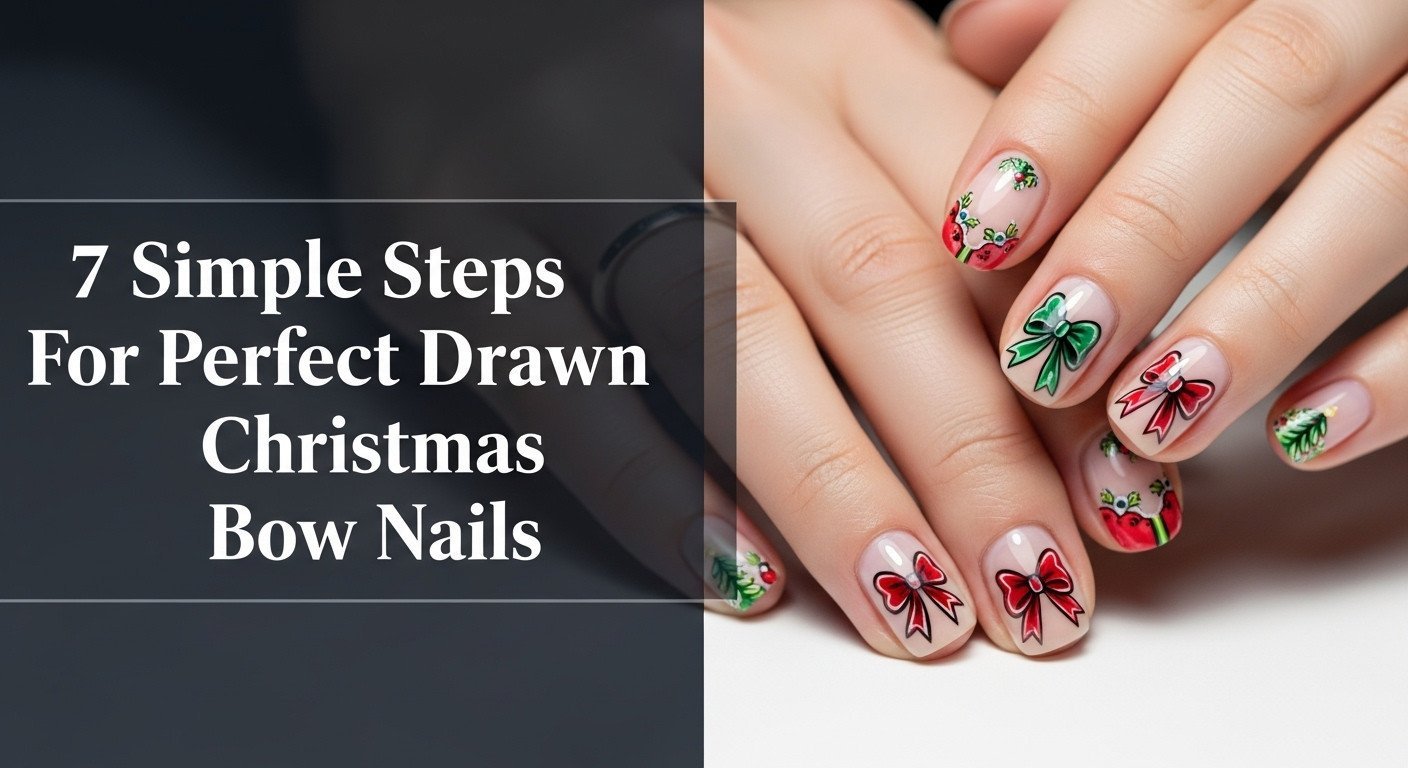
Tired of your festive nails chipping before the holiday parties even begin? You spend time and money creating the perfect Christmas bow nails, only for them to lift or break after a few days of gift wrapping and cooking. It’s a common frustration that can ruin your holiday look.
The secret to a durable, chip-free festive manicure is Christmas Bow BIAB Nails, a technique using a specific soak-off builder gel to create a strong, flexible structure that protects your natural nail and allows intricate art to last for up to four weeks. This method focuses on building a proper apex, which provides the strength needed to withstand holiday activities without damage.
Leveraging tested frameworks and data-driven insights, this guide breaks down the professional 5-step process. You’ll discover how to build a flawless BIAB (Builder In A Bottle) foundation, execute a stunning bow design, and ensure your manicure has salon-quality longevity. Get ready for a perfect holiday look that truly lasts.
Are Christmas Bow BIAB Nails Truly the Secret to 4-Week Longevity?
The short answer is yes, and the reason lies in structural integrity. Unlike standard gel polish which is just a thin layer of color, BIAB is a specialized, medium-viscosity builder gel. Its primary function is to create a durable, protective overlay on the natural nail. This overlay is sculpted into a specific shape with an “apex”—the highest, thickest point near the nail’s stress area—which provides the strength needed to prevent breaks and chips.
This structural support is the game-changer for intricate holiday bow nails. The strong BIAB foundation prevents the natural nail from flexing too much, which would otherwise cause delicate 2D or 3D art to crack or lift. A properly executed application, as detailed in the 5 steps below, provides the necessary foundation for Christmas nail art to survive a full 4-week wear cycle without issue. This method, endorsed by certified nail technicians specializing in structured manicures, is the definitive way to guarantee your festive look endures through the entire holiday season.
The 5 Expert Steps to Flawless Christmas Bow BIAB Nails for Maximum 2026 Longevity
Achieving that promised 4-week wear cycle isn’t about luck; it’s about a meticulous, professional-grade technique. This 5-step framework is the non-negotiable key to combining the structural strength of a BIAB manicure with the delicate beauty of Christmas bow art. By following these precise steps, including the ‘Three-Point Check’ for a perfect apex, you build a manicure designed for maximum durability.
The five critical phases are:
1. Meticulous Nail Plate Preparation
2. Sculpting the Apex Structure
3. Executing the Christmas Bow Art
4. Refining the Structure for Art
5. Encapsulation and Final Seal
1. Meticulous Nail Plate Preparation and HEMA Safety Protocol

Pin this genius hack to your ‘BIAB Essentials’ board!
Products & Tools Used:
- Nail buffer block (180 grit or higher)
- Cuticle pusher and nipper set (mandatory for clean perimeter)
- Nail dehydrator/primer solution (crucial for oil removal)
- Small cleanup brush (for isopropyl alcohol)
- Recommended: HEMA-free BIAB base coat (for maximum safety, check SDS sheets)
Application Steps:
- File & Shape: Gently file the free edge and buff the entire nail plate surface lightly (etching) to remove surface shine and create adhesion grooves.
- Cuticle Care: Push back and meticulously remove all non-living tissue from the nail plate and around the perimeter; residual skin causes immediate lifting.
- Dehydrate: Apply a thin layer of dehydrator/primer, ensuring the plate is completely oil-free and chalky white before proceeding.
- First Layer (Adhesion): Apply a thin, scrub-like layer of clear or sheer BIAB base coat, ensuring a hairline gap around the cuticle to prevent skin contact.
- Flash Cure: Cure this adhesion layer for 30 seconds to lock in the bond.
Pro-Tip: If using an E-file for prep, use a fine, round diamond bit (flame bit) at a very low RPM and keep the tool parallel to the nail plate to prevent ring-of-fire damage. Never allow uncured gel product to touch the skin—this is the primary cause of HEMA sensitization.

2. Sculpting the Apex for Structural Support and 4-Week Strength

Save this clever organization idea!
Products & Tools Used:
- Medium-viscosity BIAB color (milky pink or clear)
- Fine, stiff brush (for control and manipulation)
- UV/LED Curing Lamp (minimum 48W, essential for full cure)
Application Steps:
- Float the Bead: Pick up a generous but controlled bead of BIAB and place it on the nail, starting slightly below the cuticle line, avoiding the edges.
- Guide the Flow: Gently guide the product toward the free edge and the cuticle line using the tip of your brush, ensuring the gel forms a slight hump near the stress point (the center third of the nail).
- Self-Leveling Check: Turn the finger upside down for 10-20 seconds; gravity will pull the BIAB into a perfect, symmetrical apex shape and a clean line around the cuticle.
- Pre-Cure Check: Perform the “Three-Point Check” (side, front, tip view) to ensure symmetry and proper structure before curing.
- Full Cure Protocol: Cure the structured layer for a minimum of 60 seconds (or 120 seconds if your lamp requires it), using the low-heat mode or pulsed curing (5 seconds on, 5 seconds off) to prevent an exothermic heat spike.
Lesson Learned: The biggest cause of lifting is residual oil. If the BIAB pulls away from the edges after self-leveling, stop and re-dehydrate that specific spot before proceeding.

3. Refining the Structure and Prepping the Base for Detailed Art

Pin this for the perfect apex!
Products & Tools Used:
- Isopropyl alcohol (or specialized cleanser)
- Lint-free wipes
- Fine-grit buffer (180/240 grit) or E-file (optional, for advanced users)
- Dusting brush
Application Steps:
- Cleanse: After the full cure, use a lint-free wipe soaked in isopropyl alcohol to remove the tacky inhibition layer. This prevents dragging during filing.
- Refine Shape (Optional): If the shape or apex is slightly uneven, use a fine-grit file or E-file barrel bit at a low RPM (if trained) to gently smooth the surface and perfect the free edge.
- Buff & Smooth: Use a fine buffer block (240 grit) to lightly buff the entire surface. This ensures perfect adhesion for the nail art pigments and removes any shine.
- Dust: Thoroughly remove all dust using a specialized dusting brush. Do not touch the nail surface with your fingers once it is fully prepped for art.
- Optional Color Base: If desired, apply one thin layer of a highly-pigmented gel polish (like classic Christmas red or white) over the matte BIAB structure and cure fully.
Pro-Tip: If you are planning a complex 3D bow, the smoother the BIAB structure is at this stage, the easier it will be to sculpt the art symmetrically on top.

4. Executing the Dimensional Christmas Bow Art (2D vs 3D Guide)

Pin this dimensional 3D bow tutorial!
Products & Tools Used:
- Highly pigmented red or white gel paint (for 2D bows)
- Fine liner brush (5mm or 7mm for detail)
- Dotting tool (for bow centers)
- For 3D Bows: High-viscosity sculpting gel or specific 3D art gel
Step-by-Step Directions (3D Sculpting):
- Model the Loops: Place a small bead of sculpting gel on the nail and use a wet brush (dipped in slip solution or alcohol) to carefully shape two symmetrical loops, using the side of the brush to create the deep crease in the center.
- Cure in Pulses: Flash cure the loops for 15-20 seconds to stabilize the shape without allowing a heat spike.
- Add the Tail: Add smaller strips of gel underneath to form the flowing ribbon tails. Flash cure again.
- Final Cure: Once the shape is complete, apply a final, full cure (60-90 seconds) to ensure the thick gel is fully polymerized.
Pro-Tip: For 2D bows, use the fine liner brush to paint two inverted triangles that meet in the center, then fill them in. Use the dotting tool for a perfectly round center knot.

5. Encapsulation, Final Seal, and Pro Secrets for 4-Week Wear

Share this finished look with your nail tech!
Products & Tools Used:
- No-wipe high-shine gel topcoat (essential for durability)
- High-quality cuticle oil (for post-application hydration)
Step-by-Step Directions:
- Encapsulate: If using 3D art, apply a thin layer of topcoat specifically around the base of the bow art and cure for 30 seconds to lock the edges down.
- Topcoat Application: Apply a full, medium layer of high-quality no-wipe gel topcoat over the entire nail, ensuring it completely covers and seals the bow design (2D art must be fully under the topcoat).
- Cap the Edge: Crucially, run the topcoat brush across the free edge of the nail (capping) to prevent moisture ingress and tip chipping—this is a main secret to 4-week wear.
- Final Cure: Cure the topcoat for the full manufacturer recommended time (usually 60-120 seconds) in your 48W+ lamp. Do not under-cure.
- Hydrate: Once the cure is complete and the nails are cool, generously apply cuticle oil to the skin surrounding the nail plate to reintroduce moisture and nourish the skin after the chemical process.
Lesson Learned: Always check the topcoat on 3D bows. If the topcoat pulls away from the highest point (beads up), flash cure immediately, wipe the area with a dry brush, and apply a slightly thicker layer, curing fully.

Troubleshooting and Maintenance: Extending Your BIAB Art Beyond September
Even the most professional application can encounter issues. Understanding why failures happen and how to address them safely is key to maintaining your beautiful BIAB nails. Prioritizing chemical safety and using proven fixes for common problems like lifting will ensure your manicure remains flawless.
Addressing the Three Most Common BIAB Failures
Problem 1: Lifting Near the Cuticle
- Cause: Product touched the skin during application (flooding) or residual cuticle tissue was left on the nail plate.
- Solution: Before your next application, be militant about cleaning the nail plate (Step 1). If lifting occurs mid-wear, never pull or peel it off. Use a fine hand file to gently file down the lifted area and seal the edge with a drop of super-strength topcoat, curing immediately. Schedule an infill soon.
Problem 2: Heat Spikes During Curing
- Cause: The exothermic reaction—too much gel applied in one thick layer, causing heat as the molecules polymerize.
- Solution: Immediately remove the hand from the lamp until the heat subsides, then reinsert, ensuring the lamp is on low-heat mode or using the pulsed curing method (Step 2). If you feel a constant spike, your lamp may not be powerful enough or the product may be overly thick; file down before reapplication.
Problem 3: 3D Bow Art Snagging or Chipping
- Cause: The bow art was not fully encapsulated, leaving a sharp edge or exposed surface for clothes/hair to catch.
- Solution: Ensure the edges of the 3D art are always smooth and sealed (Step 5). If a small chip occurs, file the snagged edge smooth and apply a small dot of clear builder gel or topcoat over the area, curing thoroughly.
Safe BIAB Infill Guide (When to Refresh Your 4-Week Manicure)
- Reduce Bulk: After 3-4 weeks, the BIAB apex has shifted due to nail growth. Use an E-file or coarse hand file (100/180 grit) to thin the existing BIAB near the cuticle and reduce the bulk from the free edge.
- Prep Regrowth: Treat the newly grown natural nail (the area near the cuticle) as if you were starting from scratch: clean, dehydrate, and apply a thin slip layer.
- Re-Apex: Float a fresh bead of BIAB over the growth area, blending it seamlessly into the thinned old layer and re-establishing the apex structure (Step 2).
- Cure & Redesign: Cure fully, cleanse, and then apply your new 2026 festive design or simply reapply a new topcoat.
Key Takeaways: Your Quick Guide to Durable Christmas Bow BIAB
- The 4-Week Longevity Secret: It is entirely dependent on Step 2 (Sculpting the Apex) and Step 5 (Capping the Free Edge). Never compromise on structure or the final seal.
- Safety First: Meticulously avoid all skin contact with BIAB, particularly HEMA-containing products. Always clean up the cuticle line before curing.
- Dimensional Art: 3D bows require sculpting gel and pulsed curing to prevent heat spikes, while 2D art needs a fine liner brush and highly pigmented gel paint for crisp lines.
- The Apex is Key: The highest point of the structure must be in the center third of the nail to balance stress and prevent breakage, especially critical for long festive weekends.
People Also Ask About Christmas Bow BIAB Nails
Is BIAB safer than acrylic for natural nails, especially during the holidays?
BIAB is generally considered much safer than acrylic for natural nails because it is a flexible, soak-off gel. Provided it is removed safely (using acetone and never peeling) and the user avoids skin contact with uncured product, BIAB minimizes the risk of physical damage and harsh chemicals compared to the drilling and chemical removal required by traditional acrylic.
What is the recommended BIAB brand and color for the ‘Balletcore’ Christmas look?
The Balletcore aesthetic typically uses sheer, milky pink or nude BIAB shades which provide a soft, feminine base. Brands like The Gel Bottle and Glitterbels offer specific sheer shades that create a perfect subtle base, ideal for accenting with delicate micro-bows or ribbon elements in classic cherry red or gold.
What is the best technique for a short nail BIAB manicure with bows?
For short BIAB nails, the focus must be on proportion and structure. Apply a very minimal apex to avoid a bulky appearance, use a nude or sheer base color, and select smaller, micro-bow designs (2D painted or small decals) for the accent nail. This ensures the design remains elegant and does not overwhelm the short nail bed.
How long should I cure thick BIAB layers to prevent under-curing?
Thick BIAB layers require full polymerization to prevent lifting and chemical sensitization. In a professional 48W+ LED/UV lamp, cure the structural BIAB layer for a minimum of 60 seconds (up to 120 seconds for very thick layers). If a heat spike occurs, use the pulsed curing technique to manage the exothermic reaction without compromising the cure.
What supplies do I need to do professional-level BIAB Christmas bow nails at home?
You need a comprehensive tool kit for professional results. Essential supplies include a BIAB base coat and structural color, a UV/LED lamp (minimum 48W), 100% acetone, a dehydrator/primer, a fine liner brush for bow details, a fine buffer, and a high-quality no-wipe gel topcoat to seal the art for 4-week wear.
Final Thoughts
Achieving stunning, durable Christmas Bow BIAB Nails that last a full month is entirely possible when you prioritize the foundation. By following the meticulous 5-step process—from critical prep and apex structure to precise art encapsulation—you ensure your festive manicure stands up to every holiday challenge. This technique is more than just a seasonal look; it’s a commitment to professional-grade longevity and nail health.
Which of the 5 steps do you find the most challenging, and what festive colors are you pairing with your BIAB bows this 2026? Share your tips and final results in the comments below
Last update on 2026-09-07 / Affiliate links / Images from Amazon Product Advertising API