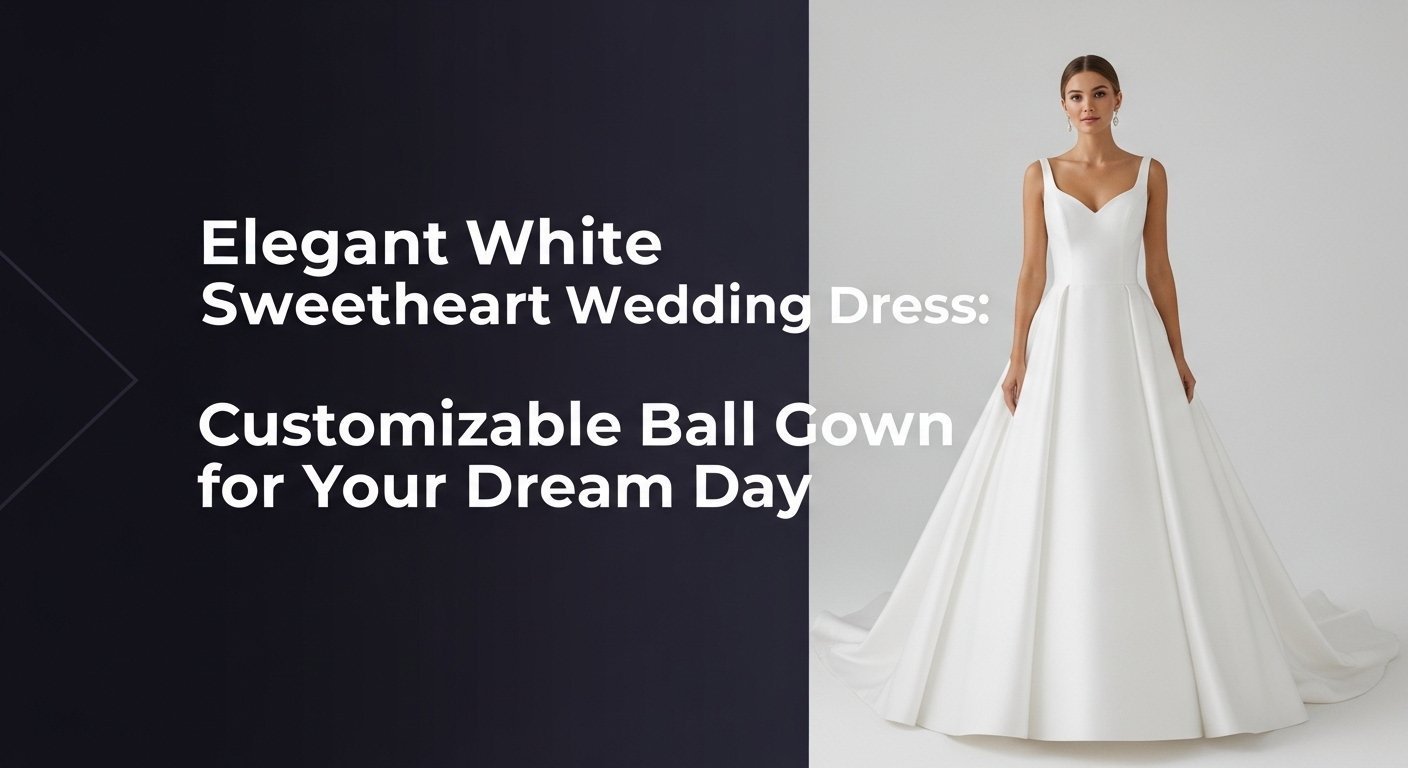
Are you dreaming of a wedding dress that feels like it was made just for you? The search for “the one” can be overwhelming, leaving you with endless options and nagging concerns about getting the perfect fit. You want a gown that is not only beautiful but also a true reflection of your personal style.
A customizable wedding dress is a gown that allows a bride to create a one-of-a-kind look tailored to her exact measurements and style preferences. By choosing specific fabrics, altering the neckline, or adding unique embellishments, you can transform a classic silhouette into a personal masterpiece for your dream day. This process ensures a perfect fit and a bridal gown that feels truly your own.
Leveraging established best practices in bridal design, this guide will show you how to turn a classic sweetheart ball gown into your dream dress. We will explore seven actionable ways to personalize this timeless silhouette, empowering you to make informed decisions. Discover how to create a bridal attire that is as unique as you are.
How Do You Find the Perfect Customizable Wedding Dress for Your Dream Day?
The journey to your dream wedding dress often begins with a vision but can quickly become a stressful reality of standard sizes and limited options. Many brides experience dress doubts when off-the-rack gowns don’t quite match their dream or fit their body perfectly. This is where the beauty of customization comes in. Instead of searching for a dress that ticks every box, you can start with a beautiful foundation—like a timeless sweetheart ball gown—and tailor it to your exact desires. This approach transforms the process from a hunt into a creative journey, ensuring your bridal gown is not just worn, but is a true expression of you. Working with an expert tailor or choosing a brand that offers custom sizing is the secret to achieving that flawless, guaranteed fit and bringing your unique vision to life for your wedding day.
7 Ways to Customize Your Sweetheart Ball Gown Wedding Dress
A sweetheart ball gown is the quintessential fairytale dress, but its true power lies in its versatility. This classic silhouette is the perfect canvas for personalization, allowing you to infuse your unique style into every detail. From subtle changes to dramatic transformations, customization empowers you to create a bridal gown that is anything but standard. In this section, we will explore seven inspiring ways to alter, embellish, and style a sweetheart ball gown. You will learn how to modify the Neckline, add custom Sleeves, select the perfect Fabric, and incorporate details that reflect your personality, ensuring your walk down the aisle is in a gown that is truly one-of-a-kind.
1. Style with Custom Sleeves for a Timeless Look

Pin this elegant sleeve idea to your ‘Dream Wedding Dress’ board!
Adding sleeves is one of the most transformative ways to customize a strapless ball gown. Whether you’re dreaming of a long sleeve lace wedding dress for a touch of vintage romance or chic off-the-shoulder sleeves for a modern feel, this addition can completely redefine your gown’s character. It’s a perfect solution for brides seeking more coverage, a bit of warmth for a cooler season, or simply a more classic aesthetic.
Gown Elements
- Detachable Sleeves: Look for options in materials like Chantilly lace or point d’esprit for a romantic feel.
- Fabric for Custom Sleeves: A yard of matching mikado silk or a contrasting delicate tulle for illusion sleeves.
- Embellishments: Tiny seed pearls or sequins to line the cuff.
- Professional Tailor: An expert tailor specializing in bridal alterations.
How to Customize
- Choose a Style: Decide between permanent, sewn-in sleeves or detachable options for a two-in-one look.
- Select the Fabric: Match the gown’s satin for a seamless look or choose a contrasting lace for a romantic vibe.
- Consult a Tailor: Work with a master seamstress to design the sleeve shape (Long sleeve, cap sleeve, off-the-shoulder) that best compliments your arm and the gown’s proportions.
- Schedule a Fitting: Try on the gown with the pinned sleeves to ensure a perfect fit and comfortable range of motion before final sewing.
Pro-Tip: In my experience, illusion sleeves made from point d’esprit or sheer tulle offer a touch of coverage without adding visual weight, making them a perfect custom fit for a grand ball gown silhouette.

2. Select a Luxurious Fabric to Define Your Style

Save this fabric guide to your ‘Wedding Details’ board!
The fabric is the soul of a wedding dress; it dictates how the gown drapes, shines, and feels. While a standard ball gown might come in satin, choosing a different high-quality fabric can dramatically alter its personality. A crisp Mikado silk creates a regal and structured silhouette, while layers of ethereal organza or tulle lend a soft, romantic, and dreamy quality. Understanding the nuances between fabrics is key to achieving your desired look.
Gown Elements
- Mikado Silk: A luxurious, heavy silk with a subtle sheen, perfect for structural tailoring and holding the ball gown shape.
- Satin: A classic choice with a high-shine finish, offering a very formal and elegant look. Choose between white vs ivory shades.
- Organza: A crisp, sheer fabric that adds volume without weight, ideal for layered skirts.
- Tulle: A lightweight, fine netting used for veils and creating soft, ethereal skirt layers.
How to Customize
- Define Your Vision: Are you aiming for a classic, structured look (Mikado Silk) or a soft, romantic fairytale vibe (Tulle and Organza)?
- Consider the Season: Heavier fabrics like satin are ideal for cooler months, while lighter ones like organza are perfect for a beach wedding dress.
- Request Swatches: Always order fabric swatches to see and feel the material in person. Compare the shades of white vs ivory in natural light.
- Discuss with Your Designer: A designer can explain how each fabric drapes and how it will affect the final silhouette and cost of your bridal gown.
Pro-Tip: For a truly luxury wedding dress feel, consider a Mikado silk for the main body of the gown and use layers of soft tulle for the underskirt. This combination provides both the majestic structure and a soft, floating movement.

3. Embellish with Beads and Lace for a Unique Touch

Pin this stunning embellishment idea for your dream dress!
To embellish a simple satin ball gown is to infuse it with your personality. This is your opportunity to add sparkle, texture, and intricate detail. You can opt for a subtle scattering of pearls along the sweetheart neckline, dramatic lace wedding dresses-inspired appliqués cascading down the skirt, or a sparkling bridal belt to cinch the waist. These details transform a classic gown into a bespoke piece of art.
Gown Elements
- Lace Appliqués: Individual motifs of lace, like Venise lace, that can be sewn onto the bodice, skirt, or train.
- Seed Pearls or Crystals: For scattering across the bodice or creating a pattern along the sweetheart neckline.
- Beaded **Wedding Belt:** A simple way to add sparkle and define the basque waist or natural waist of the ball gown.
- Invisible Thread and Fine Needles: Essential tools for hand-sewing embellishments without visible stitches.
How to Customize
- Choose a Focal Point: Decide where you want to draw the eye. Do you want a sparkling bodice, a detailed hem, or a simple beaded belt?
- Select Your Embellishments: Order samples of lace appliqués and beads to see how they look against your dress fabric.
- Plan the Placement: Use pins to temporarily place the appliqués and beads on the dress. Take photos and review them before making a final decision.
- Hire an Expert: While some minor beading can be a DIY project, intricate lace application should be handled by a master seamstress to ensure it lays flat and looks seamless.
Pro-Tip: For a subtle, vintage bridal gowns feel, ask your tailor to add a scalloped hem using a delicate guipure lace trim. It adds incredible detail and photographs beautifully without overwhelming the gown’s silhouette.

4. Design a Breathtaking Train for a Grand Entrance

Pin this dramatic train inspiration to your ‘Bridal Style’ board!
Nothing says “bride” quite like a wedding dress with train. Whether you prefer a subtle sweep train for a more casual wedding dress or a dramatic cathedral train for a grand entrance, this element is a key part of the bridal silhouette. Customizing the length and style of your train allows you to match the formality of your wedding venue and your personal taste for drama. Remember that a longer train will require a bustle for the reception, a clever series of hooks or buttons that lift the train for easy dancing.
Gown Elements
- Cathedral Train: The most formal, extending 6 to 8 feet behind the gown. Perfect for a grand church ceremony.
- Chapel Train: A popular choice, extending 3 to 4 feet. Formal without being overly cumbersome.
- Sweep Train: A subtle option, just barely “sweeping” the floor. Ideal for a more casual wedding dress.
- Detachable Train/Overskirt: Offers the drama for the ceremony and can be removed for easy dancing at the reception.
How to Customize
- Match the Venue: A cathedral train is stunning in a large church but impractical for a beach wedding. Choose a length that is suitable for your wedding venue.
- Consider Your Budget: The longer the train, the more fabric is required, which can increase the cost of the wedding gown.
- Plan the Bustle: Discuss with your tailor how to bustle a wedding dress with your chosen train. Ask to see examples of an American (over-bustle) vs. a French (under-bustle).
- Practice Walking: Once your dress is altered, practice walking and turning to get comfortable managing the train’s weight and length.
Pro-Tip: For a unique and modern twist, ask your designer about a Watteau train. This style attaches at the shoulders or upper back of the bodice, flowing down like a cape and offering a regal look without altering the skirt’s silhouette.

5. Add a Removable Overskirt for Two Looks in One

Two looks in one? Pin this genius idea to your wedding board!
Why choose between a grand ball gown and a sleek reception dress when you can have both? A detachable skirt wedding dress is the ultimate in bridal versatility. This design features a base dress, often a simple sheath or mermaid style, paired with a voluminous Overskirt that can be removed after the ceremony. This gives you a dramatic, formal look for your vows and a comfortable, party-ready silhouette for dancing the night away. It’s a modern wedding dress solution that offers a ‘wow’ factor reveal.
Gown Elements
- The Base Dress: A simple sheath, A-line, or even mermaid style dress that will be revealed after the ceremony.
- The Overskirt: Typically made of voluminous tulle or organza to create the ball gown effect.
- Attachment Mechanism: Can be a sleek satin ribbon sash, a series of hidden hooks and eyes, or buttons that attach to the waist of the base dress.
- Matching Fabrics: Ensure the waistband of the overskirt matches or complements the fabric of the base dress.
How to Customize
- Start with the Base: Choose a fitted dress silhouette you love and feel comfortable moving in. This will be your reception look.
- Design the Overskirt: Decide on the volume and material. A full tulle skirt gives a princess feel, while a structured satin overskirt feels more modern.
- Perfect the Attachment: Work with your expert tailor to create a secure and seamless attachment. The goal is for it to look like one cohesive gown.
- Plan the Reveal: Coordinate with your photographer and DJ to capture the moment you remove the skirt before your first dance.
Pro-Tip: An overskirt is the perfect solution for brides who love the ball gown look but have sizing issues or feel restricted by the volume. It offers the ceremony drama and reception freedom, solving a common problem with one stylish solution.

6. Personalize the Bodice and Neckline

Pin this beautiful neckline idea for a custom look!
The bodice is the heart of your gown’s design, and personalizing the neckline can dramatically alter its look and how it flatters you. A classic sweetheart neckline can be softened, deepened into a plunging V-neck, or covered with an elegant illusion neckline for more coverage. An expert tailor can also adjust the internal boning to ensure the bodice fits like a glove, providing support and creating a flawless silhouette. This is a crucial step in answering the question “what wedding dress suits my body type,” as the right neckline can elongate your torso and highlight your best features.
Gown Elements
- Illusion Panel: A piece of sheer tulle or lace used to create a high neck or covered look over the sweetheart shape.
- Structural **Boning:** The internal plastic or metal strips that give the bodice its shape and support. A tailor can adjust or add this for a better fit.
- Lace or Beading: To edge the new neckline for a finished, professional look.
- Modesty Panel: A small piece of matching satin or lace that can be inserted to make a deep V-neck less revealing.
How to Customize
- Analyze Your Shape: A deeper plunge can elongate the neck, while an illusion neckline offers more coverage and support. This helps answer “what wedding dress suits my body type“.
- Raise or Lower the Line: A tailor can slightly alter the height of the back or the depth of the sweetheart cut for comfort and style.
- Add an Illusion Top: Create the look of a completely different dress by adding a sheer panel with delicate buttons down the back.
- Ensure Proper Support: If you alter the neckline, discuss with your tailor whether the internal boning needs to be adjusted to maintain structure.
Pro-Tip: Ask your tailor to use fabric from the hemming of your skirt to create a custom illusion panel. This guaranteed fit of color and texture makes the alteration look like it was part of the original proprietary design.

7. Choose the Perfect Accessories to Complete Your Vision

Save this accessory inspiration for your final wedding look!
Accessories are the finishing touches that complete your bridal ensemble. The right bridal veil, wedding shoes, and wedding jewelry can elevate your customized gown and tie your entire look together. The key is balance. Your accessories should be accessorized with your dress, not compete with it. A simple satin gown might call for a statement necklace or a dramatic, cathedral-length veil, while a heavily embellished dress pairs best with delicate jewelry and a simple veil.
Gown Elements
- The Veil: Choose a length that complements your train. A cathedral veil for a cathedral train, or a short, blusher veil for a more modern wedding dress feel.
- Jewelry: Select pieces that match the tone of any beading on your dress (e.g., silver, gold, pearl).
- Bridal Belt or Sash: A final touch to define the waist. Choose a simple satin ribbon or a sparkling crystal belt.
- Wedding Shoes: Consider the venue and your comfort. Block heels or elegant flats are great for outdoor weddings, while stilettos work for a ballroom.
How to Customize
- Balance the Sparkle: If your ball gown is heavily beaded, choose simple, elegant jewelry. If your gown is plain satin, you can opt for a statement necklace or a dramatic bridal belt.
- Harmonize the Lace: If you’ve added lace sleeves or appliqués, find a bridal veil with a matching lace edge for a cohesive look.
- Consider the Neckline: A sweetheart neckline is versatile. It pairs well with a delicate necklace, statement earrings, or no necklace at all for a clean look.
- Do a Full Try-On: Before the big day, try on the entire bridal ensemble—dress, veil, shoes, and jewelry—to ensure everything works together perfectly.
Pro-Tip: Don’t forget about hair accessories. A simple pearl-adorned comb or a floral crown can be the final element that ties your entire look into your wedding theme. It’s often the small details that create the most personal bridal attire.

Key Takeaways: Your Quick Guide to a Custom Ball Gown
- Customization is the Key: A standard sweetheart ball gown is the perfect canvas. Adding custom sleeves, changing the fabric, or adding an overskirt can make it uniquely yours.
- Fabric Defines the Feel: The choice between Mikado silk for structure and tulle or organza for romance is the most impactful decision you’ll make. Always get swatches.
- Two Looks are Better Than One: A detachable skirt wedding dress offers the ultimate flexibility, giving you a grand ceremony look and a comfortable reception outfit without the cost of two gowns.
- Small Details Make a Big Impact: Simple additions like a bridal belt, lace appliqués, or a scalloped hem can elevate a simple gown to a luxury wedding dress look.
- An Expert Tailor is Your Best Friend: For everything from adding sleeves to creating a perfectly fitting bodice with the right boning, a master seamstress is essential for a high-quality finish.
- Balance is Everything: When accessorizing, remember to balance the elements. A heavily embellished dress pairs best with a simple bridal veil and jewelry.
People Also Ask About Customizing a Wedding Dress
What wedding dress suits my body type?
The best dress style highlights your favorite features and creates a balanced silhouette. For example, A-line and Ball Gown styles are flattering on most body types as they cinch the waist and flow away from the hips. Mermaid dresses accentuate curves, while Sheath dresses are great for lean figures. The key is to try on different styles to see what makes you feel most confident.
How much are wedding dress alterations?
Wedding dress alteration costs can range from under a hundred dollars to over a thousand. Basic hemming and taking in the sides are on the lower end, while significant changes like adding sleeves, changing the neckline, or complex beadwork will be more expensive. Always budget for alterations separately from the dress price, as nearly every bridal gown requires some level of custom fitting.
Can I add sleeves to a strapless wedding dress?
Yes, absolutely. An expert tailor can add sleeves to most strapless wedding dresses. You can choose from various styles like delicate cap sleeves, romantic off-the-shoulder sleeves, or classic long lace sleeves. Your tailor will help you select a fabric and design that seamlessly integrates with your existing gown for a beautiful, custom look.
Do wedding dress sizes run small?
Yes, bridal sizing typically runs 1-2 sizes smaller than standard street clothing sizes. This is because it is often based on European sizing charts and is not standardized across brands. It is crucial to be measured by a professional at a wedding dress shop and order based on your measurements, not your usual size, to solve potential sizing issues.
What is the difference between white vs ivory for a wedding dress?
White is a stark, bright white, while ivory has a subtle creamy or off-white undertone. Pure white looks best on brides with darker or olive skin tones. Ivory is almost universally flattering as its warmer tone complements a wider range of skin tones and often photographs better, appearing as a soft, natural white in pictures.
How do you store a wedding dress before the wedding?
Store your dress in a breathable garment bag in a cool, dark, and dry closet. Avoid plastic bags, which can trap moisture and cause yellowing fabric. Keep it hanging upright and away from direct sunlight, pets, and any potential spills. Give it room in the closet so the fabric isn’t crushed.
How do you get wrinkles out of a wedding dress?
The safest method is to use a professional steamer. If you must do it at home, hang the dress in the bathroom and run a hot shower to let the steam gently release the wrinkles. Never apply a hot iron directly to delicate fabrics like tulle or lace. Always test a small, hidden area first.
What is wedding dress preservation?
Wedding dress preservation is a professional cleaning and packaging process to prevent yellowing and fabric decay. After a specialized dry clean, the gown is folded with acid-free tissue and placed in an archival, acid-free box. This protects your wedding gown from light, dust, and insects so it can be kept as a keepsake for years to come.
Can you rent a wedding dress?
Yes, you can rent a wedding dress, which can be a great way to manage budget constraints. Many services now offer luxury designer wedding dress rentals for a fraction of the purchase price. This is an excellent option if you want a high-end look without the long-term commitment or storage concerns.
Is it too late to change my wedding dress?
It depends on how close you are to your wedding day and the status of your current dress. If you have wedding dress regret early on, you may be able to cancel the order or sell it. If it’s close to the date, consider dramatic alterations or adding an overskirt to transform your current dress into one you love, which is often faster and more affordable than starting over.
Final Thoughts on Your Dream Wedding Dress
Finding your perfect wedding dress is one of the most magical parts of wedding planning. But the true magic lies not in finding a dress, but in creating a bridal gown that is a perfect reflection of you. As we’ve explored, a classic sweetheart ball gown is not just a dress; it’s a canvas for your unique story. By thoughtfully choosing your fabric, adding personal details like custom sleeves or embellishments, and working with an expert tailor, you can customize your way to a gown that is unequivocally yours.
This journey is about more than just fashion; it’s about crafting a bridal ensemble that makes you feel confident, beautiful, and completely yourself on your special day. Don’t be afraid to mix and match ideas—a detachable overskirt for drama, a touch of lace for romance, a unique neckline that flatters you perfectly. Your dream marriage dress is within reach.
What customization idea are you most excited to try for your wedding dress? Share your vision in the comments below.
Last update on 2026-04-27 / Affiliate links / Images from Amazon Product Advertising API