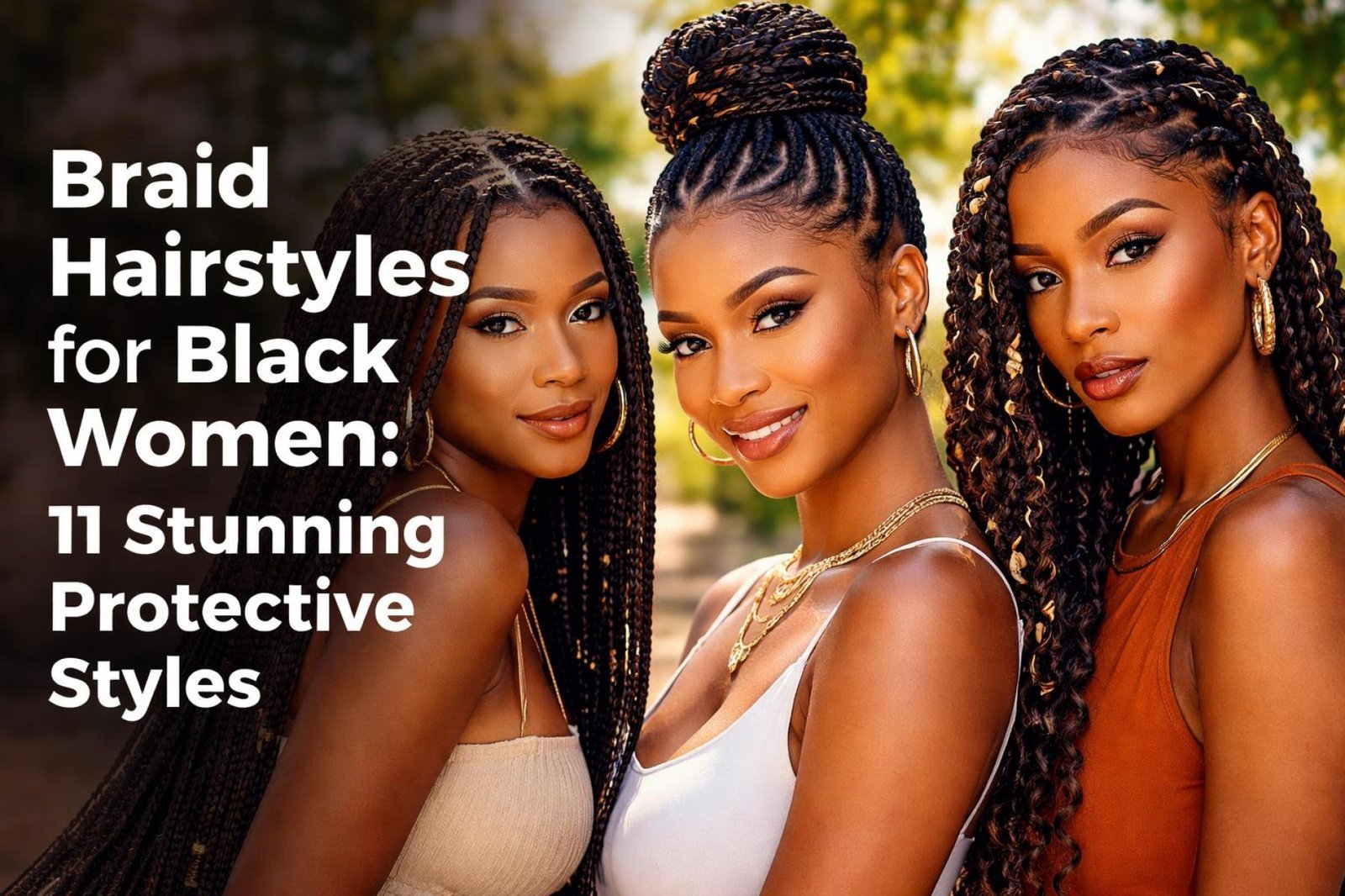
Are you looking for a style that turns heads while giving your hair the protection it deserves? The search for the perfect braid hairstyles for black women often feels like a balancing act between stunning beauty and maintaining the health of your natural hair. You want a look that is elegant and neat, but you worry about the tension, potential hair breakage, and the time-consuming daily styling.
Protective braid hairstyles for black women are styles that tuck away the natural hair ends to minimize manipulation, reduce environmental damage, and prevent breakage. These styles, such as knotless box braids or Fulani braids, are designed to give hair a “rest” period, which can support length retention and overall scalp health when installed correctly with minimal tension. This approach gives you a flawless look without compromising your hair’s integrity.
Drawing from comprehensive analysis of current data and proven methodologies, this guide will walk you through the most beautiful and healthy braided styles for 2026. We’ll explore everything from the installation process to maintenance, ensuring you can choose a style with confidence. Get ready to discover your next look that not only looks incredible but also supports your hair health goals.
What Are The Best Protective Braid Hairstyles for Black Women?
The best protective braid hairstyles for black women are those that masterfully combine style with function. At their core, these styles are designed to give your natural hair a much-needed rest from daily styling, heat, and environmental stressors. By tucking the ends of your hair away, you significantly reduce the chances of splitting and hair breakage, which is crucial for retaining length. More than just a beautiful look, a true protective style, like knotless box braids or feed-in cornrows, ‘promotes’ scalp health by minimizing tension at the root. When installed correctly by a professional hair braider, these styles can be a cornerstone of a healthy hair care regimen, allowing you to achieve your hair goals without sacrificing elegance. As hair health experts recommend, the key is always a low-tension installation and proper maintenance to prevent issues like traction alopecia prevention.
Braid Hairstyles for Black Women: 11 Stunning Protective Styles 2026
Now that you understand the “why” behind protective styling, it’s time for the fun part: finding your perfect look. We’ve curated a massive visual gallery of the 11 most stunning, popular, and elegant braid styles for 2026. From the sleek and modern stitch braids updo to the free-spirited goddess braids with curls, each option offers a unique way to express your style while caring for your hair. This list serves as your ultimate inspiration board, providing not just pictures, but the essential details you need—like the right synthetic hair extensions to buy and pro-tips for a flawless, long-lasting finish.
1. Achieve Flawless Knotless Box Braids

Pin this sleek and healthy style to your ‘Hair Goals’ board!
Knotless Box Braids have revolutionized protective styling by offering the classic beauty of box braids without the tension. Unlike traditional methods that start with a bulky knot, this style uses a feed-in method precision where braiding hair is gradually added to your natural hair. This results in a braid that lays flat, feels lighter, and is far gentler on your scalp and edges. It’s the perfect choice for anyone concerned with protecting thinning edges or who wants a more flexible style from day one, allowing you to wear a high box braids + ponytail immediately without pain.
Products & Tools Used
- 3-5 packs of pre-stretched Kanekalon hair
- A high-quality edge control gel with strong, non-flaking hold
- Rat tail comb for precise sectioning hair
- Hair moisturizers or leave-in conditioner for prep
- Mousse for braids to set the style and eliminate frizz
How to Achieve the Look
- Start with thoroughly washed, conditioned, and detangled natural hair. Apply a leave-in moisturizer.
- Use the rat tail comb to create a clean, geometric parting pattern. A typical grid for medium length braids is about one-inch squares.
- Begin braiding a small section of your own hair for about half an inch.
- While braiding, start feeding in small pieces of the synthetic hair extensions, one by one, until you reach the desired thickness. This is the core of the feed-in method precision.
- Continue braiding down the length of the hair, tucking natural hair to hide it within the braid.
- Seal the ends by dipping ends in hot water carefully, or by using a rubber band.
- Apply a small amount of edge control for a neat and easy finish.
Pro-Tip: In my years of experience as a professional hair braider, I’ve found that the key to traction alopecia prevention with knotless styles is to avoid starting the braid too tight at the root. The braid should feel secure, not painful. This is the essence of a true low-tension technique.

2. Embrace Ethereal Goddess Braids with Curls

Save this dreamy look for your next vacation or special event!
Goddess Braids with Curls offer a romantic and bohemian twist on traditional braids. This style ‘integrates with’ beautiful, free-flowing curly ends and pieces throughout the plaits, creating a stunning texture contrast between the sleek braids and soft curls. Often mistaken for boho tribal braids, the goddess style is typically more uniform in its braid size. It’s a luxurious and feminine option that’s perfect for special occasions or when you simply want to feel ethereal and glamorous.
Products & Tools Used
- 2-4 packs of traditional braiding hair (kanekalon hair) for the braided portion
- 1-2 packs of loose deep wave or water wave bulk hair (human hair blend recommended for softness)
- Mousse for braids specifically designed to reduce frizz on curls
- A light scalp oil to maintain moisture
- Scissors for trimming and shaping
How to Achieve the Look
- Braid the hair as you would for traditional box braids or cornrows.
- When you are about halfway down the braid (or at random intervals for a more boho tribal braids look), feed in a piece of the loose curly hair along with the braiding hair.
- Braid down another inch or two, securing the curly piece within the plait.
- Pull the majority of the curly hair strand out of the braid, leaving it loose.
- Continue braiding to the end and seal the braided portion by dipping ends in hot water. The curly hair will remain free.
- Once all braids are complete, gently separate the curls and apply a light layer of mousse to define them and preventing hair breakage.
Pro-Tip: Based on client testimonials, the biggest challenge with goddess braids with curls is tangling. To solve this, lightly spray the curly sections with a leave-in conditioner mixed with water each morning and gently finger-detangle. Also, sleeping in a silk bonnet is non-negotiable for minimizing shedding.


3. Style Iconic Fulani Braids with Beads

Add this culturally rich and beautiful style to your hair inspiration board!
Fulani Braids with Beads are a culturally rich and visually striking style with deep roots in West Africa, specifically the Fula people. This traditional african braids style is ‘defined by’ its unique pattern: typically a single cornrow braided down the center part, with more cornrows braided forward at the temples, and the back styled in box braids. The look is famously adorned with hair beads and hair jewelry, making it a powerful form of self-expression and a tribute to authentic African styles.
Supplies Needed
- 2-4 packs of braiding hair
- A selection of wooden, metal, or clear hair beads
- A bead threader or a crochet needle
- Edge control gel
- Scalp oil for moisture
Step-by-Step Directions
- Part the hair down the middle. Create one thin cornrow going straight back along the part line. This is the style’s signature.
- On each side of the center part, create 4-6 straight back cornrows.
- At the temples, create 2-3 cornrows on each side that are braided forward, toward the face.
- The remaining hair at the back is typically done in individual box braids.
- Thread your chosen hair beads onto the ends of the braids using a beader.
- Secure the beads by tying a knot with the hair at the end, or by wrapping a small piece of hair around and securing with a tiny rubber band.
- Apply edge control to the hairline for a flawless finish.
Pro-Tip: When using beads, ensure they are not too heavy. According to trichologist approved best practices, the cumulative weight of many heavy beads can cause excessive tension and lead to breakage. Choose lightweight wood or acrylic beads for hair retention.

4. Rock Sharp and Clean Stitch Braids

Pin this ultra-neat style for a sharp, professional look!
Stitch Braids are a modern and artistic take on traditional cornrows. This style ‘is a variation of’ feed-in cornrows, but with a unique twist: the stylist uses a special technique to create clean, horizontal lines within the partings, resembling stitches. The result is an incredibly neat braids look with sharp, geometric parting patterns that elevate the simple cornrow into a work of hair artistry. It’s a favorite for those who love a clean, graphic, and polished look, often styled as straight back cornrows or into a chic stitch braids updo.
Supplies Needed
- 2-3 packs of pre-stretched braiding hair
- A strong-hold braiding or gripping gel
- Rat tail comb
- Mousse for braids
Step-by-Step Directions
- On clean, prepped hair, create your first main part for the cornrow.
- Apply a line of gripping gel along the part.
- Take the very first small section of hair to begin the braid.
- As you pick up the next section of hair to feed into the cornrow, use the nail of your pinky finger to create a clean horizontal line, separating a small “stitch” of hair.
- Feed that “stitch” into the braid. This motion creates the distinct, track-like line.
- Continue this process down the length of the cornrow, maintaining even spacing between your stitch lines for a salon quality look.
- This style can be done as straight back cornrows or styled into a stitch braids updo or ponytail.
- Set the entire style with a generous amount of mousse.
Pro-Tip: The secret to perfect stitch braids is product control. Too much gel will cause buildup and flaking. A licensed cosmetologist will tell you to apply a thin, precise layer of gel only to the parting line itself. This provides the clean look without weighing the hair down or causing scalp irritation relief issues.

5. Channel Your Inner Queen with Lemonade Braids

Save this iconic, face-framing style for a major confidence boost!
Made iconic by Beyoncé, Lemonade Braids are ‘defined by’ their signature dramatic lemonade braids side swept direction. These small to medium-sized cornrows are braided from a deep side part, curving around the head and cascading over one shoulder. It’s a fierce, face-framing style that exudes confidence and high fashion. While the side-swept look is classic, this style ‘can be customized’ with different braid sizes, lengths, and even a pop of color for a truly personalized statement.
Supplies Needed
- 4-6 packs of kanekalon hair
- A strong hold braiding gel
- Rat tail comb for configuring partings
- Mousse and a silk scarf for setting
Step-by-Step Directions
- Decide on your deep side part. This will be the anchor point from which all braids will flow.
- Begin creating small to medium-sized cornrows that start near the part and curve towards one side of your head, going all the way back.
- Use the feed-in method to gradually add braiding hair for a natural-looking start and added length.
- The key is consistency in the size of the braids and the neatness of the curved partings. A professional braider often uses curved parts to enhance the sweeping effect.
- Continue this pattern across the entire head.
- Once all braids are complete, dip the ends in hot water to seal.
- Apply mousse all over, then tie down the hair with a silk scarf for at least 30 minutes to set the style and eliminate frizz.
Pro-Tip: The main risk with lemonade braids side swept styles is uneven tension. To ensure scalp health, make sure the braider is not pulling too tightly in the direction of the sweep. The braids should lay naturally to the side, not be pulled taut. Proper tension-free parting is crucial.

6. Opt for Elegant and Classic Senegalese Twists

Pin this timeless and sophisticated twist style for your next look!
Senegalese Twists, also known as rope twists, ‘are an alternative to’ braids that offer a uniquely sleek and lustrous finish. These twists vs braids are created using a two-strand twisting method, resulting in a smooth, rope-like appearance that is both elegant and timeless. They are incredibly versatile and can be created in various sizes, from small and delicate to bold and jumbo. This style ‘requires’ smooth synthetic hair extensions to achieve its signature glossy look, making it a popular choice for a polished and sophisticated protective style.
Supplies Needed
- 5-7 packs of smooth, Kanekalon twisting hair
- A moisturizing gel or cream
- Rat tail comb
- Hot water for sealing
Step-by-Step Directions
- Start with clean, moisturized, and stretched hair.
- Part a section of hair for one twist. The base can be a square, triangle, or diamond.
- Take a piece of the twisting hair and fold it in half. Place the U-shape at the root of your natural hair section.
- Separate your natural hair into two equal strands. Combine one natural strand with one leg of the twisting hair, and the other natural strand with the other leg.
- You now have two strands. Begin twisting them tightly around each other from the root all the way to the end. Keep the tension even for a uniform look.
- The key to a sleek finish is to twist each of the two strands individually before you twist them together.
- Once you reach the bottom, you can either dip the ends in hot water, tie a knot, or use a small rubber band to secure them.
Pro-Tip: A common frustration is twists unraveling. The industry standard technique to prevent this is to twist tightly and consistently in one direction (e.g., clockwise) all the way down. When you reach the end, the tension built up in the twist will help it stay sealed after dipping in hot water.

7. Get the Free-Spirited Boho Tribal Braids Look

Pin this beautiful, carefree style for your next festival or vacation!
For the ultimate free-spirited and artistic vibe, look no further than Boho Tribal Braids. This style is a beautiful, organized chaos, ‘featuring’ a mix of braid types, sizes, and textures. It often combines cornrows with individual plaits, and like Goddess Braids, it incorporates loose curly hair. However, boho braids are ‘a less structured version’, embracing imperfection and individuality. Often decorated with a variety of hair accessories like string wraps, cuffs, and rings, this is the perfect low maintenance braids for vacation or festival season.
Supplies Needed
- 2 packs of standard braiding hair
- 2 packs of loose curly/wavy bulk hair (human hair or high-quality synthetic)
- Assorted hair accessories like cuffs, rings, and string for wraps
- Mousse
Step-by-Step Directions
- There is no single pattern. A popular method is to start with a few anchor cornrows.
- Then, begin installing individual box braids, but don’t make them all the same size. Variety is key.
- As you create the box braids, randomly feed in and pull out pieces of the loose curly hair, just like with Goddess Braids, but be more random with placement and length.
- Leave some full strands of the curly hair completely unbraided, anchoring them at the root as if they were a braid.
- Once all braids and curls are installed, accessorize. Add gold cuffs to random braids. Use colorful string to wrap a few individual plaits.
- Finish with a light mousse to give the curls definition.
Pro-Tip: The beauty of boho tribal braids is their “lived-in” look. Don’t aim for perfection. For long-lasting curls, choose a human hair blend. While more expensive, it’s less prone to tangling and can be refreshed with water and leave-in conditioner, which is critical for hair hydration.

8. Go Bold with Statement Jumbo Box Braids

Save this bold and powerful look for when you want to make a statement!
Jumbo Braids, or large braids, are the ultimate statement-making style. They ‘are a faster alternative to’ smaller braids, making them a popular quick braid hairstyles for natural hair. This style ‘features’ dramatic, oversized partings and thick, chunky braids that exude confidence and style. While the quick installation is a huge plus, it’s important to address the common question: are jumbo braids heavy? The weight can be significant, so proper installation is key to ensure the style is both beautiful and comfortable.
Supplies Needed
- 6-8 packs of jumbo braiding hair (it’s thicker than standard Kanekalon)
- A strong hold gel
- Rat tail comb
- A large, sturdy ponytail holder for styling
Step-by-Step Directions
- This style is defined by its large parts. On clean, stretched hair, create a grid of large squares, typically 1.5 to 2 inches.
- Because the sections are so large, it’s crucial to moisturize your natural hair well.
- Use the traditional box braid method (not feed-in) for a dramatic, chunky knot at the base.
- Braid down tightly and consistently.
- Seal the ends with hot water. The ends will be quite thick.
- A popular way to style large braids is in a half up half down braids ponytail to distribute the weight.
Pro-Tip: The key to safe jumbo braids is the ratio of braiding hair to natural hair. The natural hair section at the base must be large enough to support the weight of the thick extension. If your partings are too small for the amount of hair you’re adding, you risk preventing hair breakage. This is a style best suited for those with dense, strong hair.

9. Create an Elegant Cornrow Updo

Pin this gorgeous updo for your next wedding, prom, or formal event!
A Cornrow Updo is the epitome of elegance and sophistication. This style ‘is a protective style’ in the truest sense, as all your ends are completely tucked away and secured. It ‘features’ intricate, upward-braided cornrows that can be straight, curved, or swirled, all leading into a stylish bun or top knot. It is an incredibly versatile look, perfect as an elegant braid hairstyles for wedding or a polished professional braid styles for office. The cornrows + design possibilities are endless, allowing for a truly custom and artistic creation.
Supplies Needed
- 2-3 packs of braiding hair
- Strong hold braiding gel
- Hair pins
- A hair tie for the bun
Step-by-Step Directions
- The pattern is key. The most common design involves parting the hair in a circle at the crown.
- Braid the hair outside the circle upwards towards the crown. Use the feed-in method for a smooth look.
- Once all the hair is cornrowed up to the central point, you will have a ponytail of loose braiding hair.
- Braid this loose hair into several large individual braids.
- Take these braids and wrap them into a neat bun, styling an updo.
- Use hair pins to secure the bun tightly against the head.
- Apply gel to the hairline and mousse over the entire style for a flawless, long-lasting finish.
Pro-Tip: To create a fuller, more dramatic bun, use a mesh donut bun shaper. Once you have the ponytail of loose hair, place the donut at the base, then wrap the braided sections around it to create a perfectly shaped and voluminous updo. This is a common industry standard trick for elegant braid hairstyles for weddings.

10. Try a Chic and Short Bob Braids Look

Love short hair? Pin this trendy and lightweight braided bob!
Short Bob Braids offer a chic, modern, and lightweight alternative to longer styles. This look provides all the protective benefits of braids in a sophisticated, face-framing cut. It’s one of the best short hair braids for black women ideas because it’s easy to manage, puts less tension on the scalp, and ‘complements’ a variety of face shapes. The biggest question for this style is how the ends are sealed; it ‘requires’ a special technique to create that sharp bob line without the braids unraveling.
Supplies Needed
- 3-4 packs of braiding hair
- Rat tail comb
- Sharp scissors
- A lighter (for professional use) or small rubber bands
Step-by-Step Directions
- Install box braids (knotless or traditional) as you normally would, but stop braiding just past your desired bob length (e.g., chin or shoulder length).
- Once all braids are installed, it’s time to create the bob shape. Use sharp scissors to cut all the braids evenly to the desired length. An asymmetrical cut (shorter in the back, longer in the front) is a popular choice.
- Now, you must seal the cut ends to prevent them from unraveling.
- The Professional Method: A professional braider will quickly and carefully run the flame of a lighter over the end of each braid. The synthetic hair melts slightly, creating a permanent seal. This is dangerous and should be done with extreme caution.
- The DIY-Safe Method: Use clear or black small elastic bands at the end of each braid, just above where you plan to cut. Cut below the band. This is a much safer alternative for at-home styling.
Pro-Tip: For the most natural-looking bob, ask your stylist to use a heat resistant comb and lightly bump the ends with a flat iron after sealing. This gives the bob a slight curve inwards, framing the face beautifully, a detail that elevates the style from good to great.

11. Fall in Love with Romantic Passion Twists

Pin this gorgeous, lightweight twist style for a romantic and bohemian vibe!
Passion Twists are a stunning twist style known for their curly, bohemian texture and lightweight feel. They offer a fantastic answer to the what is the difference between twists and braids question, showcasing a soft, springy finish that sets them apart. Unlike the sleekness of Senegalese twists, Passion Twists are defined by their use of Freetress Water Wave hair, which gives them a unique, almost “undone” look that resembles a natural twist-out. This style ‘has a texture’ similar to the popular butterfly locs and is celebrated for being a gorgeous and comfortable protective option.
What You Need
- 5-7 packs of Freetress Water Wave synthetic hair (this specific hair is key for the look)
- A good quality twisting cream or gel
- Rat tail comb
Routine Steps
- Prep your hair as usual (washed, conditioned, stretched).
- Take a section of your natural hair and apply twisting cream.
- Using a crochet hook, install a piece of the Water Wave hair at the root of your natural hair section. This is the crochet method.
- Once the hair is looped through, pull your natural hair through the loop to secure it.
- Split the Water Wave hair and your natural hair into two combined strands.
- Begin twisting the two strands together. Unlike Senegalese twists, you want to twist more loosely to preserve the wavy texture of the hair.
- Twist all the way to the end. The curly texture of the hair will help it stay sealed without hot water. You can add a dab of gel to the end and curl it around your finger.
Pro-Tip: The “secret” to authentic passion twists is in the installation. Don’t separate the Freetress Water Wave hair too much before you install it; this creates frizz. Also, when twisting, your fingers should be slightly slippery with gel. This allows the hair to glide and form that signature silky, curly twist.

Key Takeaways
- Tension is the Enemy of Healthy Hair: Styles like Knotless Box Braids are popular because they minimize scalp tension from the root, a key factor in preventing hair breakage and traction alopecia prevention.
- The Right Hair Makes the Style: The final look and feel of your braids depend heavily on the type of hair used. Senegalese Twists require smooth Kanekalon, while Passion Twists specifically need Freetress Water Wave hair for their signature curly texture.
- Protective Styling is an Active Process: A braided style’s protective benefits depend on proper care. This includes regular moisturizing with scalp oil, cleaning the scalp without washing fully, and sleeping with a silk bonnet to reduce friction.
- Weight Matters: While Jumbo Braids are a fast and bold option, the weight can cause stress. Ensure your natural hair sections are large enough to support the extension to avoid damage.
- Accessorize with Care: Fulani Braids with beads and Boho Braids with cuffs are beautiful, but use lightweight hair accessories to avoid putting unnecessary strain on your hair follicles and edges.
People Also Ask About Braid Hairstyles for Black Women
What are the best braids for natural hair?
The best braids for natural hair are low-tension styles that protect the strands without causing stress to the scalp. Knotless box braids are widely considered one of the best options because the braid starts with your natural hair, reducing pulling at the root. Other great choices include Senegalese twists and Fulani braids, as long as they are installed by a professional hair braider who prioritizes scalp health.
How long do box braids last?
On average, box braids can last between 4 to 6 weeks. Extending them beyond this timeframe is generally not recommended by hair health experts. After 6 weeks, new hair growth can cause the braids to hang, creating tension on the scalp. It also becomes more difficult to effectively cleanse your hair and scalp, which can lead to buildup and irritation.
What is the difference between knotless vs traditional box braids?
The main difference is the installation method at the root. Traditional box braids start by creating a knot with the braiding hair at the base of the natural hair section, which can create tension. Knotless box braids, however, start by braiding your natural hair first and then gradually feeding in the extension hair. This results in a flatter, more flexible braid that is lighter and gentler on the scalp.
How do you wash braided hair?
Focus on washing your scalp rather than the braids themselves. Dilute a sulfate-free shampoo with water in an applicator bottle and apply it directly to your scalp between the partings. Gently massage with the pads of your fingers (not nails) to lift dirt. Rinse thoroughly by letting water run down the length of the braids. Follow up with a light, liquid-based leave-in conditioner.
Are braids good for hair growth?
Braids themselves don’t make hair grow faster, but they can help with length retention, which leads to the appearance of growth. By keeping your natural hair tucked away in a protective style, you minimize daily manipulation, friction, and breakage. This allows your hair to retain the length it grows naturally, but only if the braids are installed without tension and properly maintained to avoid hair breakage.
How do you sleep with braids?
You should always protect your braids at night by wearing a large silk or satin bonnet or scarf. This is a critical step for braids + maintenance. The silky material reduces friction against your pillowcase, which helps to prevent frizz, protect your edges, and keep your style looking neat and fresh for longer. If your braids are very long, a bonnet designed specifically for long braids is ideal.
How do you stop braids from frizzing?
To stop braids from frizzing, you need to reduce friction and maintain moisture. Sleep in a silk bonnet every night. You can also apply a layer of mousse for braids over your style every few days and tie it down with a scarf for 30 minutes to smooth the flyaways. Avoid over-manipulating your braids and try not to get them wet outside of wash day.
What are the most protective hairstyles?
The most protective hairstyles are those that keep your ends completely tucked away and require very little tension. Besides the braids listed here, other excellent options include two-strand twists, flat twists, buns, and cornrow updos. The key is that the style allows you to leave your hair alone for a period, giving it a break from daily styling, heat, and environmental factors.
How many packs of hair for box braids?
For medium-sized, mid-back length box braids, the average is 5-8 packs of standard Kanekalon braiding hair. However, this can vary greatly. For jumbo braids, you might use a similar number of packs, but they will be “jumbo” packs. For very small micro braids, you may need 10 or more packs. Always consult with your stylist beforehand.
How do I soothe an itchy scalp with braids?
An itchy scalp with braids is common and can be caused by dryness, product buildup, or tension. To soothe it, use a medicated braid spray with ingredients like tea tree oil or menthol. You can also apply a light scalp oil directly to your parts. Never scratch with your nails. Instead, gently tap the itchy area or use a clean, damp cloth with witch hazel to cleanse and soothe the spot.
Final Thoughts on Choosing Your Next Braid Hairstyle
Choosing your next braid hairstyle is an exciting act of self-expression. The true magic happens when that style also serves as a guardian for your natural hair. From the tension-free elegance of knotless box braids to the cultural richness of Fulani braids, you have a world of options that blend beauty with robust hair care. Remember that the foundation of any great protective style lies in a healthy scalp, low-tension techniques, and consistent maintenance. With the insights from this guide, you are now empowered to select a stunning look that not only reflects your personality but also champions the health and strength of your hair.
Last update on 2026-04-27 / Affiliate links / Images from Amazon Product Advertising API