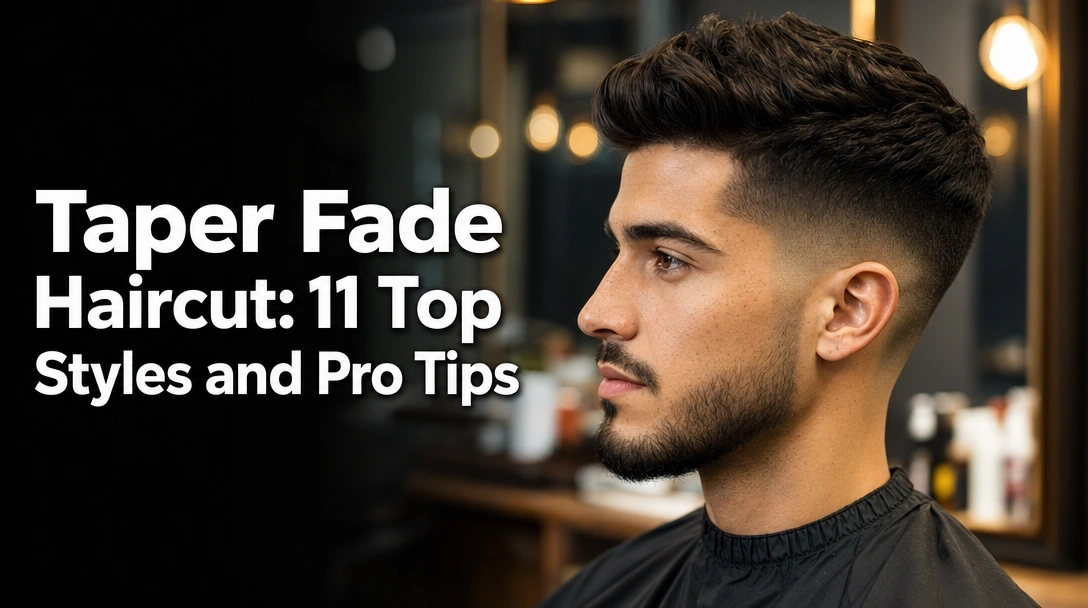
Tired of leaving the barbershop with a completely different style than you actually requested? Communicating exactly what you want is the biggest hurdle to getting a flawless taper fade haircut.
Taper fade haircut: A precision men’s grooming style that gradually blends the hair down to the skin exclusively at the temples and the nape of the neck. Unlike a standard fade, a taper leaves longer hair behind the ears, creating a clean, tailored silhouette with natural contrast.
Drawing from comprehensive analysis of current data and proven professional master barber methodologies, we break down exactly how this foundational cut works. You will discover the exact guard measurements and anatomical reference points needed to master this style. This guide equips you to finally achieve your ideal look.
What Is A Taper Fade Haircut? The Ultimate Guide and Fade Comparison for 2026
What is a taper fade haircut? As established, it is a precision men’s grooming style that gradually blends the hair down to the skin exclusively at the temples and the nape of the neck. Most men confuse the classic taper vs fade, leading to disastrous barbershop visits. A true taper graduates length from crown to neckline while specifically preserving bulk behind the ear. This foundational grooming style blends seamlessly into facial hair while maintaining a conservative, versatile silhouette. By understanding anatomical landmarks like the parietal ridge and occipital bone, you can communicate exactly where the skin-tight sections should end. Let’s look at the industry standard guard measurement chart concepts to clarify the physical mechanics.
| Feature | Taper Fade Haircut | Standard Fade |
|---|---|---|
| Placement Zone | Temples (sideburns) and nape only | Wraps entirely around the sides and back |
| Behind the Ear | Leaves longer hair/bulk behind the ear | Blended down to skin behind the ear |
| Face Shape Compatibility | Adds width; flatters narrow or long faces | Slims the face; flatters rounder faces |
| Maintenance Level | High frequency (edges grow back fast) | Medium frequency |
| Styling Silhouette | Traditional, natural, and highly tailored | High-contrast, aggressive, and uniform |
11 Top Taper Fade Haircut Styles and Pro Barber Tips
What are the best taper fade haircut styles for modern men? The most requested variations combine tight side blending with highly textured tops to flatter specific face shapes and hair types. Mastering the modern taper fade requires understanding how different techniques—like the low taper fade or mid taper fade—interact with your unique bone structure. Whether you are rocking thick curls, straight hair, or a receding hairline, executing these cuts perfectly relies on professional sanitation and clipper care alongside precise guard transitions. The following step by step tutorial gallery bridges visual inspiration with hands-on cutting methodology. You will learn the exact clipper guard sizes and geometric principles required to execute or request these 11 elite variations for 2026.
1. Execute the Classic Low Taper Fade

Save this classic low taper look to your Men’s Grooming board for your next barbershop visit!
The low taper fade haircut is the most conservative and office-friendly option available. Knowing exactly how to ask your barber for a low taper fade ensures you preserve hair density around the ears while keeping the neckline ultra-clean. This variation keeps the fade line extremely tight to the earlobe and the lowest part of the nape. Implementing salon tested clipper techniques, such as zero gap clipper blade calibration, ensures the bottom line remains razor-sharp without sacrificing the surrounding bulk.
Products & Tools Used
- Professional cordless adjustable clippers (e.g., Wahl Magic Clip for smooth blending)
- Standard clipper guard sizes (1/16″ to 1/2″ guards)
- Neck duster brush for clearing loose hairs during the fade
- Light holding cream or pomade for men to style the top naturally
Barbering & Styling Steps
- Debulk the sides using a #2 guard to create a clean canvas before fading.
- Set the baseline guideline at the bottom of the sideburns and the lowest point of the nape.
- Open and close clipper lever incrementally, working upward a quarter-inch at a time to erase the harsh skin line.
- Blend out the harsh line using the 1/16″ (half guard) to marry the skin section to the #1 guard length.
- Edge up the hairline behind the ear with precision trimmers to contrast the faded areas.
Pro-Tip: When executing a low taper, the temporal bone fade reference point is your maximum height limit. Pushing the clipper work higher than the temporal peak risks transforming the cut into a mid-fade and ruining the heavy silhouette behind the ear.

2. Style the Clean Mid Taper Fade

Pin this perfectly balanced mid taper fade to inspire your next haircut transformation!
The mid taper is universally considered the golden standard because it helps balance wide jawline with mid taper proportions. By utilizing precise face shape geometric analysis, master barbers place the fade line + debulking zone perfectly at the temple peak. This creates natural symmetry and flawlessly manages the transition zone around the ears without creating a disjointed look. You effectively taper the neckline halfway up the occipital bone, striking a perfect balance between modern edge and classic volume.
Products & Tools Used
- T-blade detail trimmers for sharp temple angles
- Hair clipper + guard number set specifically using the 1.5 and 0.5 premium guards
- Soft-bristle barber neck duster brush to visualize the blend accurately
- Medium-hold styling paste to provide controlled texture on top
Barbering & Styling Steps
- Fade the temple area starting parallel to the eyebrow arch for proper mid-height placement.
- Transition through guard sizes zero to two up the nape, stopping two inches below the occipital bone.
- Cross check graduation in the mirror to ensure the left and right temple tapers are perfectly symmetrical.
- Connect beard to sideburns by fading downward from the temple baseline into the top of the facial hair.
- Apply matte clay for texture on the top canopy, distributing evenly from back to front.
Pro-Tip: Utilizing the c-stroke clipper blending motion is critical during a mid taper. Flicking the clipper teeth outward as you reach the bulk prevents you from accidentally carving into the parietal ridge transition zone.

3. Master the Sharp High Taper Fade

Save this high-contrast high taper fade for a sharp, modern barber aesthetic!
For a more aggressive visual style, the high taper fade haircut removes the most weight from the sides while pushing the skin fade + graduation line near the crown. Many men wonder about the taper fade vs high skin fade; the high taper still leaves a sliver of dark hair behind the ear, preventing the military-style baldness of a full high fade. This style utilizes the occipital bone placement line as the upper boundary and requires you to clean up stubble with foil shaver techniques for an incredibly sharp finish.
Products & Tools Used
- Titanium foil shaver for ultra-close skin finishing
- Taper blade vs fade blade (Fade blade preferred for tight skin-to-zero transitions)
- Pre-shave skin prep or talc powder to prevent irritation
- Line up edge up trimmer for sharp frontal hairlines
Barbering & Styling Steps
- Set the baseline guideline high up on the temples, almost aligning with the corner of the front hairline.
- Clean up stubble with foil shaver, working against the grain up to the bald guideline to ensure zero shadow.
- Soften harsh skin fade transition by tapping the line lightly with a closed trimmer before using clipper guards.
- Blend out the harsh line using the 1.5 guard aggressively up into the parietal ridge transition zone.
- Maintain taper fade between cuts by brushing the top hair forward to conceal early side growth.
Pro-Tip: The secret to a flawless high taper is the foil shaver skin tapering method. Never push the foil shaver directly up to your bald guideline; always flick down and away a quarter-inch below the line to prevent a permanent ridge.


4. Create the Textured Fringe Taper Fade

Pin this textured fringe taper fade—the most requested modern men’s hairstyle of the year!
The textured fringe taper fade pairs a messy, forward-swept top with incredibly crisp sides. A low taper fade haircut with textured fringe complements textured crop and fringe hairstyles heavily relying on premium cosmetic products like sea salt spray and matte styling clay to activate the motion. To achieve this look, a barber must vigorously texturize the top with shears. It demonstrates a deep professional cosmetic understanding of hair weight manipulation through point cutting top texture creation and slithering and notch texturizing techniques.
Products & Tools Used
- Texturizing thinning shears (for barbers) or point-cutting scissors
- High-quality sea salt spray to activate natural waves and volume
- Matte styling clay for a pliable, low-shine finish
- Wide-tooth texture comb or styling pick
Barbering & Styling Steps
- Texturize the top with shears using deep point cutting to remove bulk and create piece-y separation.
- Section damp hair on crown and spray 4-5 pumps of sea salt spray directly into the roots.
- Blow dry hair with round brush, directing the airflow forward toward the forehead to force the hair down into a fringe.
- Disguise receding temples with fringe taper by allowing the textured bangs to fall naturally over the corners of the forehead.
- Apply matte clay for texture by warming a dime-sized amount in your palms and scrunching it into the ends of the fringe.
Pro-Tip: True piece-y texture isn’t just about product; it requires weight line removal technique. Ask your barber to use the slide-cutting method on the top canopy to create varying lengths that lock together when you apply sea salt spray.

5. Perfect the Curly Hair Taper Fade

Save this flawless curly taper fade to your style inspiration board to show your barber!
Often regarded as the best taper fade haircut for black men curly hair or men with heavy waves, this style helps you effortlessly control unruly curly hair on sides. The curly top + taper fade combination effectively debulks dense hair without losing silhouette length, which enhances natural curl pattern definition. A master barber understands hair porosity and moisture retention, recognizing that cross section hair cuticle behavior dictates how clippers move through thick coils without snagging or creating a puffy “mushroom” silhouette above the ear.
Products & Tools Used
- Wide-tooth detangling comb for curl separation
- Leave-in curl enhancing cream or smoothie (e.g., Shea Moisture or Cantu)
- Diffuser attachment for your blow dryer
- Nourishing argan or jojoba hair oil to seal the cuticle
Barbering & Styling Steps
- Control unruly curly hair on sides by having the barber taper the temples high enough to remove the ‘mushrooming’ bulk.
- Apply matte clay for texture? No—swap clay for a hydrating curl cream, applying it to soaking wet hair.
- Blow dry hair with round brush? No—attach a diffuser and hover it over the curls on low heat to prevent frizz.
- Scrape or comb out the curls gently with a wide-tooth comb only; never use a fine-tooth comb on dry curls.
- Line up edge up the hairline crisply to create a sharp geometric frame that contrasts the wild curls on top.
Pro-Tip: Curly hair experiences significant “shrinkage.” A master barber understands hair follicle density mapping and will cut your curls dry, or account for at least an inch of shrinkage if cutting wet, to ensure the top silhouette remains proportional to the tight taper.

6. Rock the Viral Edgar Taper Fade

Pin the sharpest Edgar Taper Fade look to your trending hairstyles board!
The viral edgar taper fade brings modern geometry to a classic bowl-cut lineage. By opting for an edgar haircut with low taper fade in the back instead of a high skin fade, the style becomes significantly more wearable and flattering. The edgar cut + low taper relies heavily on a blunt, razor-sharp frontal line up edge up while utilizing a taper to soften the sides. Executing this requires mastery of precision clipper graduation and negative space hairline architecture to ensure the heavy top overhangs the fade flawlessly.
Products & Tools Used
- T-Outliner trimmers for creating the blunt fringe baseline
- Strong-hold matte styling paste or putty
- Fine-tooth carbon comb for laying the front hair flat
- Strong hold finishing hairspray to lock the fringe in place
Barbering & Styling Steps
- Section damp hair on crown, brushing the entire front section of hair straight down over the forehead.
- Edge up the hairline straight across the forehead to create the signature blunt, horizontal Edgar fringe.
- Fade the temple area using a mid or low taper to create separation between the heavy top and the sideburns.
- Apply matte clay for texture or a strong paste, combing it flat down against the scalp.
- Cross check graduation on the sides to ensure the heavy weight line of the Edgar bowl seamlessly overhangs the tapered temple.
Pro-Tip: The Edgar requires flawless negative space hairline architecture. A master barber will analyze your natural front cowlicks before cutting the blunt fringe; if you have a strong widow’s peak, the fringe line must be cut slightly lower to compensate for hair bounce.

7. Bold Burst Taper Fade Mullet

Save this modern Burst Fade Mullet to your edgy hair inspiration board!
The burst taper fade haircut curves in a semi-circle over the ear, making it the foundational cutting technique for a burst fade mullet. Many men searching for a modern mullet with taper fade sides for men need to understand the taper fade vs burst fade distinction: a burst specifically drops the fade behind the ear rather than wrapping around the nape. The mullet + taper fade specifically targets the sideburn blend, leaving the neckline taper long and flowing, requiring advanced drop curve angle calculation to execute perfectly.
Products & Tools Used
- Curved detail trimmers for shaping around the ear
- Hair clipper lever open closed functionality for tight circular blending
- Volumizing hair texture powder for the top and back
- Round brush for blow-drying the mullet flow
Barbering & Styling Steps
- Set the baseline guideline in a semi-circle arching directly over and behind the ear, leaving the nape completely untouched.
- Blend out the harsh line by fanning the clippers outward as you trace the curve of the ear.
- Texturize the top with shears, adding choppy layers to ensure the hair flows backward naturally.
- Apply matte clay for texture or sprinkle volumizing powder heavily into the roots of the mullet tail.
- Maintain taper fade between cuts strictly around the ears while allowing the back to continuously grow.
Pro-Tip: The success of a burst taper relies entirely on the drop curve angle calculation. If the barber drops the arc too far back behind the ear, it encroaches on the occipital bone, thinning out the mullet tail and ruining the iconic front-to-back contrast.

8. The Seamless Drop Taper Fade

Pin this ultra-clean Drop Taper Fade to your barber guide board!
The drop taper fade haircut distinguishes from traditional all-around skin fades by purposefully dipping low behind the ear. When asking what is the difference between a drop fade and taper fade, remember that the drop taper connects the temple fade + neck taper with a swooping arch. Knowing the taper fade vs drop fade nuances allows you to effectively sculpt the neckline into a v shape. This style demands superior barbering graduation principles to stretch the transition zone smoothly across a curved axis.
Products & Tools Used
- Cordless clippers with click-lever adjustments for precise blending
- Professional barber shears texturizing scissors to soften the weight line
- Handheld mirror to cross-check the drop symmetry from the back
- Styling pomade for a slick, gentleman’s finish
Barbering & Styling Steps
- Set the baseline guideline starting at the mid-temple, dropping it steeply behind the ear, and finishing low at the nape.
- Blend out the harsh line by adjusting the clipper angle to parallel the swooping drop-line, never cutting straight up horizontally.
- Sculpt the neckline into a v shape or a smooth U-shape, depending on the natural hairline growth at the nape.
- Soften harsh skin fade transition behind the ear using shear-over-comb techniques to preserve the dark weight line above the drop.
- Cross check graduation heavily, as the drop fade is notoriously difficult to keep symmetrical on both sides of the head.
Pro-Tip: The mastery of a drop taper fade lies in the shear over comb graduation. Because the head curves severely behind the ear, relying solely on clipper guards often leaves a dark, heavy ridge. Shear-over-comb allows the barber to manually sculpt the swooping weight line to match your specific skull shape.

9. Master the Taper Fade with Beard Blend

Save this flawless taper-to-beard fade transition for your groom goals board!
A seamless taper fade with beard is the mark of an elite groomer. Learning how to blend a taper fade into a beard connects sideburns to groomed beard lines, ensuring your top haircut blends seamlessly into facial hair. The taper fade + beard blend treats the sideburn as a two-way fade zone: fading up into the temple and down into the beard cheekline. Professional master barber advice strongly recommends keeping the bald beard fade connection gap extremely small to avoid visually lengthening the face disproportionately.
Products & Tools Used
- Precision T-blade trimmers for outlining the beard cheeks and neck
- Hair trimmer detailing tool for fading the sideburns
- High-quality beard oil to soften coarse facial hair
- Boar bristle beard brush to train hair growth downward
Barbering & Styling Steps
- Set the baseline guideline exactly at the middle of the ear level, creating a bald gap between the head hair and beard.
- Fade the temple area moving upward into the top hair using your standard guards (0.5 to 1.5).
- Connect beard to sideburns by flipping the clippers upside down and fading downward into the beard bulk using a 1-guard.
- Line up edge up the cheek line and the neck line under the jaw to frame the faded sideburns perfectly.
- Apply matte clay for texture on top, and massage two drops of beard oil into the facial hair to complete the look.
Pro-Tip: If you suffer from a taper fade for patchy beard connection, do not bring the bald fade line too low. Keep the skin-tight section strictly at the top of the ear to preserve as much density as possible where your beard naturally thins out near the cheekbones.

10. The Sharp High Top Afro Taper Fade

Pin this ultra-sharp Afro Taper Fade to your natural hair inspiration board!
A high top afro taper fade haircut with line up provides striking geometric balance. The afro + taper fade creates clean contrast along the hairline perimeter, establishing a boxed, vertical silhouette. Mastering this taper fade haircut black barbershop staple requires addressing hair texture type 4c carefully. Proper afro hair sponge twist care manages the top texture, while precision trimmers define the sharp edges. Furthermore, using foil shavers carefully is vital for preventing razor bumps and ingrown hairs during the skin-tight fade process.
Products & Tools Used
- Heavy-duty balding clippers to debulk dense coils
- Hair texture type 4c curl sponge or tennis racket comb
- Styling gel or holding spritz for edge-ups
- Razor bump prevention serum or aftershave
Barbering & Styling Steps
- Debulk the sides with the grain before attempting to fade against the grain to prevent pulling the hair.
- Fade the temple area keeping the gradient incredibly tight and low to preserve the boxy, vertical silhouette of the high top.
- Edge up the hairline utilizing a holding spritz first to lock the hair fibers in place for a razor-sharp, white-ash line.
- Clean up stubble with foil shaver carefully, avoiding excessive pressure on the neck to prevent razor bumps.
- Section damp hair on crown and apply a leave-in conditioner, then use a curl sponge in small, circular motions to twist the top.
Pro-Tip: When executing a taper on Type 4 coily hair, bulk removal without scalp exposure is the primary goal before fading. Always use a pick to lift the hair off the scalp before debulking; clipper teeth easily snag tightly coiled hair if it is matted to the head.

11. Refine the Straight Hair Taper Fade

Pin this clean, corporate-ready Straight Hair Taper to your style guides!
Many ask, can you get a taper fade with straight hair? Yes, the straight hair taper fade creates a classic gentleman’s cut with taper. However, a taper fade for stubborn straight hair sticking out requires heavy straight hair + texturizing interventions. Straight hair resists bending to the skull’s curvature, necessitating the precise weight line removal technique. By mastering the scissor taper vs clipper fade finish, barbers ensure the hair transitions through guard sizes zero to two without creating a lateral shelf ledge.
Products & Tools Used
- Fine-tooth styling comb for slicking back
- Water-based pomade for men (medium hold, medium shine)
- Barber shears texturizing tools to thin out the side bulk
- Round brush and blow dryer with a nozzle concentrator
Barbering & Styling Steps
- Debulk the sides carefully using clipper-over-comb rather than strictly guards to prevent creating a harsh “shelf” ledge.
- Blend out the harsh line using precise half-guard increments, as fade lines are incredibly visible and unforgiving on straight, dark hair.
- Texturize the top with shears, removing 20% of the bulk from the parietal ridge so the side hair naturally lays flat.
- Blow dry hair with round brush, directing the airflow backward while lifting at the roots to create a classic pompadour or slick-back volume.
- Apply matte clay for texture? No—for this classic look, work a dime-sized scoop of water-based pomade evenly from roots to tips, combing it flat.
Pro-Tip: If you struggle with taper fade for stubborn straight hair sticking out, never ask for a high taper. Straight hair requires weight (length) to lay flat. Keep the taper exceptionally low and ask the barber to use thinning shears heavily on the transition zone so the hair collapses smoothly against your skull.

Key Takeaways: Your Quick Guide to the Taper Fade Haircut
What are the most important things to know about the taper fade haircut overview? Before you sit in the barber chair, it is critical to lock down the key points that dictate the success of this style. Whether you want a regular taper fade haircut for the office or an aggressive burst fade for the weekend, the underlying geometry remains the same. Understanding how this taper fade cut interacts with your unique face shape, hair texture, and styling routine will save you from a bad experience. A master cut requires exact communication regarding guard sizes, face shapes, and maintenance schedules.
Key Takeaways:
- It is Only Faded in Two Zones: Unlike a traditional skin fade that wraps around the entire head, a true taper fade haircut only blends hair down to the skin at the sideburns (temples) and the nape of the neck, leaving bulk behind the ears.
- Height Controls Face Shape: A low taper fade adds width to narrow faces by preserving side bulk, while a high taper fade slims round faces by removing weight up to the parietal ridge.
- Master the Taper vs Fade Distinction: The single biggest mistake at the barbershop is confusing the terms; always specify “taper” if you want to keep the dark silhouette behind your ear.
- Curly Hair Shrinkage Must Be Calculated: When getting a curly hair taper fade, ensure your barber accounts for up to an inch of vertical shrinkage to prevent the dreaded “mushroom” silhouette.
- Maintenance is High Frequency: Because tapers cover a tiny surface area (temples and nape), regrowth is visible within 7 to 10 days; expect a touch-up visit every two weeks to keep the clean neckline taper sharp.
- Straight Hair Requires Bulk Removal: To prevent stubborn straight hair sticking out above the taper line, barbers must utilize shear over comb graduation to remove weight, forcing the hair to lay flat against the skull.
FAQs About Taper Fade Haircuts
Do you still have questions about taper fade haircut styles and maintenance? You are not alone. When deciding how to transform your look, navigating barbering terminology can feel like learning a foreign language. Knowing exactly how to ask for a taper fade haircut at the barbershop is the difference between leaving with confidence and wearing a hat for three weeks. From understanding the differences in fading techniques to figuring out how long does a taper fade haircut last, we have compiled the most common queries directly from the barber chair to ensure your next cut is flawless.
What is the difference between a taper and a fade?
The primary difference is where the hair is blended: a fade wraps entirely around the head, while a taper is localized only to the sideburns and the nape of the neck. A fade removes all the hair behind your ear, creating a uniform line around the skull. A taper fade leaves a dark arch of hair behind the ear, preserving the natural silhouette of the haircut while keeping the edges clean.
How do I ask for a taper fade haircut at the barbershop?
Tell your barber the exact height of the taper (low, mid, or high) and what clipper guard size you want it blended down to (e.g., skin/bald or a #1 guard). Bring a reference photo that matches your specific hair texture. Explicitly state, “I want to keep the bulk behind my ears” to ensure they don’t accidentally give you a traditional wrap-around fade.
How long does a taper fade haircut last?
A taper fade typically lasts 2 to 3 weeks before it looks unkempt and requires a touch-up. Because the faded areas at the temples and nape are so small and blend down to the skin, even a few millimeters of stubble growth breaks the flawless gradient. Maintaining the look requires frequent, quick barber visits specifically for edge-ups.
Is a low taper fade good for curly hair?
Yes, a low taper fade is arguably the best haircut for curly hair because it removes the messy, frizzy edges while highlighting the natural volume on top. It eliminates the “mushroom” effect that occurs when thick curls grow outward over the ears, reigning in the silhouette while allowing you to showcase heavy curl definition on the crown.
Can you get a taper fade with straight hair?
Absolutely, though straight hair requires a lower taper height and heavy texturizing to prevent the sides from sticking straight out. Straight hair doesn’t naturally curve to the shape of the head. Your barber must use thinning shears at the transition zone to remove weight, ensuring the top hair lays flat and smoothly covers the tapered undercut.
What is a blowout taper fade haircut?
A blowout taper fade is a styling variation where the hair is blow-dried upward and outward to create massive volume, paired with tightly faded sideburns and neckline. Popularized in the 2000s and recently revived, the contrast between the exploded, airy volume on top and the skin-tight taper on the edges creates a dramatic, high-energy aesthetic.
How do you blend a taper fade into a beard?
A barber blends a taper fade into a beard by fading downward from the middle of the ear into the facial hair. The sideburn area is taken completely bald to disconnect the head hair from the beard. The barber then uses a #1 or #2 guard, flipping the clippers upside down, to graduate the length back into the thickest part of the beard on the cheekline.
Is a taper fade haircut professional for work?
Yes, a low or mid taper fade is widely considered highly professional and appropriate for traditional corporate environments. Because a taper leaves hair behind the ear and maintains a conservative overall silhouette, it looks much more traditional and refined than a severe, high-and-tight skin fade, making it the perfect gentleman’s cut.
How does a taper fade look from the back?
From the back, a taper fade looks like a neat, rounded or V-shaped gradient at the very bottom of the neck that seamlessly fades into the skin. The hair at the crown and the back of the head remains dark and full, curving cleanly over the occipital bone before gradually disappearing at the shirt collar line.
How to fix a bad taper fade haircut?
To fix a bad taper fade, your barber will either have to raise the taper line higher to erase the mistake, or convert it into a full wrap-around fade. If the blend line is harsh and choppy, a skilled barber can use a 0.5 guard to soften the transition. However, if the taper was pushed too high into the parietal ridge, you must simply let it grow out for three weeks before reshaping.
Final Thoughts
The taper fade haircut has cemented its place as the undisputed king of modern men’s grooming. Its brilliance lies entirely in its versatility. Whether you are rocking dense 4C afro coils, a messy textured fringe, or a slicked-back corporate gentleman’s cut, seamlessly fading the sideburns and neckline instantly elevates the entire silhouette from messy to masterfully tailored.
By understanding the distinct difference between a taper and a standard fade, you are now equipped to navigate the barber chair with confidence. Remember that the height of your taper—low, mid, or high—will dramatically alter your face shape. When in doubt, start with a conservative low taper; you can always ask your barber to take it higher, but you can never put the hair back once it’s gone.
The secret to a flawless style isn’t just the clipper work; it’s the daily men’s grooming routine and choosing the right hair styling product to activate your specific texture. Armed with this guide, your reference photos, and the exact terminology needed, your next haircut is guaranteed to be your best one yet.
Which of these 11 taper fade styles are you showing your barber at your next appointment? Drop a comment below and let us know your favorite variation!
Last update on 2026-04-27 / Affiliate links / Images from Amazon Product Advertising API