
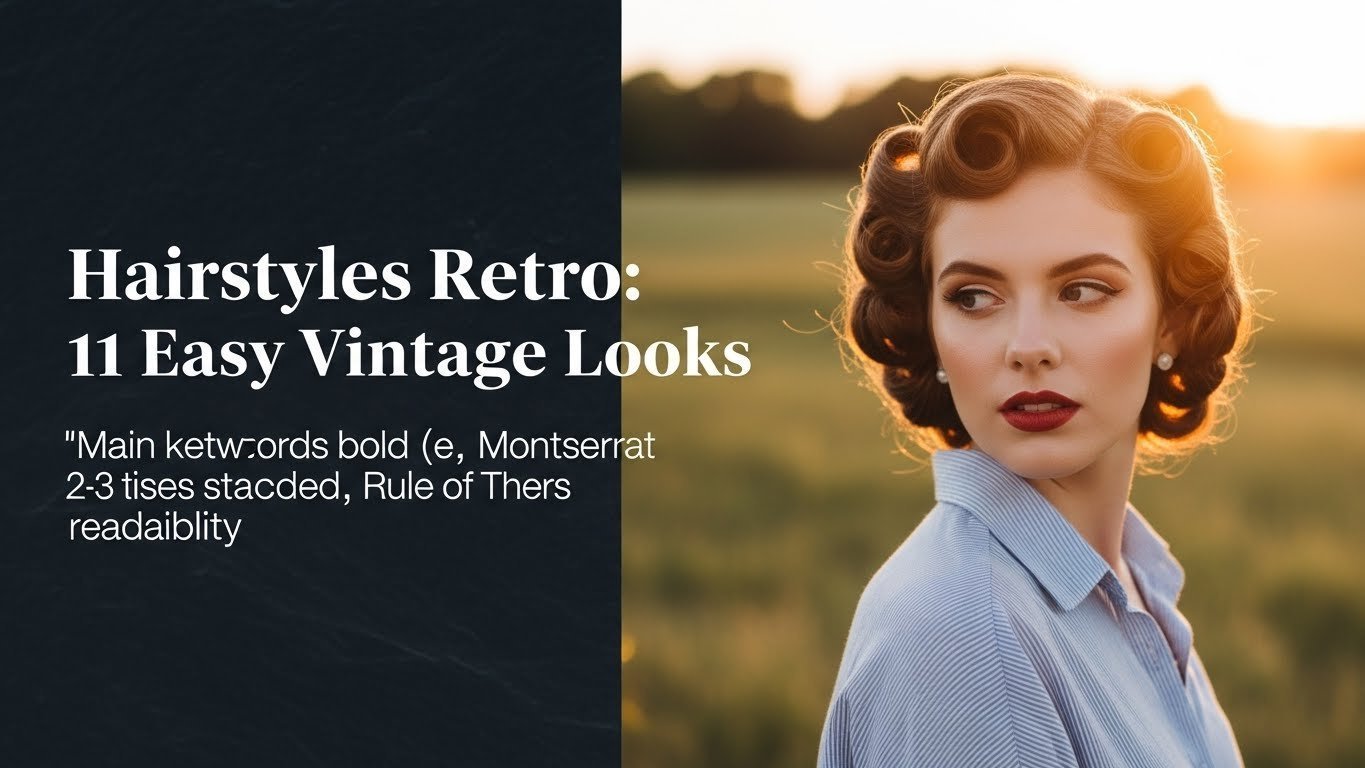
Ever wonder why the glamour of the past feels so much more polished than today’s messy buns? You aren’t alone; many beauty enthusiasts struggle to recreate retro hairstyles without them looking like a costume or feeling impossible to execute. Whether you are chasing the structured elegance of vintage hairstyles or the carefree vibe of the 70s, mastering these looks solves the dilemma of finding a sophisticated style that stands out in 2026.
Retro hairstyles: Classic hair looks inspired by specific historical periods, typically from the 1920s to the 1980s, characterized by distinct styling techniques like waves, curls, and updos that evoke nostalgia and glamour. These styles are making a massive comeback in 2026 due to their timeless elegance and versatility for various occasions, offering a polished alternative to modern trends.
Drawing from comprehensive analysis of historical trends and proven retro styling methods, this guide bridges the gap between eras for the modern stylist. You will discover 11 achievable styles, complete with specific tool recommendations and expert techniques tailored for today. Get ready to transform your look and master the art of classic hairstyles with confidence and ease.
Unlock Timeless Style: Master Retro Hairstyles for 2026
Entering the world of retro hair is about more than just copying a photograph; it is about understanding the architecture of style that defined generations. When we talk about retro hairstyles, we are referring to a broad spectrum of aesthetics, from the structured victory rolls of the 1940s to the free-spirited disco waves of the 1970s. While vintage hairstyles often refer strictly to the authentic recreation of older styles, “retro” allows for a modern reinterpretation, blending retro look nostalgia with contemporary wearability.
In 2026, the demand for easy vintage looks has surged as people seek to add a touch of intentional glamour to their daily lives. However, the techniques required—like pin curling, finger waving, and backcombing—can seem daunting to the uninitiated. This guide is designed to demystify these classic hairstyles. By breaking down complex methods into actionable steps, we bridge the gap between high-maintenance historical accuracy and modern convenience. Whether you are looking to create retro hairstyles for a special event or simply want to elevate your everyday aesthetic, understanding the relationship between tools, products, and technique is your first step toward retro styling mastery.
11 Easy Vintage Looks to Master for 2026
Ready to transform your look? The following collection of easy retro hairstyles has been curated to offer something for every hair type and length. From the precision of short retro hairstyles to the flowing volume of long retro hairstyles, these tutorials are designed to be practical and achievable. We move beyond simple inspiration to provide detailed vintage hair tutorials that focus on the “how” and “why” of each style.
Success with DIY retro hairstyles often comes down to preparation and product choice. Before diving into these 11 looks, understand that retro updo hairstyles and glamorous retro hair often require a different approach than modern wash-and-go styles. You will be using techniques like setting patterns and strategic backcombing to create the foundation for styles like the beehive or victory rolls tutorial. We have also included specific guidance on retro hair accessories to complement your classic vintage hair. Each section below is structured to give you exactly what you need and a clear path to execution, ensuring you can do a pin up curl or master pin curl hairstyles with the skill of a professional.
1. Master Classic Pin-Up Curls (1950s Glam)

Pin this glamorous **pin-up curl tutorial to your vintage beauty board!**
Classic pin-up curls define the quintessence of 1950s glam hair, offering a bounce and structure that modern curling often misses. To create retro hairstyle magic here, you aren’t just curling; you are setting the hair. This distinction is vital for achieving bouncy retro curls that last all day. The process utilizes pin curl techniques adapted for heated tools to save time while maintaining the authentic look.
What You Need
- Heat protectant spray for curling hair retro
- 1-inch barrel curling iron or hot rollers (medium size for defined curls)
- Duckbill clips or roller clips to secure sections
- Strong-hold setting lotion or styling mousse (essential for vintage hair won’t hold solutions)
- Fine-tooth comb for sectioning
- Strong-hold hairspray (flexible finish)
- Soft bristle brush for smoothing
How To Style
- Prepare Hair: Apply heat protectant to dry hair. Section your hair horizontally from ear to ear, then divide it into 1-inch vertical sections.
- Curl & Set: Curl each section away from your face with the curling iron, or use hot rollers for bouncy retro curls. For each curl, immediately roll it back up to your scalp and secure it with a duckbill clip or roller clip while still hot.
- Cool & Release: Allow curls to cool completely (at least 20-30 minutes, or longer for maximum hold) to set retro hair.
- Brush Out: Gently remove clips. Tilt your head back and use a soft bristle brush to lightly brush through the curls, shaping them into a unified wave.
- Define & Finish: Use a fine-tooth comb to gently define the top layer of curls and create a subtle wave. Finish with a generous mist of strong-hold hairspray to secure retro hairstyle.
Pro-Tip: For truly long-lasting classic vintage hair, ensure each curl cools entirely before touching. The cooling process locks the curl pattern in place, making your pin-up curls hold for hours, a proven retro styling method for durability.

2. Craft Glamorous Victory Rolls (1940s Icon)

Pin this iconic **victory rolls tutorial to your vintage hair board for special occasions!**
Glamorous victory rolls are perhaps the most recognizable of 1940s iconic hairstyles, serving as a symbol of elegance and resilience. To make victory rolls successfully, you must master the art of structural backcombing. This victory rolls tutorial focuses on how to create volume that defies gravity, transforming the front sections of your hair into sculptural art pieces often seen in retro updo hairstyles.
What You Need
- Heat protectant spray
- Teasing comb for create volume
- Strong-hold hairspray
- Bobby pins (small and large)
- Flat iron or curling iron (optional, for soft waves in the back)
- Hair elastic (optional, for securing back section)
How To Style
- Prepare Hair: Start with dry hair. Optionally, create soft waves in the length for added texture. Part your hair to the side you prefer.
- Sectioning for Rolls: Create a triangular section of hair at the front of your head, from your part down to your temple, and extending back a few inches. Repeat on the other side for two rolls.
- Tease for Volume: Take one section, hold it straight up, and thoroughly backcomb the roots using a teasing comb to tease hair for volume. Smooth the top layer over the teased section.
- Form the Roll: Holding the smoothed section, gently roll the hair inward towards your scalp, creating a hollow tube or victory rolls. Position the roll where you want it and secure it firmly with bobby pins underneath.
- Repeat & Secure: Repeat steps 3 and 4 for the second section. Ensure both rolls are symmetrical and well-anchored.
- Finish: Liberally spray with strong-hold hairspray to secure retro hairstyle and tame any flyaways.
Pro-Tip: Achieving perfect glamorous victory rolls requires a solid base. Don’t be afraid to backcomb generously; that’s where your roll’s create volume and hold truly come from. This expert retro hairstylist tips will solve most instances of vintage hair won’t hold.

3. Achieve Elegant Finger Waves (1920s/30s Icon)

Pin this elegant **finger waves tutorial for a true gatsby hairstyle flair!**
Few styles demand as much technique as elegant finger waves, the hallmark of the flapper bob and 1920s/30s iconic hairstyles. Unlike soft curls, finger waves demand precision and wet setting to create that unmistakable glossy, S-shaped ridge. Whether you are aiming for a full gatsby hairstyle or just accenting the hairline, learning to achieve finger waves is the ultimate test of vintage styling skill.
What You Need
- Fine-tooth comb (metal is often preferred for precision)
- Strong-hold setting lotion or styling gel (essential for finger waves demand precision)
- Duckbill clips or specialized finger wave clips (at least 20-30)
- Hairnet (optional, for drying)
- Strong-hold hairspray
How To Style
- Prepare Hair: Start with damp hair (or spray dry hair until evenly damp, but not soaking wet). Apply a generous amount of strong-hold setting lotion or gel evenly through the section of hair you wish to wave.
- Create the First Ridge: Using a fine-tooth comb, create a deep side part. Place the comb horizontally about an inch from the part. Press down firmly with your index finger just above the comb. Push the comb about half an inch forward, then press your middle finger against the hair to hold the new curve.
- Form the Wave: Without releasing your fingers, use the comb to create the opposite curve. Bring the comb down about an inch, push it back towards your first finger, and again secure with your ring finger. This forms an S-shape.
- Clip & Repeat: Secure each ridge with a duckbill clip, making sure not to distort the wave. Repeat the process, creating parallel waves down the side of your head.
- Dry & Finish: Allow your hair to air dry completely (this can take several hours) or use a hooded dryer on low heat. Once dry, gently remove the clips and finish with a mist of strong-hold hairspray to achieve finger waves that last.
Pro-Tip: For truly crisp and lasting elegant finger waves, use a metal fine-tooth comb as it provides better tension and definition. Remember that finger waves demand precision; patience during the drying process is key to preventing the waves from falling flat, a critical proven retro styling method for authenticity.

4. Sculpt a Voluminous Beehive Updo (1960s Charm)

Pin this iconic **beehive updo to your retro hair inspiration board!**
The voluminous beehive updo defines 1960s charm hair, representing the era’s obsession with height and drama. This retro updo hairstyle relies entirely on your ability to form a beehive through aggressive but careful backcombing. While modern styles often shy away from teasing, beehive styles add height precisely by using techniques to tease hair for volume, creating a stable cushion that the smooth top layers rest upon.
What You Need
- Volumizing mousse or root-lifting spray
- Sectioning clips
- Teasing comb or brush
- Smooth-bristle brush for finishing
- Strong-hold hairspray
- Bobby pins (lots!)
- Hair elastic (optional, for base ponytail)
How To Style
- Prepare Hair: Start with dry hair. Apply volumizing mousse to the roots of the crown section. Part hair horizontally from ear to ear, creating a top section.
- Section & Tease: Take the top section and divide it into smaller, horizontal subsections. Hold each subsection straight up and backcomb thoroughly at the roots towards the scalp using a teasing comb to tease hair for volume. Continue until the entire top section is heavily backcombed and voluminous.
- Smooth & Shape: Gently smooth the top layer of the backcombed section with a soft-bristle brush, without flattening the volume underneath. Shape this voluminous hair into your desired beehive form at the crown, ensuring it’s round and even.
- Secure the Beehive: Carefully roll the ends of the voluminous section under and towards your scalp, securing the beehive shape firmly with bobby pins hidden at the base.
- Side & Back Hair: Either smoothly pin the side sections back around the beehive, incorporating them, or gather all remaining hair (sides and back) into a low ponytail or bun, then pin it neatly under the beehive.
- Finish: Liberally mist with strong-hold hairspray to form a beehive that holds its shape. Smooth any flyaways.
Pro-Tip: The secret to a long-lasting voluminous beehive updo is layering your backcombing. Build volume in small sections, spraying each layer with hairspray before moving to the next. This advanced pin curl setting technique (applied to teasing) ensures maximum height and hold, preventing flat hair retro volume issues.
5. Style a Sleek Retro Bob (20s/60s Inspired)

Pin this polished **retro bob look for everyday elegance!**
The sleek retro bob is a versatile chameleon of vintage coiffure, straddling the line between 1920s fashion and 1960s glam. Whether you opt for a retro bob with bangs or a sharp side part, the goal is always to shape retro bob lines that frame the face perfectly. The defining characteristic here is the smooth retro finish—a glass-like shine and inward curve that creates a silhouette of pure classic vintage hair.
What You Need
- Heat protectant spray
- Smoothing serum or lightweight hair oil (for achieving smooth retro finish)
- Flat iron or large barrel curling iron (for subtle inward curl)
- Fine-tooth comb
- Round brush (for blow-drying)
- Strong-hold hairspray (optional)
How To Style
- Prepare Hair: Start with clean, dry hair. Apply heat protectant spray evenly. If blow-drying, use a round brush to create a smooth, slightly inward curl at the ends.
- Section & Straighten/Curl: Part your hair as desired (deep side part or blunt bangs). Section your hair horizontally. Using a flat iron, straighten each section from root to mid-shaft. For the ends, either gently curl them inward with the flat iron or use a large barrel curling iron for a subtle, rounded shape.
- Smooth & Polish: Apply a small amount of smoothing serum or hair oil to your palms and lightly run it over your hair to achieving smooth retro finish and add shine.
- Shape Bob: Use a fine-tooth comb to neatly shape the front and sides, ensuring clean lines. If you have bangs, style them smoothly.
- Finish: Lightly mist with strong-hold hairspray if extra hold is needed for your sleek retro bob.
Pro-Tip: For a truly sleek retro bob, invest in a quality flat iron with even heat distribution. And never skip the heat protectant! This expert retro hairstylist tips will help you achieve a polished look while preventing damage, a crucial step for styling retro hair quickly and safely.

6. Create Boho Disco Waves (1970s Revival)

Pin these **boho disco waves for your next groovy party look!**
If your soul belongs on the dance floor, boho disco waves are your ultimate 1970s revival hair. This style moves away from the rigid structures of previous decades, embracing voluminous retro hair that feels free and wild. Perfect for those with long retro hairstyles or seeking curly retro hairstyles, this look demands that you curl hair retro style—big, loose, and full of texture. It is the go-to retro look for a party or festival in 2026.
What You Need
- Volumizing mousse or root spray
- Heat protectant spray
- Large barrel curling iron (1.5-2 inches) or large hot rollers
- Wide-tooth comb or paddle brush
- Texturizing spray or dry shampoo for volume
- Strong-hold flexible hairspray
- Hair clips for sectioning
How To Style
- Prepare Hair: Apply volumizing mousse to damp roots and heat protectant spray to dry hair. Blow-dry hair completely, focusing on lifting roots for volume. Create a deep side part.
- Section & Curl: Section hair horizontally. Take 1-2 inch sections and wrap them around the large barrel curling iron, holding for 10-15 seconds. Release the curl into your hand and gently pin it to your scalp to cool. Alternatively, use large hot rollers.
- Cool & Release: Allow all curls to cool completely. Gently remove the pins or rollers.
- Brush Out & Volumize: Lightly brush through the curls with a wide-tooth comb or paddle brush to combine them into soft, boho disco waves. Flip your head upside down and spray texturizing spray at the roots and through the lengths.
- Shape & Finish: Flip your head back up, gently shape retro bob (if applicable) and define your waves with your fingers. Finish with a flexible strong-hold hairspray to keep the voluminous retro hair in place.
Pro-Tip: For authentic boho disco waves that last all night, don’t skimp on the cooling time. Letting the curls set while pinned ensures maximum longevity and bounce. Also, using a texturizing spray at the roots before brushing will give you that quintessential 70s glam volume and preventing retro hair falling flat.

7. Achieve Dramatic Side Swept Waves (Old Hollywood)

Pin this elegant **Old Hollywood wave tutorial for your next red-carpet event!**
When you want to create a glamorous retro look, nothing competes with dramatic side swept waves. This style epitomizes Old Hollywood glam hair, using uniform curl patterns to create a seamless, liquid-like surface. It is the gold standard for retro wedding hairstyles and long retro hairstyles tutorial searches. The key to smooth retro waves lies in brushing out the curls correctly to merge them into a single, cohesive unit rather than individual ringlets.
What You Need
- Heat protectant spray
- Strong-hold styling mousse
- Medium to large barrel curling iron (1-1.5 inches)
- Duckbill clips or metal setting clips
- Soft paddle brush or wide-tooth comb
- Shine spray or serum
- Strong-hold hairspray
How To Style
- Prepare Hair: Start with dry hair. Apply styling mousse for hold and heat protectant spray. Create a deep side part.
- Section & Curl: Section hair horizontally. Take 1-inch sections and curl them all in the same direction (e.g., away from your face for the side where the hair sweeps, and towards your face for the other side). For each curl, immediately roll it up to your scalp and secure it with a duckbill clip to set.
- Cool & Release: Allow curls to cool completely for at least 30-60 minutes. Gently remove all clips.
- Brush & Shape: Use a soft paddle brush or wide-tooth comb to slowly and carefully brush out all the curls, allowing them to meld into one continuous, dramatic side swept waves pattern.
- Define & Secure: Use your fingers to further define the wave patterns. On the side with less hair, smooth it back behind your ear and secure with bobby pins if needed. Spritz with shine spray and finish with a strong-hold hairspray to secure retro hairstyle.
Pro-Tip: For truly dramatic side swept waves, ensure all your curls are set in the same direction before brushing. This uniformity allows them to ‘marry’ together into fluid, Old Hollywood glam waves. A light mist of shine spray will give that iconic glossy finish that truly completes the look and provides an authentic vintage look.

8. Accessorize with Chic Headscarf Styles (1950s/60s Inspired)

Pin these versatile **headscarf styles for instant retro charm!**
Sometimes, the best retro hairstyle isn’t about the hair at all, but the accessories. Chic headscarf styles are essential retro hair accessories that instantly evoke 50s and 60s hair vibes. Whether you are having a bad hair day or just need a pop of color, knowing how to do retro hair with a scarf allows you to create retro hairstyle magic in minutes. These headscarf styles perfectly complement retro outfits and offer a practical solution for securing hair in style.
What You Need
- A square or rectangular silk, cotton, or chiffon headscarf (approx. 20-30 inches square)
- Bobby pins (optional, for securing)
- Hair elastic (optional, for base bun/ponytail)
How To Style
- Prep Your Hair: Your hair can be styled in a low ponytail, a messy bun, soft waves, or simply worn down. The scarf can enhance almost any base style.
- Fold the Scarf (Bandana Style): Lay the square scarf flat and fold it diagonally to create a triangle.
- Position & Tie (Front Knot): Place the longest edge of the triangle across your forehead, with the point of the triangle facing the back. Bring the two ends up to meet at the top of your head, tie a double knot, and tuck the point underneath the knot.
- Position & Tie (Underneath Knot): Alternatively, place the center of the longest edge at the nape of your neck, bringing the ends up over your ears and tying them in a knot or bow at the top of your head.
- Roll & Tie (Turban Style): Fold the scarf into a long, thin band. Place the middle of the band at the nape of your neck, bring the ends forward, cross them at your forehead, and then wrap them back around to tie at the nape.
- Secure: Use bobby pins discreetly to secure the scarf to your hair, especially if you have slick or fine hair, to secure retro hairstyle.
Pro-Tip: When choosing a retro hair accessory like a headscarf, opt for silk or cotton blends; they are gentler on the hair and less prone to slipping than synthetic materials. This stylist-approved retro product choice ensures comfort and lasting style, solving the problem of vintage hair won’t hold in terms of accessories.

9. Adapt the Playful Poodle Cut (1950s Inspired Short Hair)

Pin this cute **poodle cut inspired look for fun, short hair ideas!**
Who says short hair can’t be vintage? The playful poodle cut is a quintessential example of 1950s short hair, designed to maximize texture and bounce. This style is perfect for curly retro hairstyles and offers a fantastic retro look for thin hair because the tight curls create volume naturally. Learning to do retro hair on short hair often involves tighter curling patterns to mimic the structured, permed look of the era.
What You Need
- Curl-defining mousse or cream
- Heat protectant spray
- Small-barrel curling iron (0.5-0.75 inches) or small hot rollers
- Duckbill clips
- Fine-tooth comb
- Strong-hold hairspray
- Teasing comb (optional, for extra volume)
How To Style
- Prepare Hair: Apply curl-defining mousse to damp hair and blow-dry using a diffuser to enhance natural curls, or blow-dry straight for styling. Apply heat protectant.
- Section & Curl: Section your short hair into small (1-inch) sections. Using a small curling iron or hot rollers, curl each section tightly. Pin each curl to your scalp as you go and allow them to cool completely.
- Cool & Release: Once cooled, gently remove the clips or rollers.
- Shape & Volumize: Using your fingers, gently separate the curls to create a voluminous, rounded shape at the crown and sides, mimicking the playful poodle cut. If needed, gently backcomb a few sections at the crown with a teasing comb for extra lift to achieve retro look for thin hair.
- Define & Finish: Use a fine-tooth comb to neatly sculpt the front pieces or bangs. Spritz generously with strong-hold hairspray to secure retro hairstyle.
Pro-Tip: For short hair, precision with your curls is key to achieving a defined playful poodle cut. Don’t be afraid to use plenty of clips to set each curl until it’s completely cold. This proven retro styling methods will give your short retro hairstyles the lasting bounce and volume it needs.

10. Sculpt a Textured Rockabilly Pompadour (50s Edge)

Pin this edgy **rockabilly hair tutorial for a bold retro statement!**
For those who want a retro hairstyle with grit, the textured rockabilly pompadour is the answer. Combining 50s edge hair with modern texture, this style is adaptable for both women and men seeking retro hairstyles for men short hair. It is often compared to pin up hairstyles but features a more aggressive lift and roll at the front. The goal is to create volume that sweeps backward, defining the rockabilly hair silhouette.
What You Need
- Volumizing mousse or root spray
- Heat protectant spray (if blow-drying)
- Blow dryer
- Round brush or vent brush
- Teasing comb
- Strong-hold pomade (water-based for easier wash-out)
- Strong-hold hairspray
- Bobby pins (optional, for longer hair)
How To Style
- Prepare Hair: Start with damp hair. Apply volumizing mousse to the roots of the front section. Blow-dry the front section upwards and backwards using a round or vent brush to create initial lift and volume.
- Section & Tease: Isolate the top front section of your hair (from temples to crown). Take horizontal subsections and thoroughly backcomb the roots using a teasing comb to tease hair for volume.
- Smooth & Shape: Gently smooth the top layer of the backcombed section with your fingers or a brush, being careful not to flatten the volume. Roll the smoothed section back and up, creating the pompadour shape.
- Apply Pomade & Secure: Apply a dime-sized amount of strong-hold pomade to your palms, warm it up, and gently smooth over the sides and back of your hair, slicking them down. Use bobby pins to secure the pompadour base if needed for longer hair.
- Refine & Finish: Use your fingers to refine the shape and texture of the pompadour. Finish with a liberal mist of strong-hold hairspray to secure retro hairstyle.
Pro-Tip: The key to a long-lasting textured rockabilly pompadour is a combination of thorough backcombing and the right pomade. Use a water-based pomade for flexible hold and easy restyling, as recommended by expert retro hairstylist tips. This prevents vintage hair won’t hold issues and maintains the iconic 50s edge hair.

11. Recreate the Sophisticated Gibson Tuck (Edwardian Era)

Pin this timeless **Gibson tuck tutorial for effortless elegance!**
The sophisticated Gibson tuck is a serene masterpiece of Edwardian era hairstyles, proving that vintage updos enhance elegance without needing excessive complexity. It is a deceptively simple retro updo hairstyle that involves rolling the hair into itself at the nape. Known as Gibson girl hair, it works beautifully for long retro hairstyles tutorial seekers who want a refined, low-maintenance look. It is the ultimate vintage coiffure for creating an air of quiet sophistication.
What You Need
- Hair elastic (for a low ponytail)
- Bobby pins (numerous)
- U-pins (optional, for extra security)
- Hair styling sponge or bun maker (optional, for extra volume and shape)
- Texturizing spray or dry shampoo (for grip)
- Strong-hold hairspray
- Fine-tooth comb or teasing comb (optional, for smoothing or light teasing)
How To Style
- Prepare Hair: Start with dry hair. Apply texturizing spray for grip. Gently brush all your hair back and down, gathering it into a low ponytail at the nape of your neck (but don’t secure with an elastic yet).
- Create the Loop: Place your thumb and index finger just above where you’d typically tie a low ponytail. Gather all your hair in this hand. With your other hand, start to twist the hair upwards from the ends, creating a gentle roll towards your head.
- Form the Tuck: Once the twisted hair forms a neat roll or “tuck” against your scalp, use your fingers to create an opening above it (where your initial thumb and index finger were). Gently pull the entire rolled section through this opening, tucking it upwards and inwards, concealing the ends.
- Secure the Tuck: Use bobby pins liberally along the edges of the tuck, securing it firmly to your scalp. Use U-pins to anchor the entire roll. Ensure no ends are poking out.
- Volumize (Optional): For added volume or if using a styling sponge, place the sponge at the nape and roll your hair over it before tucking. Gently pull small sections of hair from the crown to create soft volume if desired.
- Finish: Liberally mist with strong-hold hairspray to secure retro hairstyle and smooth any flyaways for your sophisticated Gibson tuck.
Pro-Tip: For a perfect sophisticated Gibson tuck, ensure your hair has enough grip. A texturizing spray before you start can make a huge difference, especially if your hair is very fine or silky. This expert analysis retro hair trends indicates a move towards softer, more achievable vintage updos, making the Gibson tuck ideal for long retro hairstyles tutorial.

Key Takeaways: Your Quick Guide to Retro Hairstyles
Now that you have explored these iconic looks, keep these core principles in mind to ensure your vintage hair journey is a success. These takeaways distill the most critical aspects of creating retro hairstyle magic so you can style with confidence.
- The foundation for successful **retro hairstyles lies in proper preparation and setting techniques, ensuring your vintage hair won’t hold issues are a thing of the past.** Apply heat protectants, volumizing mousse, and ample setting time for bouncy retro curls and lasting hold.
- Volume and definition are paramount for authentic **retro looks, whether it’s a voluminous beehive updo or glamorous victory rolls. Master the art of backcombing to tease hair for volume and use the right tools like teasing combs and large barrel curling irons.
- Specificity in product choice is crucial for **mastering vintage hair techniques; choose strong-hold yet flexible formulas.** Stylist-approved retro products like setting lotions for finger waves or specific pomades for a rockabilly pompadour can make all the difference in achieving an authentic vintage look.
- Accessories like **retro hair accessories such as headscarves offer quick and easy retro hairstyles transformations without extensive styling.** Explore chic headscarf styles to effortlessly complement your chosen retro aesthetic hair and solve the problem of styling retro hair quickly.
- Patience and practice are essential, especially for **complex retro updo structures like elegant finger waves and structured rolls.** Embrace the learning process; each attempt builds skill, ensuring you achieve finger waves or form a beehive with increasing ease and precision.
FAQs About Retro Hairstyles
How to do retro hairstyles easily for beginners?
Start with simpler looks like soft pin-up curls or headscarf styles, focusing on mastering basic curling and pinning techniques before attempting more intricate updos. Use a good heat protectant and quality setting spray, and practice sectioning for cleaner results, making the process of create retro hairstyle less daunting.
What is the difference between retro and vintage hairstyles?
While often used interchangeably, “vintage” typically refers to styles from specific past eras (e.g., 1920s-1960s), emphasizing authenticity, whereas “retro” encompasses styles inspired by or imitating past trends, often with a modern twist, reflecting a **retro hair periodization rather than strict historical adherence.**
Can you do retro hair on short hair?
Absolutely! Many **retro hairstyles are perfect for shorter hair, including sleek finger waves, the playful poodle cut, or incorporating headbands and scarves into bobs and pixie cuts.** These looks are excellent for short retro hairstyles and demonstrating versatility.
What products do I need for vintage hair that won’t fall flat?
Essential products include strong-hold setting lotions, volumizing mousses or sprays, quality heat protectants, and reliable hairspray to ensure your **vintage hair won’t hold issues are resolved.** Consider hair powder for added grip and volume, especially for flat hair retro volume solutions.
How do you make victory rolls that actually stay?
To ensure **victory rolls stay, thoroughly backcomb each section at the roots for maximum volume and grip, smooth the top layer, and secure the rolls firmly with plenty of bobby pins hidden at the base.** Finishing with a strong-hold hairspray is crucial for maintaining the 1940s iconic hairstyles.
What hairstyles were popular in the 60s besides the beehive?
Beyond the iconic **beehive hair, the 1960s also saw popularization of flipped-out ends, sleek bobs with blunt bangs, the voluminous bouffant, and various half-up styles, all contributing to 60s glam and distinct retro hair trends.
How can I achieve retro waves without heat?
You can create **retro waves without heat using techniques like wet setting with pin curls or foam rollers on damp hair, secured with setting lotion and allowed to air dry completely.** This method helps in achieving smooth retro finish and reducing damage, a smart solution for avoiding damage retro styling.
What are some easy retro hairstyles for long hair?
For **long retro hairstyles, consider soft, brushed-out waves (Old Hollywood glam), a voluminous high ponytail with a flipped end, or elegant side swept waves with a deep part, all easily adaptable for longer lengths.** Incorporating hair accessories can also create easy retro hairstyles for long hair tutorial.
What is the best way to maintain a retro hairstyle throughout the day?
To maintain a **retro hairstyle throughout the day, always finish with a strong-hold hairspray, carry a few extra bobby pins for touch-ups, and use a light shine spray to combat humidity and frizz.** Avoid touching your hair excessively, which can disrupt the style.
How can I choose a retro hairstyle that suits my face shape?
Consider styles that balance your features: round faces often benefit from height (like a beehive) or angularity (like a sleek bob), while long faces might prefer width (like softer waves or a wide headscarf). Experimentation and consulting a stylist can help you find a retro hairstyle suits my face shape best.
Final Thoughts on Retro Hairstyles
Mastering retro hairstyles is more than just recreating a look; it’s about embracing a piece of history and infusing your personal style with timeless glamour. From the intricate finger waves of the 1920s to the bold victory rolls of the 1940s and the voluminous beehive hair of the 1960s, each style tells a story and offers a unique aesthetic. We’ve equipped you with 11 easy vintage looks and the step-by-step guidance, product recommendations, and expert tips to ensure your efforts result in stunning, long-lasting retro-inspired hairstyles that solve common retro hair styling challenges.
By focusing on proper preparation, using the right retro hair products, and practicing the techniques outlined, you can confidently create retro hairstyle that truly stands out. These looks not only elevate your aesthetic but also demonstrate your dedication to artistry and detail. Whether you’re aiming for everyday elegance or a show-stopping special occasion, the world of vintage hairstyles offers endless possibilities to express yourself. Go forth and transform your hair into a magnificent homage to the past, making a stylish statement in 2026.
Which of these hairstyles retro are you most excited to try first, and what era of vintage glam resonates most with your personal style?
Last update on 2026-03-11 / Affiliate links / Images from Amazon Product Advertising API


