
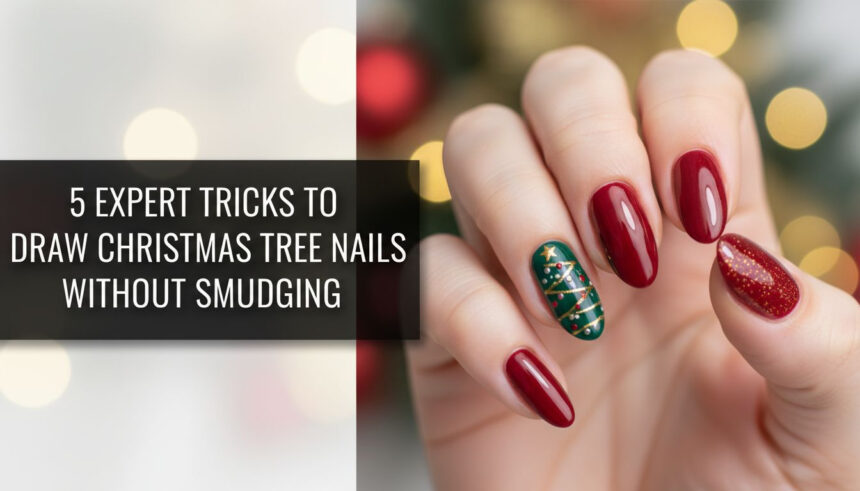
Struggling to paint a festive manicure that doesn’t look like a smudged green blob? You spend so much time trying to get those delicate lines just right, only to have them wobble or smear. It’s frustrating when your holiday nail design ends up looking more messy than magical.
Christmas Tree Nail Design is a seasonal, hand-painted nail art technique that uses fine brushes and layered polish to create a festive tree motif. Achieving a clean, smudge-free result hinges on mastering polish consistency, brush control, and a specific top coat application method that protects your delicate work.
Drawing from proven professional manicurist techniques, this guide breaks down the secrets to flawless holiday nail art. You’ll discover five expert tricks to fix wobbly lines and prevent smudging for good. Get ready to create salon-quality festive nails right at home.
Are Shaky Hands Ruining Your Christmas Tree Nails? Master Smudge-Free Detailing
There’s nothing more defeating than spending an hour on a detailed Christmas tree nail design, only to have a shaky hand create a wobbly trunk or a misplaced top coat smear your masterpiece. This common frustration is the number one reason DIY holiday nail art fails. It’s not a lack of artistic talent; it’s a lack of technique. The difference between a messy attempt and a crisp, festive manicure lies in understanding how professionals control every variable—from the viscosity of the nail polish to the stability of their drawing hand. These five expert tricks address the root causes of smudging and wobbly lines, providing actionable solutions based on professional nail artist tips. By focusing on brush control, polish chemistry, and proper sealing, you can achieve a durable, smudge-free holiday nail design that looks like it was done in a salon.
5 Expert Tricks to Draw Christmas Tree Nails Without Smudging
Ready to move beyond the frustration and master this festive look? This guide provides a step-by-step Christmas nail tutorial built on five professional secrets. We’ll cover everything from preparing your nail polish for razor-sharp lines to the final sealing method that locks in your design without a single smudge. Whether you’re using traditional lacquer or durable gel polish, these vetted techniques are your key to achieving a chip-free, elegant tree manicure that lasts through the holiday season.
1. Calibrating Perfect Polish Viscosity with Thinner

Pin this genius hack to your ‘Flawless Nail Art’ board!
The most common reason for thick, dragging lines is the polish itself. If your green polish is too thick, it’s impossible to create delicate branches. Calibrating the optimal polish viscosity is the foundational step for achieving clean lines in your nail art. A professional polish thinner transforms goopy, unworkable polish into a liquid with an ink-like consistency that flows effortlessly from a fine, synthetic striper brush.
Products & Tools Used:
- Professional Polish Thinner (must be thinner, not remover—check ingredients for ethyl acetate/butyl acetate blend)
- Highly Pigmented Green Polish (choose an opaque emerald or forest shade)
- Fine-Tipped Synthetic Striper Brush (size 00 recommended)
- Clean mixing palette (foil, ceramic tile, or glass)
Application/Styling Steps:
- Test the Viscosity: Dip your brush into the green polish and draw a line on your testing palette; if the line drags, clumps, or is too thick, it needs thinning.
- Add Thinner Sparingly: Apply one single drop of polish thinner directly into the polish bottle or onto the palette (mixing only the amount you need).
- Mix Slowly: Gently swirl the bottle or mix the drop on the palette using the striper brush to incorporate the thinner without creating air bubbles.
- Re-Test: The polish is ready when it flows smoothly and continuously off the brush tip, creating a razor-thin line that holds its shape without immediately pooling.
Pro-Tip: Never use acetone or polish remover to thin polish; these chemicals will break down the polish formula, leading to cracking, dullness, and poor adhesion. Use only dedicated polish thinner.

2. Utilizing the Anchoring Technique for Wobbly Line Fixes

Save this pro tip for steady, clean lines!
Even with perfect polish, shaky hands can ruin a design. The anchoring technique is a physical hack used by professional nail artists to create exceptional hand stability and eliminate tremors. By creating a stable pivot point, you gain precise brush control, allowing you to draw crisp, continuous lines without any wobbling.
Products & Tools Used:
- Detail Nail Art Brush (short, synthetic bristle, easier control than a long striper brush for beginners)
- Thinned Green Drawing Polish (calibrated from Trick 1)
- Flat, Stable Working Surface (essential for the anchor)
- Base Color Polish (fully dried or cured)
Application/Styling Steps:
- Find Your Anchor Point: Rest your elbow on the table and lightly press the pinky finger of your dominant (drawing) hand firmly against the flat table surface or against the non-dominant hand you are painting.
- Load the Brush Lightly: Only load the bottom third of your detail brush with polish; excessive polish will pool and flood your lines.
- Angle for Precision: Hold the brush at a consistent 45-degree angle to the nail surface, using minimal pressure—just the weight of the brush itself.
- Draw in One Motion: Starting at the center of the base of the tree (near the cuticle), draw the main vertical trunk line toward the tip in one continuous, controlled motion, allowing the anchor point to steady your movements.
Lesson Learned: If you can’t draw the line in one go, break it down into two smaller, anchored movements. Always use the pinky as a pivot point, never letting it lose contact with the stable surface.

3. The Minimalist Three-Stroke Squiggle Tree Method (Quick Win)

Get gorgeous holiday nails in under 5 minutes per finger! Save for later!
For those short on time or feeling anxious about perfection, the simple squiggle tree is the ultimate quick win. This minimalist tree design is the easiest Christmas tree nail art for beginners because it embraces imperfection. The three-stroke method delivers a festive, geometric look without the stress of creating perfectly straight lines or detailed branches.
Products & Tools Used:
- Opaque Green Polish (standard lacquer or gel)
- Gold or Silver Dotting Polish (metallic finish recommended)
- Small Dotting Tool (for ornaments) or a toothpick
- Base Color (nude or white base coat recommended)
Application/Styling Steps:
- Draw the Trunk: Using your fine striper brush (and the Anchoring Technique), draw a very short vertical line in the center of the nail, positioned closer to the tip.
- Apply the Bottom Branch: Start at the bottom of the trunk line and draw a short, slightly curved horizontal line extending outwards on both sides—this is the widest branch.
- Stack the Middle Branch: Above the first, draw a slightly shorter, slightly curved horizontal line. Ensure there is a small gap of the base color visible between the two lines.
- Finish the Top: Draw the shortest line near the top, creating a distinct triangular silhouette with three visible layers.
- Add Ornaments (Optional): Dip your dotting tool into the metallic polish and place small, even dots between the green lines. Finish with a single dot at the very tip for the star.
Pro-Tip: If using lacquer, allow the green paint to air dry for 3 minutes before applying the ornament dots. If using gel, flash cure the green lines (10 seconds) before adding the dots.

4. Smudge-Proofing Your Art: The “Float the Top Coat” Strategy

Stop smudging your hard work! Save this technique!
This is the most critical step for preventing smudge nail art. A quick-dry top coat contains strong solvents that can reactivate and drag the underlying polish, causing bleeding. The “float the top coat” technique is a professional method to seal nail art designs by applying a thick layer of top coat that flows over the art instead of being brushed on it.
Products & Tools Used:
- Quick-Dry Top Coat (preferably one with a medium-thin viscosity)
- Completed Christmas Tree Nail Art (fully dry or cured)
- Clean Brush (the brush must be perfectly clean before starting)
Application/Styling Steps:
- Wait Until Art is Cured/Dry: This step is non-negotiable. If using lacquer, wait at least 15-20 minutes after completing the art. If using gel, fully cure (30-60 seconds) or flash cure the art.
- Load the Brush Heavily: Pull the top coat brush out of the bottle, wiping only one side on the neck, leaving a large, thick bead of polish on the clean side.
- Position the Bead: Gently set the bead of top coat polish onto the nail surface just above the design, near the cuticle area.
- Float Over the Art: Using minimal pressure, swiftly guide the large bead down the nail, allowing the polish itself to roll and flow over the underlying design. The brush bristles should not touch the art directly, avoiding reactivation and dragging.
- Seal the Free Edge: After floating the polish over the nail plate, use the brush to quickly swipe the top coat horizontally across the very tip (free edge) of the nail for maximum durability.
Pro-Tip: If using a quick-dry top coat, work fast, as the strong solvent can begin to dissolve the underlying design quickly. If you must use two strokes, make the first stroke clean and the second stroke quick and light.

5. Gel Polish vs. Lacquer: Choosing the Right Medium for Durability

Use gel for 3-week holiday durability! Save this guide!
The choice between gel polish and regular polish (lacquer) directly impacts the longevity and precision of your Christmas tree nails. Gel offers unparalleled durability and control, while lacquer provides flexibility and easier removal. Understanding the UV/LED curing protocols for gel is key to leveraging its benefits for intricate designs.
Products & Tools Used:
- For Gel: Gel Base Coat, Gel Color Polish (Green/Gold), Gel Top Coat (No-Wipe recommended), UV/LED Curing Lamp
- For Lacquer: Standard Lacquer Base Coat, Color Polish, Quick-Dry Lacquer Top Coat
- Acetone (for lacquer clean-up) or 91% Isopropyl Alcohol (for gel inhibition layer removal)
Application/Styling Steps:
- Determine Longevity Need: If you need the design to last 2-3 weeks, choose gel polish; if you only need 3-7 days, standard lacquer is sufficient.
- Base Layer Application: Apply and fully cure (for gel) or fully dry (for lacquer) the base coat, which is critical for adherence and protecting the nail plate from highly pigmented colors.
- Art Application: Draw the Christmas tree design using your chosen medium and technique (Tricks 1, 2, 3).
- Curing Protocol (Gel Only): After drawing each layer of the tree, flash cure (10-15 seconds) the design to stabilize it before proceeding to the next layer or adding ornaments. Fully cure the final top coat (60-120 seconds).
- Air Drying (Lacquer Only): Apply the final top coat using the Float Technique and allow 1-2 hours of gentle activity time for the lacquer to harden fully, or use the ice water trick for faster surface hardening.
Lesson Learned: Gel polish offers superior precision for fine lines because it won’t dry until cured, allowing unlimited time for cleanup. However, it requires a lamp and a slightly more involved removal process.

Key Takeaways: Your Quick Guide to Smudge-Free Festive Nails
5 Essential Secrets for Perfect Christmas Tree Nail Art:
- Viscosity Control: Always thin your drawing polish using a dedicated polish thinner (never acetone) to achieve an ink-like consistency that flows smoothly, preventing bulky, dragging lines.
- Hand Anchoring: Use the Anchoring Technique (resting your pinky finger on the table) to stabilize your hand and eliminate wobbly, shaky lines, guaranteeing professional precision.
- Quick Wins: The Three-Stroke Squiggle Tree offers the fastest, most beginner-friendly result, requiring only minutes per nail and minimal artistic skill.
- Smudge Prevention: Utilize the “Float the Top Coat” Strategy—apply a large bead of top coat without letting the brush bristles touch the underlying art—to seal the design without reactivating the colors.
- Longevity: For maximum durability through the holiday season, choose gel polish and utilize flash curing between delicate art layers to stabilize the design before the final seal.
People Also Ask About Christmas Tree Nail Art
What is the easiest Christmas tree design for a complete beginner?
The Simple Squiggle Tree is unanimously the easiest design for beginners. This design requires only a single fine striper brush and opaque green polish, utilizing three slightly curved horizontal lines (decreasing in length) stacked on a short vertical line. The subtle curves are much more forgiving of shaky hands than attempting a geometrically perfect triangular shape.
Can I use acrylic paint instead of nail polish for the fine details?
Yes, using water-based acrylic craft paint is highly recommended for beginners’ micro-detailing. Acrylic paint dries almost instantly upon contact with the polish surface and will not reactivate or smear the underlying lacquer color coat. Ensure you seal the acrylic art completely with a strong, non-smear top coat for longevity, as the paint itself is not durable.
Why is my Christmas tree nail art peeling off so quickly?
Rapid peeling is usually caused by inadequate nail preparation or excessive thickness. Ensure you have properly dehydrated the nail plate (with rubbing alcohol or a dehydrator) before applying your base coat. Additionally, apply all color and art layers as thinly as possible. Thick, bulky polish layers do not adhere well to the nail and tend to peel off in sheets.
Final Thoughts
You now possess the five expert secrets necessary to transform your Christmas manicure from a smudged mess to a festive masterpiece this 2026 holiday season. By mastering polish viscosity and implementing the anchoring and floating techniques, you’ve gone beyond simple nail polish application and unlocked genuine nail art technique mastery. Don’t be afraid to try the different methods outlined—start simple, and build your skills over the March! Which of these five tricks are you most excited to try first? Share your results in the comments below
Last update on 2026-03-04 / Affiliate links / Images from Amazon Product Advertising API


