
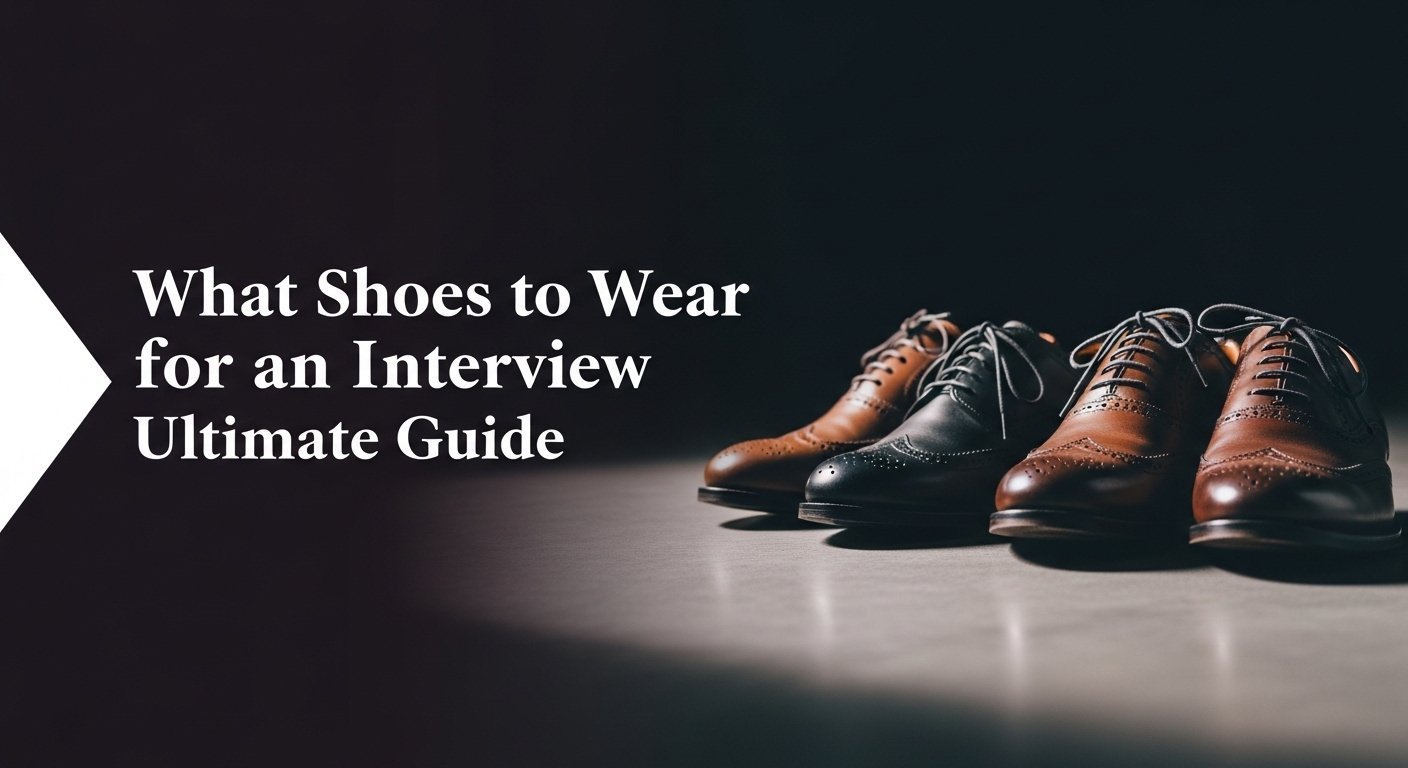
Wondering what shoes to wear for an interview? You’re not alone. Many job seekers worry that the wrong choice could undermine their entire professional image, creating unnecessary stress before the big day.
For a job interview, the best shoes are conservative, closed-toe, and in excellent condition. Opt for classic styles like leather loafers, oxfords, or low pumps in neutral colors such as black, brown, navy, or grey. Ensure they are polished and free of scuffs, as your footwear choice communicates professionalism and attention to detail.
Based on an analysis of current professional standards and recruiter tips, this guide provides clear rules for interview footwear. You’ll discover exactly how to select the right shoes based on gender, industry, and dress code, ensuring you make a powerful first impression.
Key Facts
- First Impressions Form Fast: Research indicates that interviewers form a significant part of their initial impression within the first few seconds, where your overall appearance, including your shoes, plays a critical role.
- Attention to Detail Signal: Hiring managers often view well-maintained, polished shoes as a proxy for a candidate’s attention to detail, suggesting a similar level of care will be applied to their work.
- Comfort Boosts Confidence: Studies on “enclothed cognition” suggest that what you wear affects how you think and feel. Comfortable shoes prevent distraction and allow you to walk and stand with more confidence.
- Formality Dictates Style: The most common mistake candidates make is misjudging the company’s dress code. A black leather Oxford is standard for a corporate law firm, while a loafer might be appropriate for a tech company, demonstrating the importance of context.
- The “Avoid” List is Universal: Regardless of the industry, certain footwear like sneakers, sandals, stilettos, and any worn-out or dirty shoes are almost universally considered inappropriate for an interview setting.
What Shoes Should You Wear for a Job Interview?
For a job interview, you should wear clean, polished, closed-toe shoes in a neutral color like black, brown, or navy. The style should match the formality of the company’s dress code, prioritizing professionalism and comfort over current fashion trends. Your footwear is a key piece of non-verbal communication that signals your attention to detail and respect for the opportunity.

Choosing what shoes to wear is a strategic part of your interview preparation. Long before you answer the first question, your attire has already started communicating for you. Career advice from top recruiters consistently emphasizes that while the right shoes may go unnoticed, the wrong shoes are always memorable—and for the wrong reasons. This guide offers expert help to ensure your footwear choice reinforces your professional image and helps you put your best foot forward.
Why Are Your Shoes So Important For a First Impression?
Your shoes are critical in an interview because they reflect your judgment and attention to detail. Hiring managers see well-maintained, appropriate footwear as a sign of professionalism and respect. This small detail contributes significantly to the overall first impression, suggesting you are a serious and prepared candidate who understands corporate etiquette.
This psychological impact is a powerful component of non-verbal communication. A candidate’s choice in footwear sends several key signals:
- Attention to Detail: Polished, scuff-free shoes suggest that you are meticulous and care about the small things. Recruiters may infer that this trait will carry over into your work.
- Respect for the Opportunity: Taking the time to choose appropriate footwear shows you take the interview seriously. It’s a non-verbal way of saying, “This opportunity is important to me.”
- Understanding of Corporate Culture: Your ability to match your shoe’s formality to the company’s dress code shows you’ve done your research and can fit into their environment.
- Preparedness: Clean and appropriate shoes are part of overall professional grooming. A polished appearance suggests you are prepared, organized, and ready for a professional role.
This phenomenon is sometimes linked to the “halo effect,” where an interviewer’s positive first impression of your appearance can positively influence their perception of your skills and qualifications. Don’t let a poor shoe choice create a negative impression before you even begin to speak.
What Are The Best Interview Shoes for Women?
For women, the best interview shoes include classic pumps with a low to medium heel (1-3 inches), structured loafers, and pointed-toe flats. Choose closed-toe styles in neutral leather or matte finishes. Black, navy, and beige are safe, professional color choices that work with most interview outfits. Avoid stilettos, platforms, and open-toed shoes. The goal is to look polished and professional while ensuring you can walk comfortably and confidently.
Should I Wear Heels or Flats to an Interview?
Both heels and flats can be appropriate for an interview; the choice depends on the company culture and your personal comfort. Low-to-mid heels (1-3 inches) are a classic, formal choice, while pointed-toe flats in a professional material are a modern, comfortable, and equally acceptable alternative. Our experience shows that walking confidently in flats makes a better impression than stumbling in uncomfortable heels.
Here is a breakdown to help you decide:
| Feature/Aspect | Classic Heels (1-3″ Block/Pump) | Professional Flats (Pointed-Toe/Loafer) |
|---|---|---|
| Professionalism | Traditionally viewed as more formal; excellent for corporate and legal fields. | Widely accepted as professional; perfect for modern offices, tech, and creative roles. |
| Comfort & Stability | Lower comfort for long periods; risk of stumbling if not accustomed to them. | High comfort and stability; allows for confident walking and standing. |
| Confidence Signal | Can provide a feeling of power and authority (“power dressing”). | Confidence comes from comfort and lack of distraction from foot pain. |
| Best For | Conservative industries, C-suite interviews, when paired with a formal suit. | Interviews requiring walking tours, long days, or in less formal industries. |

Are Ankle Boots Appropriate for an Interview?
Yes, you can wear ankle boots to an interview if they are styled correctly. Choose a sleek, polished leather boot with a low heel. They are best worn with trousers or slacks that cover the ankle, creating a seamless look. Avoid chunky, casual, or military-style boots. This choice is most suitable for business casual settings or during winter months.
Here are the simple do’s and don’ts for wearing ankle boots to an interview:
- DO choose a sleek, minimalist design in black or dark brown leather.
- DO opt for a low, sturdy block heel for stability and professionalism.
- DO wear them with full-length trousers or slacks that cover the top of the boot.
- DON’T wear chunky, casual, or weather-proof styles (e.g., hiking or snow boots).
- DON’T pair them with skirts or dresses in a formal interview setting.
- DON’T choose boots with excessive buckles, zippers, or embellishments.
What Are The Best Interview Shoes for Men?
For men, the best interview shoes are leather Oxfords or Derbies in black or dark brown. Black Oxfords are the most formal option, ideal for corporate interviews with a suit. Dark brown Derbies or leather loafers work well for business casual settings. Always ensure shoes are polished and paired with dress socks that match the color of your trousers.
In our experience, understanding the subtle differences between these classic styles demonstrates a higher level of professional polish. The key difference lies in the lacing system. Oxfords have a “closed lacing” system, where the quarters are sewn under the vamp, creating a sleeker, more formal look. Derbies have an “open lacing” system, with the quarters sewn on top, making them slightly more versatile and relaxed.
| Shoe Style | Formality Level | Lacing System | Best For |
|---|---|---|---|
| Oxford | High (Most Formal) | Closed Lacing | Corporate/Legal Interviews, with a Suit |
| Derby | Medium-High | Open Lacing | Most Business Interviews, with a Suit or Slacks |
| Loafer | Medium (Business Casual) | Slip-On | Tech/Creative/Casual Interviews, with Slacks/Chinos |
What Shoes Should You Absolutely Avoid for an Interview?
For any job interview, you should absolutely avoid wearing sneakers, sandals, flip-flops, stilettos, chunky platforms, worn-out or dirty shoes, and brightly colored footwear. These styles are considered too casual, unprofessional, or distracting and can signal a lack of seriousness and poor judgment to the interviewer. Following established etiquette rules is a simple way to show respect.
To avoid a critical error, steer clear of the following footwear:
- Sneakers and Athletic Shoes: These are too casual, signaling you didn’t put enough effort into your appearance.
- Sandals, Flip-Flops, or any Open-Toed Shoes: These are considered unprofessional and too informal for any interview setting.
- Stilettos or Very High Heels (over 4 inches): They can be seen as overly flashy and are often impractical and difficult to walk in confidently.
- Chunky Platform Shoes: These are too trendy and casual, detracting from a professional image.
- Worn-out, Scuffed, or Dirty Shoes: This is the most critical mistake. It signals a lack of attention to detail and personal care.
- Casual Boots (e.g., Uggs, Hiking Boots): These are inappropriate for a professional environment and should be saved for other occasions.
How Do You Choose Shoes Based on the Company Dress Code?
To choose interview shoes, first assess the company’s dress code, often categorized as Business Formal, Business Casual, or Casual. For Business Formal (e.g., law, finance), men should wear black Oxfords and women should wear low pumps. For Business Casual (most offices), loafers, derbies, and flats are appropriate. For creative or startup roles, a clean, premium leather sneaker may be acceptable, but only if you are certain of the culture.
Here’s how to tailor your choice to the environment:
Business Formal (Corporate/Law/Finance)
This is the most conservative dress code. Your shoe choice should be classic and understated.
- Men: Black leather Oxfords are the gold standard. Dark brown can be acceptable, but black is the safest, most formal choice.
- Women: A classic closed-toe pump in black or navy with a heel no higher than 3 inches is perfect.
Business Casual (Most Modern Offices/Tech)
This is the most common dress code and offers more flexibility, but still requires a professional look.
- Men: Dark brown or black leather Derbies or structured loafers are excellent choices.
- Women: Elegant flats, loafers, or block heels in neutral colors work well. This is where a sleek ankle boot worn with slacks can be appropriate.
Startup/Creative Casual
This category is the trickiest. While the day-to-day dress code might be very casual, you should always dress a step above for the interview.
- Men & Women: Clean, dark leather loafers are a safe bet. In some known-casual creative agencies or tech startups, a minimalist, dark, premium leather sneaker could be acceptable, but this is a risky move. When in doubt, opt for the more conservative loafer.
FAQs About what shoes to wear for an interview
What color shoes are best for an interview?
The safest and most professional shoe colors for an interview are black, dark brown, and navy. These neutral colors are versatile, do not draw excessive attention, and convey a sense of seriousness and authority. Black is the most formal choice, making it ideal for corporate settings, while dark brown and navy are excellent for business casual environments.
Can you wear boots to an interview in the winter?
Yes, you can wear boots to an interview in winter, provided they are the right style. Opt for sleek, polished leather ankle boots with a low heel, worn underneath trousers. Avoid heavy, clunky styles like snow boots, hiking boots, or casual boots like Uggs. The goal is to maintain a professional silhouette while accommodating for the weather.
What if I don’t own any dress shoes or heels?
If you don’t own traditional dress shoes, choose the most formal, clean, and conservative pair you have. For men, a simple, dark-colored leather loafer is a great alternative. For women, a simple, dark-colored flat is perfectly acceptable. The key is that the shoe must be closed-toe, in excellent condition, and understated. It’s better to wear a clean flat than a scuffed heel.
How important is it that my shoes are polished?
Extremely important. Polished shoes signal attention to detail, preparedness, and respect for the interviewer and the company. Scuffed, dirty, or unkempt shoes can be interpreted as a sign of laziness or a lack of seriousness. Taking 5 minutes to clean and polish your shoes is one of the easiest ways to make a positive first impression.
Should my shoes match my belt or handbag?
Traditionally, it is recommended for men to match their shoe color to their belt (e.g., black shoes with a black belt). For women, matching shoes to a handbag is a classic touch but is no longer a strict rule. The more important principle is to ensure all your accessories are in harmony and contribute to a cohesive, professional look.
Is it okay to wear new shoes to an interview?
It is generally not recommended to wear brand-new, unbroken-in shoes to an interview. New shoes can cause discomfort or blisters, which can be a painful distraction. If you must wear new shoes, be sure to wear them around the house for several days beforehand to break them in and ensure you can walk confidently and comfortably.
What kind of socks or hosiery should I wear?
For men, you should wear dark-colored dress socks (calf-length) that match the color of your trousers, not your shoes. For women, if wearing a skirt or dress, neutral-colored or sheer black hosiery is the most professional choice. In many modern offices, bare legs are also acceptable if the dress code is more casual. Avoid patterned or brightly colored socks and hosiery.
Are patent leather shoes too flashy for an interview?
Patent leather can be appropriate, but it depends on the shoe and the industry. A classic black patent leather pump for women can look very sharp and professional in a corporate setting. However, an entire patent leather shoe for men might be seen as too flashy for a conservative interview. When in doubt, a matte leather finish is always a safer choice.
What shoes should I wear to a retail or fast-food interview?
For a retail or fast-food interview, the dress code is often more relaxed, but you should still look neat and professional. A comfortable, clean, and simple shoe is best. Men could wear dark-colored casual loafers or a clean derby-style shoe. Women could wear comfortable flats or loafers. Avoid sneakers and sandals unless specifically told otherwise.
Do I need to wear expensive brand-name shoes?
No, the brand of the shoe is far less important than its condition and style. A clean, polished, and appropriate style from an affordable brand will always make a better impression than a scuffed, worn-out luxury shoe. Focus on finding a shoe that fits the criteria of being closed-toe, neutral-colored, and in excellent condition, regardless of the price tag.
Key Takeaways: What Shoes to Wear for an Interview Summary
- Prioritize Professionalism Over Trends: The best interview shoes are always classic, conservative, and closed-toe. Styles like leather Oxfords for men and low pumps or flats for women are timelessly appropriate.
- Condition is Non-Negotiable: A clean, polished, and scuff-free shoe is critical. It signals attention to detail and respect for the interview process, regardless of the shoe’s price or brand.
- Context is King: Always match your footwear to the company’s dress code. Black Oxfords are perfect for a formal law firm, while clean loafers are better suited for a business casual tech company.
- Comfort Creates Confidence: Choose shoes you can walk and stand in comfortably. Fidgeting or stumbling due to painful shoes can be a major distraction and undermine your confidence.
- When in Doubt, Go Dark and Neutral: Black, dark brown, and navy are the safest and most professional color choices. They are versatile and project an image of seriousness and authority.
- Know What to Avoid: Absolutely no sneakers, sandals, stilettos, platforms, or any shoe that is worn-out or dirty. Avoiding a poor choice is just as important as making a good one.
- Gender-Specific Rules Apply: For men, Oxfords and Derbies are top choices, with socks matching the trousers. For women, low heels (1-3 inches) and elegant flats are equally professional options.
Final Thoughts on What Shoes to Wear for an Interview
Choosing what shoes to wear for an interview is more than a fashion choice; it’s a strategic decision that completes your professional presentation. By adhering to the principles of professionalism, condition, and context, you eliminate a source of anxiety and take control of your first impression. Your footwear is the foundation of your interview outfit. By ensuring it is polished, appropriate, and comfortable, you build a foundation of confidence that allows your skills and personality to shine through. Now you can walk into your next interview knowing you are putting your absolute best foot forward.
Last update on 2026-03-01 / Affiliate links / Images from Amazon Product Advertising API


