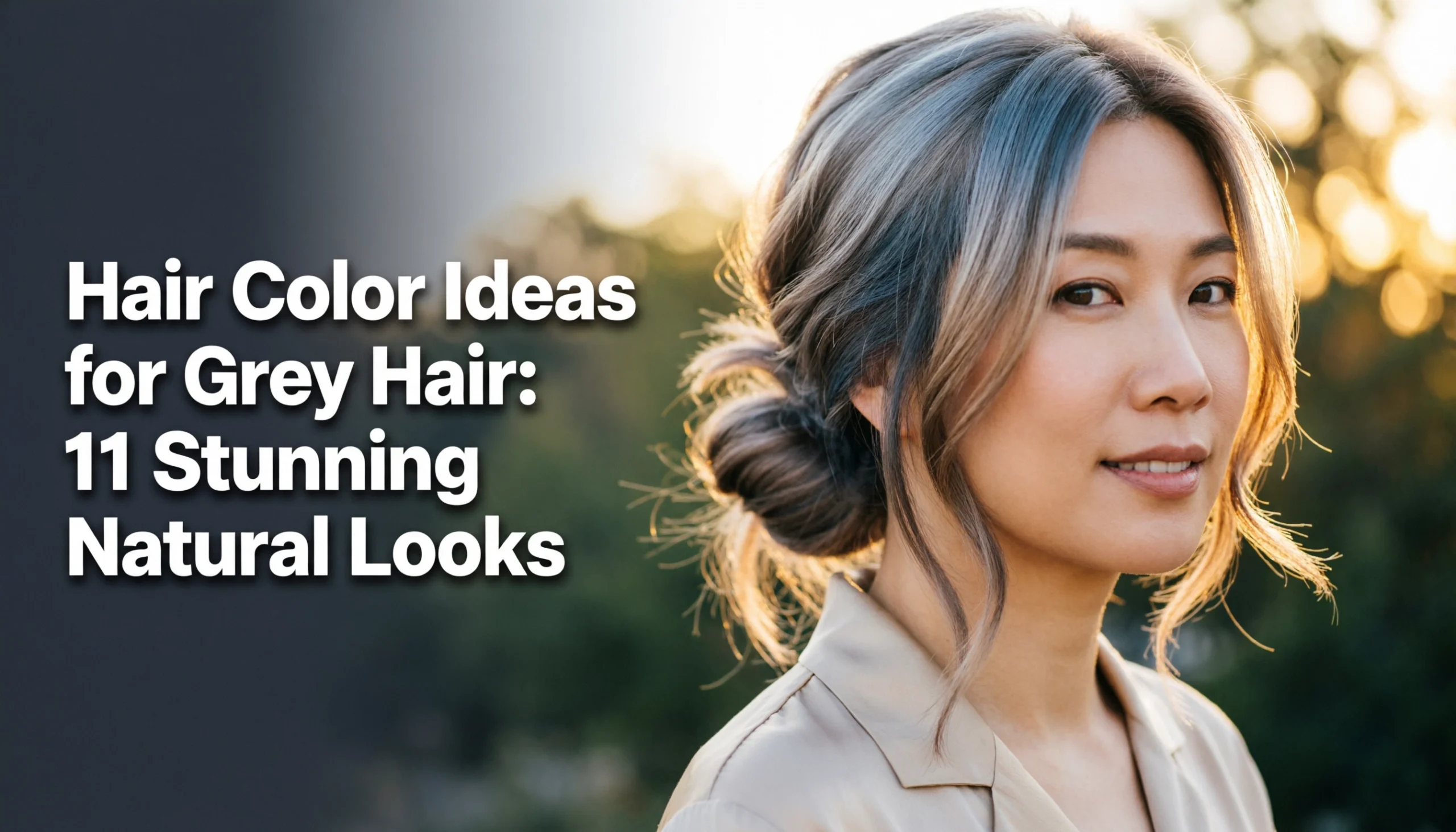
Finding another silver streak is frustrating when you despise constant root maintenance. Dealing with harsh contrast lines and stubborn regrowth is a weekly battle. You need gorgeous hair color ideas to cover grey hair without damaging your delicate strands.
The best hair color ideas to cover grey hair include applying multi-dimensional balayage to blend silver strands, using a demi-permanent ash brown dye for soft root coverage, or adding cool blonde highlights to make greys look like natural dimension. For maximum coverage on resistant white hair, a neutral-toned permanent hair dye is highly recommended.
Drawing from comprehensive analysis of established salon techniques, this guide reveals exactly how to camouflage silver regrowth. We will explore eleven specific methods to seamlessly blend or fully cover your greys. Discover professional strategies that prioritize long-term hair health and lower maintenance routines today.
What Are The Best Hair Color Ideas To Cover Grey Hair Naturally?
When it comes to grey hair coverage solutions, the beauty industry has evolved far beyond the harsh, opaque box dyes of the past. Today’s master colorists focus heavily on the concept of blending rather than just blanketing the hair. Natural grey hair is notoriously stubborn, resistant, and coarse, requiring specialized hair coloring techniques for grey to ensure the pigment anchors correctly without compromising the hair’s structural integrity. Because aging hair naturally experiences changes in hair porosity and a loss of natural lipids, modern coloring strategies prioritize long-term hair health and incredibly natural-looking results.
Choosing the right natural look depends entirely on the percentage of white strands you have and your personal maintenance threshold. Permanent dye provides full, 100% opaque coverage by fully opening the cuticle, making it ideal for highly resistant, dense white patches. However, if you are looking for a lower-maintenance routine, demi-permanent glosses and strategic highlighting offer brilliant blending grey hair color ideas. These deposit-only methods soften the harsh transition line at the root, allowing your silver strands to look like intentional, shimmering highlights.
By utilizing professional grey hair dye options tailored to your specific hair composition, you can effectively manage regrowth without looking artificial. Whether you prefer a quick root touch-up, sweeping balayage, or customized lowlights, the best hair colors for gray hair always work with your hair’s natural evolving canvas, not against it.
11 Stunning Hair Color Ideas for Grey Hair at Every Level
Finding the perfect grey hair color transformation requires matching the right professional technique to your desired outcome. Hair stylists specializing in grey hair utilize a wide array of tools—from targeted root smudges to full-head glosses—to create a radiant, natural-looking finish. When exploring these stylish grey coverage ideas, it is vital to understand how different chemical formulations interact with melanin-deficient strands.
The molecular composition of grey hair requires specific oxidation hair dye interactions. Because white strands lack underlying pigment, they can easily pull muddy, translucent, or overly ashy if formulated incorrectly. By following these expert tips and carefully selected gray coverage ideas, you can achieve vibrant, shiny grey hair color that grows out beautifully and keeps your strands profoundly healthy.
1. Blend Greys Seamlessly with Cool Blonde Highlights

Save this stunning highlight blending technique to your favorite hair inspiration board!
Using foil highlights for grey hair is an incredibly strategic way to camouflage early silver streaks. Instead of painting over the grey entirely, this technique lifts the surrounding natural hair to a light, icy shade. By lightening the darker pieces, you drastically reduce the harsh contrast of silver roots against a dark base. Cool blonde shades for grey naturally neutralize the yellowing that often plagues natural white hair, making this one of the best blonde hair color ideas to cover gray for women over 50.
Products & Tools Used
- High-quality purple shampoo (to neutralize brassiness in both blonde and grey strands)
- Foil highlights kit with a 20-volume developer (if lifting at home)
- Precision tint brush and sectioning comb
- Cool-toned hair gloss or toner for grey hair
- Deep conditioning treatment formulated for color-treated hair
Application & Styling Steps
- Section clean, dry hair into four manageable quadrants using professional clips to ensure even application.
- Weave fine sections of hair, focusing heavily on areas where stubborn greys are most concentrated (usually the temples and part line).
- Apply the lightener evenly down the foil, ensuring full saturation without bleeding onto the scalp.
- Process the hair according to the manufacturer’s instructions, checking the lift every 10 minutes until a pale yellow is achieved.
- Rinse thoroughly, then immediately apply a cool-ash toner to blend the new grey hair highlights perfectly with your natural silver.
- Wash weekly with a purple shampoo to keep the blonde shades crisp and prevent the greys from turning yellow.
Pro-Tip: According to master colorists, when dealing with hair porosity in aging hair, always use a bond-building treatment during the highlighting process. Grey hair lacks pigment and natural oils, making the cuticle more susceptible to damage from strong lighteners.

2. Soften Roots with an Ash Brown Demi-Permanent

Pin this gorgeous ash brown blending technique for your next salon visit!
An ash brown hair color for grey applied as a demi-permanent treatment offers a flawless, low-commitment solution. Unlike permanent dye, demi-permanent options for grey hair deposit color without aggressively lifting the natural base. This means you get a beautifully translucent tint over your white strands, blending grey hair seamlessly without leaving a harsh line of demarcation as your roots grow out. This is highly recommended for women navigating the early stages of a grey hair transition.
Products & Tools Used
- Ammonia-free hair dye for grey hair in an Ash Brown shade (demi-permanent formula)
- 10-volume developer (activator)
- Applicator bottle or professional tint bowl and brush
- Barrier cream (to prevent staining around the hairline)
- Color-safe, sulfate-free shampoo and conditioner
Application & Styling Steps
- Perform a thorough patch test 48 hours before applying any new color to avoid allergic reactions.
- Apply a thin layer of barrier cream along your forehead, ears, and neck.
- Mix the demi-permanent hair dye and the 10-volume developer in your tint bowl following the exact manufacturer ratios.
- Starting at the natural part, use the brush to tap the color directly onto the grey roots, working in thin, 1/4-inch sections.
- Once the roots are fully saturated, gently comb the remaining color through the mid-lengths for the last 5-10 minutes of processing to refresh faded ends.
- Rinse the hair with cool water until it runs clear to seal the hair cuticle integrity, then follow with a sulfate-free conditioning routine.
Pro-Tip: Demi-permanent dye chemistry utilizes a low alkaline activator that gently opens the cuticle just enough to deposit pigment. Because it doesn’t lift your natural hair color, it slowly fades over 24-28 washes, completely eliminating the harsh “skunk stripe” regrowth typical of permanent dyes.


3. Integrate Multi-Dimensional Balayage for Camouflage

Save this beautiful balayage technique to completely camouflage those early greys!
Using freehand balayage for grey is the ultimate low-maintenance camouflage. By utilizing sweeping, artistic strokes, a colorist can integrate your natural silver streaks into a beautiful, multi-dimensional grey coverage design that mimics sun-lightened hair. Balayage for grey hair is perfect for those with 10% to 30% white strands who want a modern look without committing to a full four-week root touch-up schedule.
Products & Tools Used
- Clay-based lightener (specifically formulated for open-air processing)
- Balayage paddle/board
- Angled color brush for sweeping application
- Toner for grey hair (to customize the final shade)
- Color depositing conditioners for home maintenance
Application & Styling Steps
- Part the hair as you normally wear it to identify exactly where the grey hair regrowth is most visible.
- Load a small amount of clay lightener onto the angled brush. Hold a section of hair taut against the balayage board.
- Using a light, sweeping motion, paint the lightener onto the surface of the hair in a “V” shape, avoiding the root entirely.
- Carefully paint slightly higher on the strands directly adjacent to your natural greys, using the lightened pieces to “trick the eye” and camouflage the silver.
- Let the clay lightener process in the open air until the desired level of lift is achieved.
- Wash, apply a custom toner, and maintain the multi-dimensional color at home using a color-depositing mask once a week.
Pro-Tip: True balayage application relies on a clay lightener because it forms a hard outer shell while staying moist on the inside. This prevents the bleach from bleeding onto the surrounding natural hair, resulting in the softest, most natural grey hair camouflaging possible.

4. Add Depth with Subtle Lowlights for White Strands

Don’t want to go completely blonde? Try pinning these subtle brunette lowlights for depth!
When hair turns predominantly white, it often loses its visual density and can make the complexion appear washed out. Instead of highlighting to add lightness, applying subtle lowlights for grey hair reintroduces crucial depth and contrast. Using lowlights for white hair is one of the best brunette hair color ideas to blend grey hair without full dye, breaking up a solid block of silver and creating a voluminous, youthful appearance.
Products & Tools Used
- Demi-permanent dark or medium brown color (formulated with warm undertones to prevent “muddy” fading)
- Low-volume developer
- Highlighting foils and a rat-tail comb for weaving
- Color safe products for grey hair
- Barrier cream
Application & Styling Steps
- Thoroughly brush the hair to remove tangles, as precise sectioning is critical for subtle lowlights.
- Using the rat-tail comb, weave out very thin, sparse sections of the white/grey hair. Less is more—you want to create shadows, not stripes.
- Place a foil under the woven section and apply the dark demi-permanent color from root to tip.
- Fold the foil securely to prevent the dark color from bleeding onto the surrounding crisp white hair.
- Continue placing foils throughout the hair, focusing on the underneath layers to create the illusion of density and depth.
- Process, rinse carefully, and style. The darker pieces will peek through the silver, effectively blending white hair and making the transformation look incredibly natural.
Pro-Tip: When applying lowlights for white hair, an expert colorist will always use a “filler” or choose a shade with warm red/gold undertones. Because white hair lacks all underlying pigment, applying a straight ash-brown will turn the hair a dull, greenish-grey. The warmth is necessary for true pigmentation correction.

5. Boldly Transition to Icy Platinum Blonde Full Coverage

Ready to embrace the light? Pin this icy platinum inspiration for a bold grey transition!
If you have a very high percentage of grey (over 60%), transitioning to ice or platinum blonde shades is a highly strategic move. Rather than fighting the natural loss of pigment with dark dyes, this method embraces the light, providing full grey coverage hair color that completely eliminates the visual line of harsh regrowth. It is undeniably one of the most effective answers for how to dye grey hair to look natural and youthful because the platinum tone matches your incoming silver roots perfectly.
Products & Tools Used
- Professional-grade bleach powder and appropriate volume developer (typically 20-30 vol)
- Ice or platinum blonde shades of toner (violet/blue based)
- Intensive bond-building treatments grey hair needs (like Olaplex or K18)
- High-quality purple hair mask
- Applicator brush, gloves, and mixing bowls
Application & Styling Steps
- (Highly recommended to be done in a salon): The colorist will apply bleach to the darker, pigmented hair to lift it to a pale yellow, matching the lightness of your natural white strands.
- The lightener must be applied meticulously during the hair lightening process, avoiding overlapping onto already white/fragile hair to prevent hair damage from dye.
- Once the pigmented hair has reached a level 10 (pale banana inside), rinse completely and apply a neutralizing bond-builder.
- Apply an icy, violet-based platinum toner all over the head. This tones the newly bleached hair and turns the natural greys into a brilliant, sparkling silver-white.
- Process the toner for 10-15 minutes until a uniform, icy color is achieved.
- Maintain hair color at home using a purple mask every third wash to prevent environmental yellowing.
Pro-Tip: Understanding the difference between a single process vs double process for grey is vital here. A platinum transition requires a double process (bleach followed by a toner). Because your roots are already growing in white, touching them up in the future with a high-lift blonde creates zero harsh lines, drastically extending the time between salon visits.

6. Frame the Face with Warm Caramel Highlights

Save this warm caramel face-framing technique to brighten your complexion and hide temple greys!
Grey hairs frequently make their first appearance squarely around the temples and front hairline. Covering first greys effectively doesn’t require a full head of color. By strategically placing face-framing highlights (often called a “money piece”), you can seamlessly blend those localized greys. Utilizing warm tones for grey hair counteracts the dulling effect silver strands can have on the skin, providing a gorgeous, glowing color that complements grey hair and provides supreme grey hair regrowth management.
Products & Tools Used
- Highlighting kit formulated for brunettes (to achieve warm caramel, not pale blonde)
- Sectioning clips and a pintail comb
- Highlighting foils
- Conditioners for colored hair
- Toning gloss in a honey or caramel shade
Application & Styling Steps
- Section out the “money piece”—the front hairline and temple areas where covering sparse grey hair is your primary goal.
- Clip the rest of your hair entirely out of the way.
- Take fine, diagonal slices of hair around the face, heavily targeting the silver strands, and place them on foils.
- Apply the lightener specifically to these front sections, painting closer to the root to ensure the temple greys are covered.
- Let process until the hair lifts to a warm, brassy orange/gold (do not lift all the way to pale yellow).
- Rinse and apply a warm caramel gloss to seal the cuticle and give the highlights that rich, syrupy warm tone.
Pro-Tip: Master colorists utilize matrix color theory for grey to inform this technique. If you are a natural brunette, your first greys will likely show up prominently against your dark base. By placing warm caramel highlights exactly where the greys are, you turn a frustrating sign of aging into an intentional, face-brightening style.

7. Embrace the Change with a Silver Fox Color Transition

Pin this stunning silver fox transition guide to embrace your natural grey beautifully!
If you are tired of the constant maintenance cycle, asking “what’s the best way to transition from colored to grey hair” is your first step toward freedom. A true silver fox hair dye transition is a professional color correction service designed to strip out years of old, dark boxed dye from your mid-lengths and tone them to perfectly match your incoming natural silver roots. Transitioning grey hair intentionally ensures you look chic and put-together throughout the entire growth process, rather than enduring a year of harsh demarcation lines.
Products & Tools Used
- Professional color remover (salon use)
- Gentle lightener and low-volume developer (salon use)
- Silver/Grey color depositing conditioners
- Highly pigmented purple or silver shampoo
- Keratin treatment for colored grey to restore elasticity
Application & Styling Steps
- Book a consultation with a stylist specializing in a complete grey hair transformation for a color-correction appointment.
- The stylist will apply a color remover to gently break the artificial dye molecules in your old colored hair.
- Next, they will carefully lighten the remaining mid-lengths and ends until they are pale enough to accept a silver tone.
- A custom silver or slate-grey toner is applied all over to perfectly bridge the gap between your natural silver roots and the newly lightened ends.
- At home, replace your regular shampoo with a silver-enhancing shampoo to deposit micro-pigments that keep the silver looking intentional and glossy.
- Use a deep conditioning keratin mask weekly, as repairing damaged grey hair is crucial after a major chemical strip.
Pro-Tip: The “silver fox transition” requires expert-level extraction of oxidation hair dye for grey. To maintain the fragile molecular composition of grey hair, ask your colorist about using deposit-only color technology (like a sheer silver gloss) over the lightened ends rather than an oxidative dye, which will help preserve the hair’s vital lipid layer.

8. Achieve Full Coverage with Rich Chocolate Brown

Need 100% coverage? Pin this rich chocolate brown permanent dye guide!
When you demand zero transparency from your silver strands, permanent hair dye for grey hair is the mandatory solution. Achieving 100% opaque, full coverage grey hair dye results relies entirely on utilizing ammonia and developer to physically open the tightly bound cuticle of resistant grey hair. A rich chocolate brown is frequently cited as the best brown for grey hair because it provides incredible depth and shine without pulling too intensely dark. Knowing exactly how to apply permanent dye guarantees you avoid the dreaded “translucent root.”
Products & Tools Used
- High-quality permanent hair dye (Look for an “N” or “NN” formulation in Chocolate Brown)
- 20-volume developer (The industry standard for grey coverage)
- Tint brush and mixing bowl
- Barrier cream (Vaseline or professional cream)
- Color-sealing post-treatment
Application & Styling Steps
- Do not wash your hair for 24-48 hours before applying; natural oils protect the scalp from the strong chemicals in permanent dye.
- Mix your chocolate brown color with the 20-volume developer. (20-vol is strictly required to lift the cuticle of coarse grey hair enough to deposit pigment).
- Apply the dye strictly to the grey roots showing, pressing the product firmly into the hair with the tint brush. Grey hair can be stubborn and push the color off, so apply generously.
- Process for the full time recommended for grey hair (usually 35-45 minutes). Do not rinse early, or the coverage will be translucent.
- To prevent the ends from going too dark or “ink-like,” only pull the color through the mid-lengths for the final 5 minutes if they need a refresh.
- Rinse, shampoo lightly, and apply a color-sealing conditioner.
Pro-Tip: If you struggle with resistant grey hair formulation, the secret is “pre-softening.” A professional colorist will apply straight 20-volume developer to the stubborn greys for 5 minutes before applying the color mixture. This temporarily opens the tight grey hair cuticle integrity so the thick permanent dye can penetrate fully and anchor deeply.

9. Boost Shine and Blend with an Ammonia-Free Gloss

Want shine without the commitment? Pin this ammonia-free hair gloss treatment!
Often, the biggest complaint about aging hair isn’t the color—it’s the wiry, matte texture. Applying a clear or tinted hair gloss for grey hair is an exceptional dull grey hair treatment. A gloss acts much like a clear topcoat for your nails, filling in the rough, raised cuticle layer of coarse silver strands to produce an intensely shiny grey hair color. Utilizing an ammonia-free hair dye for grey hair in a gloss format provides beautiful, sheer blending rather than heavy, opaque coverage.
Products & Tools Used
- Tinted or clear ammonia-free hair gloss
- Clarifying shampoo
- Applicator bottle
- Wide-tooth comb
- Shower cap
Application & Styling Steps
- Wash your hair with a clarifying shampoo to remove all product buildup. Do not apply conditioner. Towel dry until damp.
- Wearing gloves, apply the hair gloss for grey hair directly from the applicator bottle onto your damp hair.
- Use a wide-tooth comb to distribute the gloss evenly from the roots all the way through to the ends.
- Clip your hair up and cover it with a shower cap. The natural heat from your scalp will help the gloss penetrate.
- Process for 15-20 minutes as directed.
- Rinse thoroughly and follow with your regular conditioner. The result is a highly translucent grey coverage that makes silver strands look like shiny, intentional highlights.
Pro-Tip: Understanding the difference between a gloss vs toner for grey hair is vital for your color theory basics. A toner chemically shifts the underlying pigment (e.g., cancelling out brassy yellow), while a gloss is a low-pH treatment that primarily provides lipid layer restoration for grey hair. It closes the cuticle flat, giving those notoriously wiry greys a smooth, glass-like reflection.

10. Disguise Stubborn Greys with Vibrant Red Tones

Pin this fiery copper red inspiration for a bold way to cover stubborn greys!
Dyeing grey hair with fashion shades requires advanced chemical formulation, making red one of the most notoriously difficult colors to execute. A vibrant color for grey hair will often fade immediately or turn bright neon pink because white strands possess zero underlying pigment to anchor the red molecules. To achieve the best red for grey hair, you must mix a natural base into your vivid copper or auburn shade. This technique yields stunning vibrant red hair color ideas for full grey hair coverage that actually last.
Products & Tools Used
- Permanent red hair color (The fashion shade, e.g., Copper or Auburn)
- Permanent neutral hair color (The base shade, e.g., 6N or 7N, matching the lightness of the red)
- 20-volume developer
- Color-safe shampoo formulated for red hair
- Mixing bowl and precision brush
Application & Styling Steps
- In your mixing bowl, you must mix your colors: Use 1/2 of the vibrant red shade and 1/2 of the neutral (N) shade. (This is the professional secret to covering greys with red!).
- Add the appropriate ratio of 20-volume developer to your color mix.
- Apply the custom mix strictly to your grey roots, ensuring complete, thick saturation.
- Process for 40-45 minutes. Red molecules are very large and need maximum time to anchor into the grey hair cortex.
- If the ends look faded, apply a demi-permanent red gloss (not the permanent root mixture) to the ends for the last 10 minutes.
- Rinse in cold water only. Protecting grey hair color when it’s red requires washing in cold water to prevent rapid fading.
Pro-Tip: Never apply a straight red boxed dye over white or grey hair. According to advanced color theory grey hair mechanics, a straight red dye applied to melanin-deficient strands will result in glowing “hot roots.” You must always mix your vibrant red dye with a neutral (N) base to provide the essential pigmentation correction that anchors the color and makes it look rich and natural.

11. Quick Fix with a Temporary Root Concealer Spray

Need a quick fix before your event? Pin this temporary root concealer trick!
For those moments when a salon visit isn’t possible, utilizing root sprays and root powders provides an instant, stress-free camouflage. These temporary hair color sprays are the ultimate quick grey fix products, depositing surface-level pigment that effectively hides the contrast line until your next wash. Mastering the technique of using root spray correctly prevents the dreaded “painted scalp” appearance, allowing you to seamlessly extend the time between your expensive coloring appointments.
Products & Tools Used
- High-quality temporary hair color sprays (matched to your current dyed color, not your grey)
- A fine-tooth styling comb
- A clean makeup spoolie or old toothbrush
- Makeup wipes or micellar water
Application & Styling Steps
- Style your hair exactly how you plan to wear it. Using root spray should be the absolute final step in your routine.
- Shake the can vigorously. Hold the can 4-6 inches away from the scalp.
- Instead of spraying directly down onto the part (which stains the scalp), place the fine-tooth comb flat against your scalp right at the part line to act as a shield.
- Spray in short, light bursts along the root area, moving the can continuously to avoid a concentrated blotch of color.
- For extreme precision around the delicate front hairline, spray the product onto a clean makeup spoolie, then brush it directly onto the individual grey roots showing.
- Let it dry for 1 minute before touching. Use a makeup wipe to clean up any overspray on the forehead.
Pro-Tip: When evaluating root spray vs root powder, consider your application area. Top-rated grey hair products in aerosol form are best for rapidly covering large areas of high-contrast roots along the main part. Conversely, pressed powders are vastly superior for precise, targeted application around a thinning front hairline because the powder clings to the hair shaft without staining the delicate skin.

Key Takeaways: Your Quick Guide to Grey Hair Coverage
When evaluating the vast array of grey hair coverage solutions, making an informed decision comes down to understanding the chemical interactions between the dye and your silver strands. This grey hair management color summary distills the main takeaways from professional colorists, allowing you to choose the exact method that balances your desired look with your maintenance lifestyle.
Key Takeaways:
- Assess Your Percentage: Choose your method based on how much grey you have. Demi-permanent options for grey hair work beautifully for under 30% grey, while over 50% usually requires permanent dye or a strategic platinum transition.
- Blend, Don’t Always Cover: Using highlights for grey hair or multi-dimensional balayage turns silver strands into intentional texture, drastically reducing the harsh root line as your hair grows.
- Respect Hair Porosity: Aging, grey hair lacks natural oils and has a tighter cuticle. Always use deep conditioning and bond-building treatments grey hair requires when lifting or chemically processing.
- The “N” Series Rule: If using permanent dye for 100% coverage, you must formulate with a Neutral (N) or Double Neutral (NN) base to successfully anchor the color into resistant white strands without turning muddy.
- Warmth is Essential: When adding lowlights for white hair, ensure the dark dye has warm red or gold undertones to prevent the color from looking ashy, green, or flat against the bright silver.
- Glosses for Texture: If you want to embrace your natural grey but hate the wiry, dull texture, an ammonia-free hair gloss acts as a clear topcoat to restore brilliant shine without permanently altering the color.
- Temporary Fixes Save Time: Utilize root sprays and root powders strategically to disguise regrowth for special events, allowing you to stretch the time between damaging chemical processes.
People Also Ask About Covering Grey Hair
Navigating the complexities of how to cover grey hair naturally often brings up highly specific scenarios. Whether you are curious about exactly what color will cover grey hair best or you need to fix a brassy mistake, these answers are drawn directly from master colorists to resolve your most pressing questions about grey hair.
What color will cover grey hair best?
Neutral tones (labeled as N or NN on hair dye boxes) are the absolute best colors to cover grey hair because they provide the balanced base pigment that white hair lacks.
If you try to use fashion colors like ash or vibrant red directly on grey hair without a neutral base, the color will often look translucent, muddy, or unnaturally bright. A permanent neutral brown or dark blonde mixed with 20-volume developer ensures 100% opaque, natural-looking coverage.
Can I cover grey hair without permanent dye?
Yes, you can easily cover grey hair without permanent dye by using demi-permanent color, semi-permanent glosses, or temporary root concealers.
Demi-permanent hair color is excellent because it blends the grey without creating a harsh line of demarcation as it grows out. While it won’t provide 100% opaque coverage like a permanent dye, it offers a translucent, natural look that slowly fades over 24 washes, making it much healthier for the hair shaft.
How to blend grey hair with natural color?
The most effective way to blend grey hair with your natural color is through highlighting techniques like balayage or baby-lights.
By strategically placing lightened strands throughout your hair, especially around the face and part line, the eye is tricked into seeing the natural grey hairs as part of the blonde dimension. This technique breaks up the solid line of grey regrowth, requiring far less maintenance than a solid root touch-up.
What developer to use for grey hair?
Professional colorists industry standard is to always use a 20-volume developer when covering grey hair with permanent dye.
Grey hair often has a very tightly closed cuticle that is highly resistant to color absorption. A 20-volume developer provides just enough lift to open that cuticle and deposit the artificial pigment deep into the cortex. Using a 10-volume developer with permanent dye on grey hair will usually result in translucent, faded coverage.
Is balayage good for covering grey hair?
Balayage is exceptional for blending grey hair, though it is not designed for 100% full coverage.
Because balayage involves hand-painting sweeping highlights onto the hair, it creates a multi-dimensional look that perfectly camouflages scattered silver strands. It is highly recommended for women with 10% to 30% grey who want a modern, low-maintenance look without the hassle of monthly root touch-ups.
What are the pros and cons of coloring grey hair?
The main pro of coloring grey hair is achieving a youthful, consistent appearance, while the primary con is the required maintenance and potential chemical damage.
Coloring can restore volume and shine to aging hair. However, permanent dyes alter the hair structure, requiring regular deep conditioning treatments. Additionally, once you begin dyeing your roots permanently, you are committed to a 4-to-6 week touch-up cycle to prevent the “skunk stripe” effect.
What’s the difference between gloss and toner for grey hair?
A toner deposits specific color pigments to neutralize unwanted tones (like turning brassy yellow greys to icy silver), while a gloss is a low-pH treatment that primarily adds brilliant shine and seals the cuticle.
Glosses can be completely clear or lightly tinted. Both are non-damaging, ammonia-free options, but toners are used for color correction, whereas glosses are used for texture improvement and sheer color blending.
How to fix hair color mistakes on grey hair?
To fix color mistakes on grey hair, such as dye pulling too dark or turning green, you should consult a professional colorist for a color correction service.
Because grey hair lacks underlying pigment, attempting to strip color at home using harsh bleaches or boxed color removers often leads to severe breakage. Professionals use gentle oxidation reducers to safely extract the artificial pigment without destroying the fragile grey hair underneath.
How often should I color my grey hair?
If you use permanent dye for full coverage, you will likely need to color your roots every 4 to 6 weeks.
However, if you utilize blending techniques like demi-permanent glosses or highlights, you can stretch your salon visits to every 8 to 12 weeks. The frequency entirely depends on the contrast between your dyed color and your natural white regrowth, as well as how fast your hair grows.
What is the best permanent hair color for grey hair?
The best permanent hair color for grey hair is a professional, salon-quality cream formulation that contains conditioning agents and is mixed with a dedicated 20-volume developer.
Brands like Wella Professionals or Redken are frequently top-rated for grey coverage because their molecular formulations are specifically designed to penetrate resistant, coarse white strands while maintaining the lipid layer of the hair.
Final Thoughts on Your Grey Hair Color Transformation
Navigating a grey hair transformation doesn’t have to mean resigning yourself to a lifetime of harsh chemicals and tedious four-week root touch-ups. As we’ve explored throughout this hair color guide for grey hair, the modern approach to grey coverage heavily favors blending, enhancing, and working with your natural silver rather than fighting against it.
Whether you opt for the multi-dimensional camouflage of balayage, the gentle blending of a demi-permanent gloss, or boldly embrace the light with an icy platinum transition, the secret to achieving the best hair colors for gray hair lies in respecting your hair’s unique texture and porosity. Aging hair requires specialized care, so always prioritize deep conditioning, bond-building treatments, and color-safe products to keep your locks looking vibrant and structurally healthy.
Before you mix any developer at home or book your next salon appointment, critically consider your maintenance threshold and your ultimate hair goals. A consultation with a master colorist who specializes in grey hair coloring techniques can help you map out a strategy that transitions you seamlessly, keeping your hair strong and your confidence high.
Which of these 11 natural-looking grey coverage ideas are you most excited to try this September 2026? Are you leaning toward a low-maintenance gloss, or are you finally ready for a bold silver fox transition? Let us know your hair goals in the comments below!
Last update on 2026-04-27 / Affiliate links / Images from Amazon Product Advertising API