Are you tired of damaging your naturally dark hair with harsh chemical lighteners? Finding safe, vibrant hair color ideas for black hair often feels like a frustrating battle against brassiness.
The best hair color ideas for black hair without bleach involve using high-lift color, demi-permanent glosses, or color-depositing conditioners to add dimension. You can achieve rich caramel balayage, subtle brown highlights, or glossy blue-black tones safely by lifting the cuticle gently without stripping your natural melanin.
Drawing from established professional colorist recommended methodologies and structural hair science, this guide prioritizes hair health first. Discover 11 stunning, bleach-free transformations designed specifically for your deeply pigmented strands. You will learn exactly how to achieve salon-grade results without compromising your hair’s integrity.
What Are The Best Hair Color Ideas For Black Hair Without Bleach?
The best hair color ideas for black hair without bleach involve utilizing high-lift professional tints, ammonia-free demi-permanent glosses, and highly pigmented color-depositing conditioners to safely alter your hue. These targeted methods gently penetrate the hair cuticle to add vibrant dimension or deep, reflective tones without stripping away your natural structural integrity.
For decades, the standard approach to altering natural black hair color involved aggressive bleaching, inevitably leading to severe moisture loss, frayed ends, and unwanted orange brassiness. Natural black hair, which typically sits at a Level 1 or 2 on the universal hair color scale, possesses an incredibly dense concentration of eumelanin (dark pigment). Stripping this pigment requires intense chemical oxidation that compromises the keratin bonds within your hair shaft. Today, a professional colorist recommended approach focuses on hair health first, utilizing advanced high-lift formulas that gently open the cuticle to deposit warm-toned highlights, or rich, opaque glazes that enhance your natural depth.
Before attempting any no bleach hair color transformation at home, understanding your hair’s structural integrity is paramount. If you want to seamlessly blend caramel tones or achieve a glossy blue-black tint, your hair must be porous enough to accept the new dye molecules, but healthy enough to retain them.
What most guides miss: The Hair Porosity Self-Test
Before purchasing any best hair dye for black hair, you must test your porosity. Take a clean, product-free strand of your hair and drop it into a glass of room-temperature water. If the strand floats at the top, you have low porosity hair (meaning a very tight cuticle that requires longer processing times or gentle heat to open). If it sinks to the bottom, you have high porosity hair (often from previous chemical damage), which will absorb color instantly but fade just as quickly, requiring a protein-filling treatment before any color application.
By prioritizing your hair’s porosity and working exclusively with your natural underlying pigments rather than against them, you can achieve brilliant, multi-dimensional color without sacrificing a single ounce of moisture.
The Science of Black Hair: Shade Guide & Color Comparison
Understanding the deep nuances of black hair variations requires a fundamental grasp of color wheel theory and cellular hair anatomy. At a molecular level, the rich depth of your hair is dictated by eumelanin concentration within the cortex. When a developer penetrates the cortex to alter this color, it interacts directly with your unique hair porosity levels. Choosing the right shade of black or the right lifting mechanism dictates whether your hair maintains a luminous, healthy shine or falls flat and brittle.
To make an informed decision, you must first identify your exact base color and understand how different chemical agents interact with your strands. The world of darkest hair colors is surprisingly diverse, ranging from warm, natural tones to stark, light-absorbing hues.
The Ultimate Black Hair Shade Guide:
* Jet Black (Level 1): The darkest, most intense shade possible. It contains cool, blue undertones and boasts a highly opaque, reflective finish. Jet black powerfully contrasts with warm skin tones and is best suited for individuals with cool undertones seeking a dramatic, glass-hair aesthetic.
* Soft Black (Level 2): Also known as darkest brown, this shade looks black to the naked eye but features rich, warm brown undertones under direct sunlight. It flatters almost all skin tones and provides the most natural-looking gray coverage.
* Blue-Black: A fashion shade that deposits heavy sapphire or midnight blue pigments over a natural black base. It delivers a highly vibrant, cool-toned shimmer that requires strict maintenance to prevent fading.
Navigating the transition from your natural base to your desired aesthetic requires choosing between different dye classifications. Understanding the chemical differences between oxidative dyes containing p-Phenylenediamine (PPD) and gentler deposit-only glosses establishes the foundation for a healthy color transformation.
Box Dye vs Professional Salon Color Application
| Feature | Generic Box Dye | Professional Color / High-Lift |
|---|---|---|
| Developer Strength | Pre-mixed, often excessively high (30-40 volume) causing unnecessary cuticle damage. | Customizable (10, 20, or 30 volume) based on exact eumelanin concentration and hair texture. |
| Pigment Quality | Uses progressive metallic salts that build up, making future color correction nearly impossible. | Uses pure oxidative dyes that deposit evenly and can be safely removed or adjusted later. |
| Predictability | “One size fits all” approach often results in unexpected hot roots or muddy ends on dark hair. | Chemically formulated to interact specifically with your current level 1-10 hair scale position. |
| Hair Integrity | Strips moisture, leaving the follicle rough and prone to breakage. | Contains alkalizing agents balanced with hydrolyzed silk proteins to protect the cuticle. |
Whether you are debating jet black vs blue black or trying to decide between a permanent vs semi-permanent formula, prioritizing professional-grade ingredients over harsh box kits is the ultimate secret to vibrant, long-lasting results.
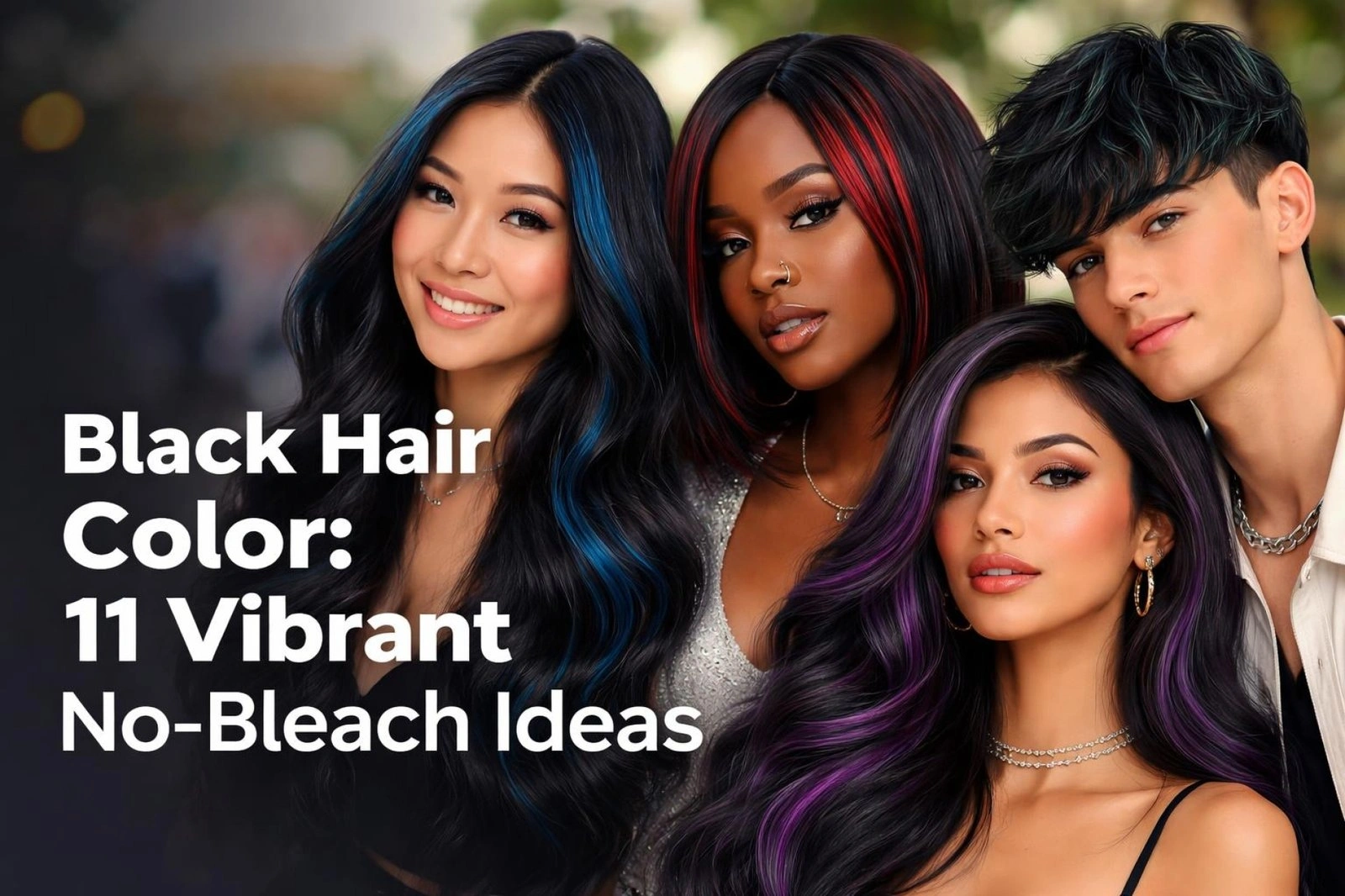
Black Hair Color: 11 Vibrant No-Bleach Ideas for 2026
The era of choosing between healthy hair and beautiful hair is officially over. By leveraging the latest advancements in high-lift technology and pure-pigment depositing glosses, you can achieve stunning, multi-dimensional looks without touching a single packet of bleach. These low maintenance hair color ideas for black hair are specifically curated to enhance your natural depth while preventing the dreaded orange brassiness that plagues dark hair lighteners.
Whether you are looking for natural black hair ideas that add a subtle, office-appropriate glow, or vibrant fashion tones tailored specifically for varying ethnic hair textures, there is a bleach-free solution available. The following 11 techniques represent the absolute best, stylist-approved methods for upgrading your dark strands safely in 2026.
1. Blend a Rich Caramel Balayage for Natural Black Hair

Pin this stunning caramel balayage idea to your “Hair Goals” board for your next salon visit!
Achieving a warm, multi-dimensional caramel balayage black hair transformation doesn’t require aggressive bleaching. When you combine natural black hair with warm caramel tones, the result is a beautifully sun-kissed look that seamlessly neutralizes harsh contrasts and blends with your natural roots for effortless maintenance. By utilizing a high-lift caramel tint specifically formulated to interact with eumelanin, you can gently lift the cuticle and deposit warm ribbons of color without the severe structural damage caused by traditional powder lighteners.
What You Need
- High-lift caramel hair color specifically formulated for dark bases (to avoid brassiness)
- 30-volume cream developer for optimal cortex penetration
- Professional balayage board and highlighting brush
- Alligator sectioning clips for precise separation
- Sulfate-free color-safe shampoo and deep conditioning moisture mask
Application Steps
- Section the dry, unwashed hair into four distinct quadrants to ensure even application.
- Mix your high-lift caramel tint with the 30-volume developer according to the manufacturer’s exact ratios.
- Paint the color onto the mid-lengths and ends using a sweeping, V-shaped motion to create a seamless blend.
- Process the color for 35-45 minutes, monitoring closely to ensure proper lifting without over-processing.
- Rinse thoroughly with cool water, neutralizing the chemicals with a color-safe shampoo and intense moisture mask.
Pro-Tip: As a stylist trick, always keep the caramel highlights at least two inches away from your roots. This prevents “hot roots” and allows for a beautiful, low-maintenance grow-out phase!


2. Formulate a Glossy Blue Black Hair Color Transformation

Save this striking blue-black hair inspiration to your aesthetic mood board!
A blue black hair color offers an intensely dramatic, glossy finish that breathes life into flat, dull strands. Merging a jet black base with deep midnight blue hues creates a high-shine, cool-toned aesthetic that exceptionally complements pale and cool skin undertones. Because this process strictly relies on depositing color rather than lifting, it acts as a restorative glossing treatment that actually plumps the hair cuticle, ensuring maximum reflection and structural health.
What You Need
- Ammonia-free blue-black demi-permanent hair color
- 10-volume developer (strictly for depositing color, not lifting)
- Barrier cream (like petroleum jelly) to prevent skin staining
- Tint brush and non-metallic mixing bowl
- Color-protecting UV shield spray to prevent fading
Application Steps
- Apply a thick layer of barrier cream around your hairline, ears, and neck to prevent the intensely pigmented dye from staining your skin.
- Mix the blue-black color with the 10-volume developer until it reaches a smooth, velvety consistency.
- Saturate the hair completely from root to tip, taking small 1-inch sections to ensure no patches are missed.
- Process for the full recommended time (usually 25-30 minutes) to allow the blue pigments to fully anchor to the hair shaft.
- Gloss the hair post-rinse with a high-shine serum to lock down the cuticle and amplify that reflective midnight blue tone.
Pro-Tip: Blue molecules are the smallest in hair dye and fade the fastest. Use a blue-depositing conditioner once a week to maintain that cool-toned, multidimensional sapphire reflect!

3. Apply Subtle Ash Brown Babylights for Asian Hair Textures

Pin this beautiful, low-maintenance babylight technique to your hair color boards!
For those seeking ashy hair color ideas for black hair asian textures, incredibly fine ash brown babylights offer the perfect seamless enhancement. Asian hair typically features a highly compact, thick cuticle that naturally lifts to an intense orange or red stage when lightened. By strategically utilizing a cool-toned ash brown high-lift tint, you successfully neutralize these warm underlying red tones while adding a subtle, professional-looking dimension that perfectly suits thick, coarse hair strands without causing brassiness.
What You Need
- High-lift ash brown permanent color (green/blue base to neutralize warmth)
- Micro-weave highlighting comb for babylights
- High-quality professional foils
- 20 or 30-volume developer depending on hair strand thickness
- Purple or blue neutralizing shampoo
Application Steps
- Weave incredibly fine, paper-thin sections of hair using the tail comb (this is the key to babylights rather than chunky highlights).
- Apply the ash-brown high-lift color meticulously to the foiled sections, ensuring complete saturation on thick hair textures.
- Fold the foils securely to trap the natural heat, which helps the color penetrate the compact cuticle of Asian hair types.
- Monitor the lifting process carefully; once the hair reaches a dark brown state, the ash tones will begin neutralizing the natural red undertones.
- Rinse and immediately wash with a blue-based shampoo to ensure the final result is a true, cool-toned ash brown.
Pro-Tip: Coarse hair types often require slightly longer processing times because of the tightly bound cuticle layer. Always perform a strand patch test first to determine your exact timing!

4. Create a Warm Honey Brown Ombré for Curly Hair

Don’t forget to save this gorgeous curly hair ombré inspiration for later!
When exploring the best hair color for black women with natural hair, a warm honey brown ombré stands out as a stunning, sun-kissed option that beautifully enhances curl definition. Pairing curly hair and highlights naturally introduces concerns regarding moisture retention, as textured hair is inherently more porous and prone to dryness. By utilizing a nourishing, high-lift cream color rich in botanical oils instead of harsh bleach, you ensure the delicate keratin bonds and tight curl pattern remain perfectly hydrated and bouncy.
What You Need
- Nourishing honey brown cream hair dye enriched with natural oils (argan or jojoba)
- 20-volume developer for a gentle lift
- Detangling brush and wide-tooth comb
- Plastic processing cap
- Intensive hydrating hair mask and leave-in curl cream
Application Steps
- Detangle the hair completely and apply a light barrier of coconut oil to the ends if they are excessively porous to prevent over-processing.
- Blend the honey brown color starting from the ends and working your way up, stopping about midway up the hair shaft for an ombré effect.
- Feather the transition line using your fingers to ensure there are no harsh, straight lines where the dark root meets the honey color.
- Cover the hair with a plastic processing cap; the natural heat from the scalp will help the cuticle open gently without bleach.
- Deep condition immediately after rinsing, applying a heavy moisture mask for 20 minutes to restore hydration and snap the curl pattern back to life.
Pro-Tip: Curly hair is naturally more porous and prone to dryness. Using a high-lift cream color packed with oils instead of powder bleach ensures your curl pattern remains tight, bouncy, and damage-free.

5. Design Face-Framing Copper Highlights for Indian Hair

Pin these face-framing copper highlights to instantly brighten your look!
When comparing warm vs cool highlights, bold copper tones paired with black hair create a strikingly vibrant effect that perfectly complements the olive and warm skin undertones commonly found in South Asian demographics. Because thick Indian hair naturally exposes deep red and orange pigments during the lifting process, opting for face-framing copper highlights allows you to work with this underlying warmth rather than fighting it. Utilizing specialized high-lift formulas ensures a safe, brilliant color transformation that instantly breathes radiant life into flat, monochromatic color.
What You Need
- High-lift copper or auburn permanent hair dye (brands like Garnier perform well for this)
- 30-volume developer for thick hair textures
- Balayage painting brush
- Sectioning clips and foils
- Color-depositing copper conditioner to maintain vibrancy
Application Steps
- Section out the “money piece”—the front two sections of hair directly framing your face, about 1-2 inches deep.
- Saturate these front sections thoroughly with the copper dye mixture, painting slightly closer to the root than a traditional balayage.
- Isolate the colored sections in foils to prevent the dye from bleeding onto the rest of your black hair.
- Process for up to 45 minutes, allowing the developer to break through the thick cuticle typical of Indian hair types to reveal the vibrant copper beneath.
- Maintain the look weekly by swapping your regular conditioner for a copper-depositing gloss, as red/orange molecules fade quickly.
Pro-Tip: Because extremely dark hair naturally lifts to a red/orange stage first, dyeing your hair copper is actually the least damaging route. You are working with your hair’s natural underlying pigment rather than fighting it!

6. Paint Dimensional Chocolate Brown Highlights on Black Hair

Save this effortlessly chic chocolate brown highlight technique for your next glow-up!
If you are searching for subtle highlights for natural black hair, dimensional chocolate brown ribboning offers the most elegant, office-appropriate upgrade available. By strategically painting rich chocolate tones onto a dark black base, you create beautiful, natural-looking movement that flawlessly blends with your dark roots. The key to this technique relies on professional “ribboning”—weaving slightly chunkier sections of hair to ensure the brunette tones actually stand out and enhance the overall depth without getting lost in the sea of black strands.
What You Need
- Professional high-lift chocolate brown color tube
- 20-volume developer for a subtle, 2-level lift
- Tail comb for ribboning sections
- Highlighting foils
- Sulfate-free shampoo to preserve the rich brunette tones
Application Steps
- Weave chunky, ribbon-like sections of hair rather than micro-fine babylights to ensure the chocolate color pops against the black base.
- Paint the chocolate dye from the mid-shaft down, lightly feathering up toward the root to avoid harsh lines.
- Foil the sections to keep the dye moist and active, processing for 30-35 minutes for a subtle lift.
- Tone (if necessary) with a sheer brunette gloss at the sink to add extra shine and lock in the rich chocolate hues.
- Style with loose waves; dimension shows up best when the hair has movement, allowing the chocolate and black tones to intermingle.
Pro-Tip: If you have previously box-dyed your hair black, high-lift color will not work (color does not lift color). You must be working on virgin natural black hair to achieve chocolate highlights without bleach!

7. Glaze with a Deep Jet Black Hair Color

Pin this glass-hair jet black gloss routine for maximum shine!
Learning how to achieve jet black hair at home is entirely about the post-dye glossing process. While applying a jet black hair dye (Level 1) creates an opaque, deeply saturated onyx hue that completely transforms dullness, this intense depth can sometimes absorb light and look flat. To counteract this matte effect and ensure the hair cuticle lies perfectly flat, professional colorists always follow an ammonia-free black tint with a high-shine clear liquid glass serum, turning standard dark hair into a highly reflective, runway-ready masterpiece.
What You Need
- Jet black demi-permanent hair dye (ammonia-free)
- 10-volume developer (depositing only)
- Barrier cream for hairline protection
- Wide-tooth comb for even distribution
- Professional clear hair gloss or liquid glass serum
Application Steps
- Prep the hairline meticulously with barrier cream—jet black dye will heavily stain the skin and ears.
- Apply the color globally from roots to ends, using the wide-tooth comb to drag the product through, ensuring every single strand is coated.
- Process for 25 minutes. Because you are going darker, heat is usually not necessary.
- Rinse until the water runs completely clear, which may take longer than lighter colors due to the heavy pigment load.
- Seal the cuticle with an intensive clear gloss treatment in the shower to lock in the dark pigments and create a reflective, glass-like finish.
Pro-Tip: Jet black hair absorbs light, which can sometimes make it look matte or flat. Using a clear gloss over the color is the secret to achieving that expensive, reflective “glass hair” aesthetic.

8. Infuse Vibrant Burgundy Red Tints on Dark Bases

Don’t lose this stunning burgundy tint idea—save it to your hair boards now!
A deep burgundy or deepest mahogany tint remains one of the most highly requested hair color ideas for black hair over 50 due to its ability to brilliantly enhance dark bases while beautifully warming up mature skin tones. This elegant “indoor black, outdoor red” phenomenon is achieved by utilizing permanent vs semi-permanent high-intensity red dyes that penetrate deeply without requiring bleach. Because red color molecules are uniquely large, they deposit beautifully over dark strands but require strict maintenance routines to prevent them from rapidly washing out of the cuticle.
What You Need
- High-intensity burgundy or mahogany permanent hair color (specifically formulated for dark hair)
- 20 or 30-volume developer
- Color applicator bottle
- Old t-shirt and dark towels (red dye stains aggressively)
- Color-depositing red/burgundy conditioner
Application Steps
- Mix the vibrant burgundy color in the applicator bottle for easy, global application.
- Apply starting at the mid-lengths and ends first, leaving the roots for the last 15 minutes to prevent “hot roots” (the heat from your scalp processes color faster).
- Massage the color thoroughly into the hair, ensuring complete and even saturation.
- Process for the full 35-40 minutes; red needs maximum time to penetrate and lock into the dark cortex.
- Rinse with the coldest water you can tolerate. Cold water snaps the cuticle shut, trapping the elusive red color molecules inside.
Pro-Tip: Red and burgundy hair dyes have the largest color molecules, making them the hardest to keep locked in the hair shaft. Wash your hair in cool water and use a color-depositing mask weekly to prevent fading to a dull brown!

9. Enhance With a Natural Soft Black Hair Color

Pin this guide to achieving the perfect natural soft black color!
When considering soft black vs dark brown, it’s essential to recognize that a genuine natural black hair color typically sits comfortably between the two at a Level 2. A soft black dye is infused with subtle, warm brown undertones that flatter absolutely all skin tones and perfectly blend with natural roots without leaving a harsh line of demarcation. Unlike the stark, opaque nature of Level 1 black, soft black gracefully covers grays and evens out faded, sun-damaged strands while retaining a dimensional, touchable, and believable appearance.
What You Need
- Level 2 or 3 (Darkest Brown/Soft Black) demi-permanent hair color
- 10-volume developer
- Tint brush and bowl
- Sectioning clips
- Hydrating color-safe conditioner
Application Steps
- Mix the soft black demi-permanent color. Demi-permanent is perfect here as it provides rich color and gray blending without a harsh line of demarcation when it grows out.
- Apply to the roots first if you are covering grays, tapping the color gently into the regrowth area.
- Pull the remaining color through the mid-lengths and ends for the last 10 minutes of processing just to refresh faded tones.
- Process according to box instructions (usually 20-25 minutes).
- Rinse and condition thoroughly, admiring how the subtle brown undertones keep the black looking natural and multi-dimensional.
Pro-Tip: If you are over 40 or have very pale skin, always choose Soft Black over Jet Black. Soft black contains brown undertones that warm up the complexion, whereas Jet Black can cast harsh shadows and wash you out!
10. Deposit a Matte Charcoal Black for Cool Skin Undertones

Save this ultra-modern charcoal black aesthetic to your edgy hair boards!
The rising trend of merging charcoal and matte finishes offers an exceptionally modern, edgy alternative to traditional shiny hair colors. Formulated specifically to neutralize warmth, a smoky charcoal black leans heavily into ashy, cool-toned gray pigments rather than standard blue or brown bases. This velvety, goth-chic aesthetic perfectly suits alternative styles and cool skin undertones, relying heavily on color theory additives to achieve a high-fashion, purposefully muted texture that stands out in a crowd of high-gloss finishes.
What You Need
- Ash-black or charcoal semi-permanent hair color
- 10-volume developer
- Tinting brush
- Texturizing spray or matte styling paste for finishing
- Silver-depositing shampoo to maintain the smoky tone
Application Steps
- Apply the ash-black dye evenly to clean, dry hair. Ensure complete saturation, as missing spots will leave warm brown patches that ruin the charcoal illusion.
- Process for 30 minutes to allow the heavy ash and gray pigments to anchor to the hair.
- Rinse with cool water and skip the heavy glossing serums—the goal of charcoal hair is a slightly velvety, smoky finish.
- Wash weekly with a silver or purple shampoo to continuously neutralize any natural red/brown pigments trying to peek through.
- Style with a matte texturizing paste or dry shampoo to emphasize the edgy, smoky, modern aesthetic.
Pro-Tip: Charcoal black looks incredible on cool skin tones, but it can make warm, olive skin look a bit green. Always match your hair’s undertone (ash vs. warm) to your skin’s natural undertone for the most flattering result!

11. Apply an Espresso Brown Glaze for Damaged Ends Correction

Pin this color correction glaze trick to fix dry, faded ends!
When dealing with severe dullness and damaged ends, resorting to harsh permanent dye for color correction is a major mistake. Instead, utilizing a restorative espresso brown gloss treatment focuses purely on depositing acidic, highly conditioning pigments onto the compromised hair shaft. This therapeutic method magically transforms dryness, protects vulnerable porosity levels, and seals the frayed cuticle, allowing you to instantly fix brassy, sun-bleached tips on natural black hair without initiating any further chemical damage.
What You Need
- Espresso brown color-depositing conditioner or acidic hair gloss
- Wet detangling brush
- Plastic shower cap
- Clarifying shampoo (for prep)
- Microfiber hair towel
Application Steps
- Prep by washing your hair with a clarifying shampoo to remove product buildup, allowing the glaze to adhere evenly to the hair shaft.
- Apply the espresso brown gloss generously to damp, towel-dried hair, focusing heavily on the faded, damaged ends.
- Distribute the product evenly using a wet detangling brush to ensure every strand is coated in the conditioning color.
- Cover with a plastic cap and let it sit for 15-20 minutes. Because it’s a conditioner, leaving it longer only provides more hydration.
- Rinse thoroughly with cool water. No need to shampoo or condition afterward—your hair will be incredibly soft, and the faded ends will be rich and dark again.
Pro-Tip: Color-depositing conditioners are acidic, which means they help close and seal a damaged hair cuticle. This is the absolute safest way to darken and color-correct fried, sun-bleached ends on black hair!

Key Takeaways: Your Quick Guide to Hair Color Ideas for Black Hair
Navigating the multitude of hair color ideas for black hair fundamentally comes down to understanding your specific hair porosity, selecting the correct developer, and prioritizing your natural eumelanin integrity. To prevent frustrating brassiness and ensure an effortless, salon-quality maintenance routine for your natural black hair color, always follow these critical, professionally recommended guidelines.
Key Takeaways:
- Use High-Lift Dyes Instead of Bleach: To achieve caramel or brown highlights safely, utilize professional high-lift color and 30-volume developer, which gently lifts the cuticle without stripping the hair’s structural integrity.
- Match Your Skin Undertone: Cool skin tones look stunning with Jet Black or Charcoal, while warm or olive skin tones should opt for Soft Black or Copper highlights to avoid looking washed out.
- Demi-Permanent is Best for Going Darker: When transitioning to Blue-Black or Espresso, always use ammonia-free demi-permanent dyes with a 10-volume developer; they deposit rich color and high shine without causing unnecessary chemical damage.
- Ethnic Hair Textures Require Specific Formulations: Thick Indian and Asian hair cuticles are highly compact and naturally lift red, requiring stronger processing times and green/blue-based toners to neutralize unwanted brassiness.
- Maintain With Color-Depositing Products: Fading is the most common issue with rich hair colors. Prevent dullness and hot roots by integrating color-depositing glosses and sulfate-free shampoos into your weekly routine.
- Work With Your Underlying Pigment: Black hair naturally exposes red and orange when lightened. Opting for burgundy, mahogany, or copper highlights is the healthiest, least damaging way to add vibrant dimension.
People Also Ask About Hair Color Ideas for Black Hair
Whether you are debating how to dye black hair without bleach or wondering if you can successfully highlight black hair at home, dealing with highly pigmented hair naturally brings up common uncertainties. The following answers leverage color theory and professional stylist protocols to resolve your most pressing questions about covering grays, lifting dark bases, and neutralizing stubborn brassiness.
What hair color looks good on black hair?
Rich caramel, warm honey, copper, and deep burgundy are the most flattering colors for black hair. Because naturally dark hair contains underlying red and orange pigments, working with these warm tones creates a seamless, natural-looking dimension. If you prefer cool tones, ash brown babylights or a glossy blue-black all-over color offer a striking, high-contrast aesthetic that complements the dark base beautifully.
How to dye black hair without bleach?
You can dye black hair without bleach by using a professional high-lift permanent color paired with a 30-volume developer. This chemical combination gently opens the hair cuticle and lifts your natural pigment by 2 to 3 levels, allowing you to achieve rich chocolate, caramel, or auburn tones. However, high-lift color only works on virgin, undyed hair; it cannot lift previous box dye.
Can you highlight black hair at home?
Yes, you can highlight natural black hair at home using a balayage board and a bleach-free high-lift highlighting kit. For the safest results, focus on face-framing streaks or a subtle ombré where the color is painted on the mid-lengths and ends. Always section your hair meticulously and perform a patch test to gauge how long your specific hair texture takes to process.
Is jet black or soft black better?
Soft black is generally better and more universally flattering than jet black because it contains warm brown undertones that complement most skin types. Jet black is incredibly stark and absorbs light, which can cast harsh shadows and wash out pale or warm complexions. Jet black is best reserved for those with cool skin undertones who want a dramatic, edgy, glass-hair look.
How to get blue black hair?
To get vibrant blue-black hair, apply an ammonia-free, demi-permanent blue-black dye using a 10-volume developer over your dark base. The 10-volume developer ensures the color strictly deposits onto the hair shaft without causing damage. To maintain the blue reflect and prevent it from fading into a dull brown, use a blue-depositing conditioner once a week.
Does brown hair color show on black hair?
Standard brown box dye will not show on black hair, but a high-lift professional brown dye will. Because color cannot lift color, if your hair is already dyed black, no brown dye will show up. If you have virgin black hair, a high-lift chocolate or ash brown dye mixed with a 20 or 30-volume developer will successfully lighten the hair to a visible brunette shade.
How to avoid brassiness on black hair?
To avoid brassiness when lightening black hair, you must neutralize the exposed warm pigments using blue or green-based toners and shampoos. Black hair naturally lifts to red and orange. By choosing ash-toned dyes and maintaining your highlights with a professional blue shampoo, you cancel out the unwanted orange tones, keeping your highlights looking cool, fresh, and intentional.
How to cover gray on black hair?
To cover gray on black hair seamlessly, use a level 2 or 3 dark brown permanent dye rather than a level 1 harsh black. Using a dark brown ensures complete gray coverage while providing a softer grow-out line. Apply the color only to the roots, and use a sheer, ammonia-free gloss on the ends to prevent the hair from becoming overly dark and opaque.
What color highlights suit Indian hair?
Warm tones like copper, auburn, and rich caramel are the best highlight colors for thick Indian hair. Indian hair types typically feature a highly compact cuticle and strong natural warmth. Enhancing this with copper face-framing streaks or a honey ombré complements the naturally olive and warm skin undertones perfectly while requiring significantly less chemical processing than blonde highlights.
How often should I redye black hair?
You should touch up the roots of black hair every 4 to 6 weeks, but only pull the color through the ends every 3 to 4 months. Applying permanent dark dye to your ends every time you do your roots causes “color buildup,” resulting in damaged, brittle, and ink-black ends. Instead, use a gentle, clear gloss on the lengths of your hair to restore shine between full dye jobs.
Final Thoughts on Hair Color Ideas for Black Hair
Finding the perfect hair color ideas for black hair doesn’t have to mean sacrificing your hair’s health to harsh bleach and aggressive lightening sessions. Whether you are looking to add subtle dimension with an ash brown balayage, dramatically enhance your natural depth with a glossy blue-black tint, or warm up your complexion with face-framing copper highlights, there are countless vibrant, bleach-free options available to you in 2026. The secret to achieving safe, salon-grade results lies in understanding your hair’s natural porosity, choosing the right developer, and working with your underlying pigments rather than fighting them.
Remember, maintaining the integrity of your hair cuticle should always be your absolute first priority before applying the best hair dye for black hair. By utilizing high-lift tints for safe lightening and acidic demi-permanent glosses for rich darkening, you can completely transform your look while keeping your strands beautifully hydrated and strong. Always perform a patch test before committing to a new shade, and invest in high-quality, color-depositing conditioners to keep your new hue looking fresh and vibrant for months.
Which of these 11 no-bleach transformations are you most excited to try first? Are you leaning toward a subtle chocolate ribboning effect, or are you ready to embrace the modern, matte charcoal look? Let us know your favorite style in the comments below, and don’t forget to pin your favorite inspiration photos to your beauty boards before your next salon visit!
Last update on 2026-09-13 / Affiliate links / Images from Amazon Product Advertising API