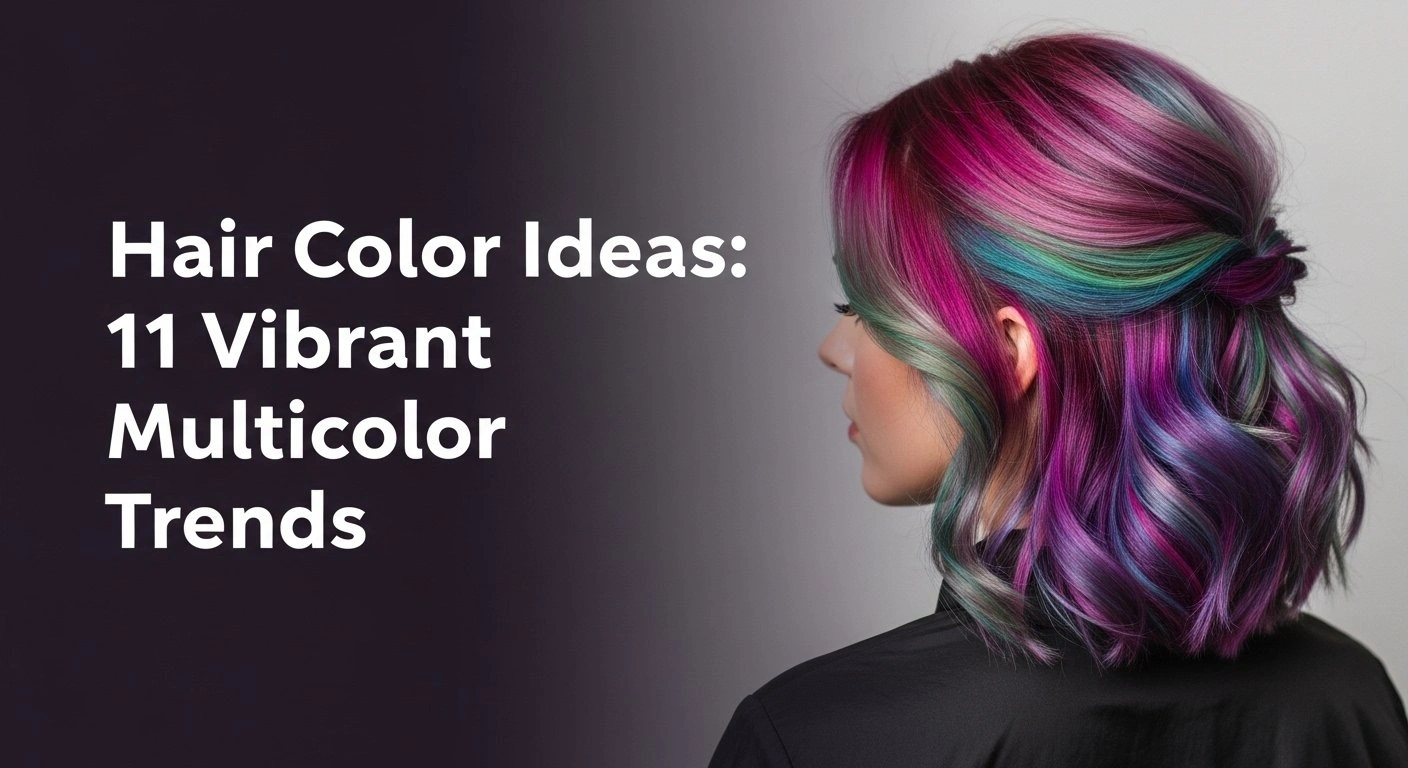
Dreaming of a vibrant two tone hair transformation but terrified of patchy fading? Finding the perfect hair color ideas multicolor look often comes with the fear of color bleeding.
Multicolor hair involves applying two or more distinct vibrant or pastel shades to create dimensional, high-contrast, or blended styles like color melts and split dyes. To achieve these looks without color bleeding, section carefully, use direct dyes on pre-lightened hair, and always wash with cold, sulfate-free water.
Drawing from professional salon-tested safety guidelines and color theory, we mapped out the safest multi color dye techniques. You will discover how to use an AI virtual try-on tool to visualize these vibrant hair colors before committing. Get ready to transform your aesthetic with confidence.
11 Vibrant Multicolor Trends for 2026
Stepping into the world of vivid hair colors requires more than just picking a pretty inspiration picture. Modern salon professional techniques, like fluid hair painting and shadow root diffusion, have elevated creative hair color to an art form. Whether you crave electric neon saturation or iridescent pastel ribbons, your success depends heavily on proper porosity control. Highly porous, damaged hair simply will not hold these intense pigments evenly.
In this comprehensive guide, we move beyond simple galleries to give you the exact technical blueprints for each style. You will find specific product recommendations, developer volumes, and foil sectioning techniques used by certified technicians to protect your hair health safety. Before diving into the trends, mentally test your skin undertone to see which palette suits you best. Let’s explore the exact steps needed to recreate these multidimensional masterpieces at home.
1. High-Contrast Split Hair Color (Black & Blonde Split)

Pin this striking split-dye transformation to your Alternative Hair board!
When debating between a split dye vs balayage, the split dye offers unmatched dramatic impact. This high contrast style combines icy platinum with deep black, requiring exact isolation to prevent disaster. The secret to flawless edgy split dye hair ideas lies entirely in the parting process. You must wash the dark side and the light side completely separately with cold water to maintain hair health safety and color integrity.
Products & Tools Used
- Professional heavy-duty sectioning clips with no-slip grips
- Pointed pintail comb for precision parting
- Pre-lightening powder and 20-volume developer
- Saturated black oxidative dye
- Intensive deep conditioning mask
Application Steps
- Section the hair precisely down the middle from the forehead to the nape of the neck using the pintail comb.
- Apply the heavy-duty sectioning clips to tightly secure the side designated for the black dye, ensuring zero stray hairs cross the part.
- Pre-lighten the blonde side using bleach and developer, processing until it reaches a pale yellow.
- Deposit the black colorant on the opposite side carefully, keeping a towel barrier at the scalp part line.
- Rinse the dark side first with cold water while keeping the blonde side pinned up to absolutely prevent color bleeding.
Pro-Tip: As a licensed colorist, I always apply a thick barrier cream directly on the exact part line. This stops the black dye from creeping over the scalp and staining the freshly bleached blonde roots!

2. Face-Framing Money Piece Hair (Brown + Blonde Balayage)

Save this beautiful dimensional brunette look for your next salon visit!
If you want a low-maintenance introduction to multicolor hair, the money piece hair trend is perfect for you. This multidimensional color perfectly frames the face and complements your skin tone by strategically placing warm tones right at the front hairline. Unlike chunky 90s highlights, a modern brown + blonde balayage money piece uses micro-foiling at the root. This technique creates a seamless grow-out, meaning you do not need monthly touch-ups.
Products & Tools Used
- Professional balayage board and textured paddle set
- Fine-bristle tint brush
- Bleach powder and 10 or 20-volume developer (gentle lift)
- Neutralizing purple or blue toner
- Sulfate-free color-safe shampoo
Application Steps
- Map out a triangular section at the front hairline, customizing the depth based on how bold you want the money piece to be.
- Weave the very top layer of the triangle with a pintail comb to create a soft, micro-foiled diffusion at the root.
- Paint the bleach mixture heavily onto the mid-lengths and ends using the balayage board for complete, even saturation.
- Foil the front sections to incubate the heat, lifting the hair to a pale yellow state.
- Tone the lightened front sections to perfectly match your desired balayage vibe, washing with a sulfate-free cleanser.
Pro-Tip: When doing a money piece, I always utilize a “shadow root” technique by tapping a demi-permanent color (matching the natural base) just at the first quarter-inch of the root. This softens the line of demarcation for an ultra-expensive look.

3. Bold Skunk Stripe Hair (Neon + Dark Roots)

Pin this alternative vivid color trend to your edgy hair inspiration board!
When evaluating a skunk stripe vs money piece, the difference is all about blending. The skunk stripe hair aesthetic requires heavy saturation of bright, neon color set directly against dark roots to create bold, unblended visual impact. This Y2K-inspired color blocking technique relies on thick “slices” of color rather than finely woven highlights. Mastering the slicing technique with proper hair foil placement demonstrates professional-level understanding of contrast.
Products & Tools Used
- Pre-cut hair foil pop-up sheets
- Neon semi-permanent direct dyes (e.g., lime green or hot pink)
- Pre-lightening powder with bonding additive
- Tint brush with stiff bristles
- Color-safe barrier cream
Application Steps
- Isolate thick, unbroken 1-inch to 2-inch wide panels of hair framing the face or running along the part line (this is the slicing technique).
- Protect the remaining dark hair by clipping it tightly out of the way and applying a barrier cream to the boundary lines.
- Lift the isolated “skunk” slices in hair foil, saturating heavily with bleach until they reach a level 9 or 10 pale blonde.
- Deposit your vibrant neon + dark roots color directly onto the freshly washed and dried pre-lightened stripes.
- Seal the color by rinsing with freezing cold water and applying a cuticle-sealing conditioner.
Pro-Tip: The secret to a true skunk stripe is absolutely zero blending. Unlike a balayage where you feather the bleach up, you want a blunt, harsh line at the root to maximize the high contrast Y2K aesthetic.

4. Seamless Color Melt Technique (Lavender + Teal)

Save this stunning color melt technique for your next vivid hair transformation!
The color melt technique is a multidimensional style where vivid shades flawlessly transition between colors without any harsh lines of demarcation. If you want a stunning lavender + teal combination, you must master the physical action of “smudging.” Color melting is visually superior to traditional ombre when working with vivids because it utilizes intermixable shades and diffusion principles to blend pigments beautifully along the hair shaft.
Products & Tools Used
- Two complementary semi-permanent tints (e.g., violet and teal)
- A clear diluter (to create a pastel transition shade)
- Specialized color melting or blending brush
- Multiple mixing bowls
- Sulfate-free cleansing conditioner
Application Steps
- Pre-lighten the entire canvas (global application) to a pale, even blonde, as vividly melting lavender and teal requires a completely clean slate.
- Apply the darkest shade (purple) to the root area, dragging it down about two to three inches.
- Deposit the secondary shade (teal) from the mid-lengths down to the ends of the hair.
- Smudge the two colors together using your thumb and index finger where they meet in the middle, or use a clear diluter to create a seamless third gradient color in the transition zone.
- Process for 30-45 minutes before rinsing with ice-cold water to prevent the dark root color from bleeding onto the lighter ends.
Pro-Tip: When doing a color melt technique, always wipe your blending fingers on a damp towel between every single section. If you drag the dark root color too far down with dirty gloves, you will muddy the transition and ruin the gradient effect!

5. Hidden Rainbow Underlayer (Peek-a-Boo Highlights)

Want a colorful secret? Pin this hidden rainbow underlayer to your boards!
If you are searching for subtle multi tonal hair for work, the rainbow underlayer is the ultimate compromise. This subtle yet vibrant approach conceals a full spectrum of colors beneath your natural tresses. Peek-a-boo highlights require advanced “halo sectioning” to map the hair structure perfectly. It is an incredibly low-maintenance way to experiment with hidden rainbow hair color ideas since root growth on the top layer remains completely untouched by bleach.
Products & Tools Used
- Vibrant rainbow hair colors kit (Red, Orange, Yellow, Green, Blue, Purple)
- 6 small tint brushes (one for each color)
- Hair foil sheets to keep colors separated
- Bleach and 20-volume developer
- Croc clips for heavy top-layer isolation
Application Steps
- Map out a “halo” section by parting the hair horizontally from ear to ear, clipping the entire top half of the natural hair securely out of the way.
- Pre-lighten only the bottom half of the hair (the underlayer) to a pale blonde canvas.
- Section the underlayer into 6 vertical slices.
- Paint each vertical slice with a different color of the rainbow in order, wrapping each individual slice in a hair foil to stop the colors from mixing.
- Rinse the foils individually from the bottom up, using freezing cold water, then drop the natural top layer over the vivid peek-a-boo highlights.
Pro-Tip: When rinsing an under-dyeing rainbow style, always rinse the darkest/coolest colors (blue, purple) last, and the lightest colors (yellow, orange) first. This prevents the dark colors from bleeding over and muddying your bright yellow!


6. Dimensional Calico Hair Color (Orange, Blonde, Brown)

Obsessed with autumn vibes? Pin this Calico Hair trend!
Many users search for “what is calico hair” after seeing it trend on TikTok. This earthy, multidimensional look heavily relies on color blocking to mimic a tortoiseshell cat pattern. Combining orange blonde brown hair in a chunky pattern directly contrasts with finely woven traditional highlights. You will need multiple mixing bowls and precise formulation to ensure the copper strands stay crisp without bleeding into the blonde sections.
Products & Tools Used
- Interlocking color bowls for separating formulas
- Copper permanent dye, light blonde toner, and brunette lowlight formula
- Medium-weave highlighting comb
- Hair foil
- Barrier cream for porosity control
Application Steps
- Section the hair into chunky, 1-inch thick zigzag partings around the head.
- Apply the copper dye to one chunky section, the blonde bleach/toner to the next, and the brown lowlight to the third, wrapping each securely in foil.
- Repeat this color blocking pattern consistently throughout the entire head to create the distinct calico hair effect.
- Process all colors simultaneously according to the manufacturer’s directions.
- Rinse the blonde foils first, followed by the copper, and finally the brunette, using color-locking shampoo to maintain the crisp, chunky highlights separation.
Pro-Tip: Calico hair thrives on high contrast. Do not attempt to smudge or melt the roots together. The beauty of this multicolor trend is seeing the distinct, chunky blocks of orange, blonde, and brown sitting right next to each other!

7. Vibrant Dip Dye Ends (Pink + Orange)

Want a low-commitment color pop? Pin these vibrant dip dye ends!
Understanding the difference between a color melt vs dip dye is critical here. Dip dye ends create a stark, intentional line of demarcation, exactly like dipping a paintbrush into a bucket of paint. This bright, saturated application method focuses entirely on the strands at the bottom. It protects your scalp health and completely avoids overlapping bleach damage on delicate roots, making vibrant pink + orange hair incredibly accessible.
Products & Tools Used
- Vibrant pink and orange semi-permanent dye
- Wide-tooth comb
- Pre-lightening kit (if ends are dark)
- Hair elastics
- Deep conditioning mask
Application Steps
- Secure the hair into low pigtails using elastics exactly at the line where you want the dip dye ends to start.
- Pre-lighten the hair below the elastics if your hair isn’t already blonde, washing and drying thoroughly once pale yellow.
- Apply the hot pink color heavily just below the elastic band.
- Deposit the orange color directly beneath the pink, pulling it all the way through to the very tips of the hair.
- Feather the line where the pink and orange meet with a wide-tooth comb to create a slight blend, then process and seal with cold water.
Pro-Tip: If you have long hair and want to try vivid shades but are terrified of damage, dip dyes are perfect. If you get tired of the pink and orange or the ends get dry, you simply get a trim to remove the color entirely!

8. Ethereal Holographic Hair (Pastel + Silver)

Mesmerized by this iridescent shine? Pin this holographic hair trend!
The question “what is holographic hair” dominates beauty searches. This highly metallic, pearly aesthetic requires a pristine white canvas to allow translucent pastel + silver shades to look like a shining prism. It is arguably the highest-maintenance look on this list. Achieving this iridescent shine requires expert color theory knowledge, specifically neutralizing yellow undertones entirely before applying any pastels via delicate micro-foiling.
Products & Tools Used
- Icy silver toner (anti-brass)
- Ultra-diluted, translucent pastel direct dyes (lavender, mint, baby pink)
- Precision tint brush
- Plex-based bond builder (for hair health safety)
- Shine-enhancing finishing serum
Application Steps
- Lift the hair to an absolute level 10 platinum blonde—there can be absolutely zero yellow left in the hair.
- Neutralize the canvas completely using an icy silver toner, creating your metallic base.
- Isolate incredibly thin, transparent slices of hair around the crown of the head using a micro-foiling technique.
- Paint alternating strips of your diluted pastel colors onto these micro-slices.
- Rinse gently and style bone-straight using a flat iron and shine serum to maximize the iridescent, prism-like reflection of the colors.
Pro-Tip: Holographic hair relies entirely on light reflection to look 3D. If the hair is highly porous or damaged from bleaching, it will look matte and dull. Always incorporate a bond builder into your bleach and use a high-gloss laminating treatment to get that pearly, reflective finish!

9. Mesmerizing Galaxy Hair Dye (Blue + Purple Hair)

Bring the cosmos to your hair! Pin this Galaxy dye look!
Executing an all-over vivid look is easiest when you utilize analogous colors—shades that sit next to each other on the color wheel. Galaxy hair dye combines cosmic colors like blue + purple hair to create intense chroma and deep dimension. Using a global application mapping strategy, colorists can blend these saturated tones seamlessly. Because blue, violet, and magenta complement each other perfectly, this is a relatively foolproof DIY application.
Products & Tools Used
- Highly saturated blue, violet, and magenta direct dyes
- Barrier cream to prevent skin staining
- Three tint brushes
- Alligator clips for sectioning
- Color depositing maintenance mask
Application Steps
- Pre-lighten the hair via a global application (all over) to a level 8 or 9; a pale yellow base is fine because blue and purple are cool tones.
- Section the hair into four standard quadrants (down the middle, and ear to ear).
- Apply the darkest shade (usually midnight blue) to the root area to create depth.
- Paint the mid-lengths and ends by alternating panels of violet, blue, and magenta, using your fingers to smudge the colors together where they meet.
- Condition heavily after processing with a color depositing mask to lock down the cuticle and amplify the shine of the galaxy hair dye.
Pro-Tip: Because blue and purple use analogous colors, they blend beautifully without ever turning brown or muddy. This makes Galaxy hair the safest and easiest vivid multicolor trend for beginners to try at home!

10. Radiant Sunset Hair Color (Copper + Blonde Lowlights)

Capture the golden hour forever. Pin this stunning Sunset Color Melt!
For those who prefer “natural” vivids over pastel or neon fashion colors, sunset hair color is the ultimate choice. This vibrant, multidimensional look utilizes warm tones that heavily complement olive and warm skin undertones. By blending copper + blonde lowlights with a deep red base, you create a glowing gradient. Interestingly, this look leverages natural underlying warmth—the brassiness exposed during bleaching—as an advantage rather than something to fight against.
Products & Tools Used
- Permanent oxidative dye in Crimson/Red (Roots)
- Permanent Copper/Orange dye (Mid-lengths)
- High-lift golden blonde (Ends)
- Developer (10 or 20 volume)
- Sulfate-free color maintenance shampoo
Application Steps
- Map out your color zones: top 3 inches for red, middle 4 inches for copper, remaining ends for golden blonde.
- Deposit the deep crimson red dye onto the roots first, as this requires the most processing time.
- Blend the copper oxidative dye into the red, pulling it down through the mid-lengths of the hair.
- Feather the golden blonde onto the ends, creating a seamless sunset gradient.
- Process for the full recommended time before rinsing with cool water to lock in those vibrant warm tones.
Pro-Tip: The beauty of a sunset hair color is that it actually uses the underlying warmth in bleached hair. If your bleach job lifts to a brassy orange or yellow, you don’t need to tone it out—the copper and gold dyes will cover it perfectly and look even more vibrant!

11. 3D Prism Hair Color (Pixel Hair Art)

Love futuristic aesthetics? Pin this incredible 3D Pixel Hair Art!
Addressing the trending query “what is 3D hair color,” we arrive at the most advanced technique circulating on social media: pixel hair art. This avant-garde prism hair color application creates a digital optical illusion on the surface of the hair. Precision painting and exact tension requirements are mandatory here. It is an industry-leading stylist technique that requires dead-straight styling for the geometric pattern to be visible.
Products & Tools Used
- Precision fine-detail hair dye brushes
- High-quality flat iron
- 3-4 vivid direct dyes (Cyan, Magenta, Yellow for a prism effect)
- Light-hold hairspray
- Sectioning comb
Application Steps
- Style the hair completely bone-straight using a flat iron; pixel hair art only works on a perfectly flat canvas.
- Apply a light layer of hairspray to the top layer of the hair to create a stiff, workable canvas that won’t shift.
- Paint tiny, precise squares of bleach in a staggered, Tetris-like pattern only on the very top layer of the hair using your detail brushes.
- Deposit your vibrant prism colors (pink, blue, yellow) carefully over the pre-lightened squares once the bleach is rinsed and dried.
- Seal the color gently, avoiding aggressive scrubbing that could blur the crisp geometric lines of your 3D hair color.
Pro-Tip: Pixel hair art is an optical illusion. If you part your hair on the left one day and the right the next, the pattern will completely disappear. The design must be mapped and painted exactly on the parting and styling you wear every single day.

Key Takeaways: Your Quick Guide to Multicolor Hair
Before you grab a tint brush and begin your transformation, it is essential to review the technical rules. Understanding complex chemical interactions—like porosity, pH balance via cold water, and pigment neutralization—will save you from expensive color corrections. Use this highly scannable multicolor hair overview as your pre-dye checklist.
Key Points to Remember:
- Test Before You Dye Using AI Tools – Before committing bleach to your hair, use an AI hair color changer or virtual try-on app to see how high-contrast split dyes or pastel holographics look with your specific skin undertones and eye color.
- Master the Color Wheel for Formulations – Always reference color theory when choosing your palettes; analogous colors (like blue and purple) blend seamlessly, while complementary colors (like red and green) will turn brown and muddy if they touch.
- Porosity Control is Mandatory – You must use barrier creams and precise sectioning clips to prevent color bleeding between different zones, especially when working with high-contrast styles like a black and blonde split.
- Heat is the Enemy of Vivids – To maintain multicolor hair and stop immediate fading, you must seal the cuticle by washing your hair exclusively with freezing cold water and sulfate-free color-safe shampoo.
- Pre-Lightening Dictates the Final Result – Pastel and holographic tones require a perfectly neutralized, level 10 icy blonde canvas, whereas warm tones like sunset coppers can easily be applied over brassy or yellow-lifted bases.
- Commit to the Maintenance Routine – Creative hair color is an investment; keeping vibrant colors saturated requires weekly color-depositing masks, heat protection, and regular salon glosses to maintain hair health safety.
People Also Ask About Multicolor Hair
When experimenting with DIY coloring or planning a major salon overhaul, uncertainties about chemical processes, longevity, and maintenance naturally arise. Below, we address the most common questions about color matching, structural hair health, and preventing messy transfers.
How to dye hair multiple colors at home?
To successfully dye hair multiple colors at home, you must pre-lighten the hair, map out distinct sections, and use barrier creams to separate the colors. Start by bleaching the desired areas to a pale yellow. Wash and dry the hair completely. Section the hair using heavy-duty clips and apply your vivid direct dyes to each specific zone. Most importantly, wrap each colored section in foil to prevent the tints from touching, and rinse each section separately with cold water.
How to prevent hair colors from bleeding?
You can prevent hair colors from bleeding by washing with freezing cold water, using sulfate-free shampoos, and rinsing contrasting colors separately. Color bleeding happens when the hair cuticle is open. Hot water opens the cuticle, allowing pigment to escape and transfer to lighter strands. According to salon professionals, applying a thick barrier cream between sections during the dyeing process and avoiding aggressive scrubbing during wash days will keep your multi-tonal lines sharp.
What two hair colors look good together?
Two hair colors look best together when they are analogous (next to each other on the color wheel) like blue and purple, or high-contrast neutrals like black and platinum. For a seamless gradient, blending pink and orange or teal and lavender guarantees a gorgeous transition without muddying. If you want a bold, color-blocked look, pairing a bright neon with a very dark base creates a striking aesthetic.
How to use an AI hair color changer?
To use an AI virtual try-on tool, upload a clear, well-lit photo of yourself facing forward in natural light without any hair obscuring your face. These digital tools use advanced algorithms to map your hair strands and apply virtual pigment. Simply select the “multicolor” or “split dye” options in the app to test different palettes against your skin undertone before making a permanent chemical commitment at the salon.
Do I need to bleach my hair for rainbow colors?
Yes, you must bleach your hair to a pale blonde level 9 or 10 if you want vibrant, true-to-tone rainbow colors. Direct dyes (vivid colors like pink, blue, and yellow) sit on the surface of the hair and are entirely translucent. If you apply blue dye over dark brown hair, it will only appear as a slight dark tint in the sunlight. To achieve saturated hues, pre-lightening is absolutely mandatory.
What is the best multi color hair dye?
The best dyes for multicolor hair are professional-grade, semi-permanent direct dyes from brands known for high pigmentation and conditioning properties. When comparing popular brands or salon-grade lines, look for formulas that are vegan, free of harsh developers, and heavily pigmented. Because you are layering these colors over bleached hair, using a conditioning direct dye helps restore moisture while depositing intense color.
How to wash multi colored hair?
Wash multi-colored hair as infrequently as possible, ideally 1-2 times a week, using exclusively cold water and color-safe, sulfate-free shampoo. When you do wash, avoid aggressively scrubbing the mid-lengths and ends where the vivid colors live. Focus the shampoo only on the scalp. For high-contrast looks, you may need to physically hold the two sides apart and rinse them separately to avoid color transfer.
What is skunk stripe hair?
Skunk stripe hair is an edgy, high-contrast coloring technique featuring a chunky, unblended stripe of bright color (often blonde or neon) against a dark base. Unlike a blended money piece or traditional balayage, a skunk stripe is intentionally harsh and color-blocked. It typically frames the face or is placed heavily at the nape of the neck, emphasizing bold contrast over seamless diffusion.
How long does rainbow hair last?
Vibrant rainbow hair typically lasts between 4 to 8 weeks before significantly fading, depending on your washing habits and the porosity of your hair. Cool tones like blue and green tend to stick to the hair follicle longer, while warm pastels like light pink and peach can wash out in just a few shampoos. To maintain the saturation, refresh the color with depositing masks every few weeks.
How to transition from black to multicolor hair?
Transitioning from black hair to multicolor hair requires a professional, multi-session color correction process to safely lift the dark pigment using bleach and bond builders. Black dye is incredibly difficult to remove and often lifts to a stubborn orange or red. To avoid severe damage, you must lighten the hair incrementally over several salon visits before you can apply your desired vivid fashion colors safely.
Final Thoughts on Multicolor Hair Ideas
Diving into the world of hair color ideas multicolor is one of the most exciting ways to express your personal style and completely transform your aesthetic in 2026. Whether you are drawn to the edgy, high-contrast impact of a black and blonde split dye, or prefer the ethereal, multidimensional shimmer of pastel holographic ribbons, creative hair color offers endless possibilities for reinvention.
However, as we have explored, achieving these vivid hair colors requires more than just slapping dye on a canvas. The secret to a flawless color melt, a crisp skunk stripe, or a hidden rainbow underlayer lies in structural planning. Mastering proper sectioning, understanding color theory to avoid muddy transitions, and strictly adhering to a cold-water maintenance routine are non-negotiable steps if you want to prevent color bleeding and keep your tresses looking salon-fresh.
If you are feeling overwhelmed by the choices, do not rush the process. Take advantage of an AI hair changer tool to visualize how different palettes complement your skin undertone and eye color before ever touching bleach. And remember, when in doubt—especially if you are transitioning from dark box dye to a pastel canvas—consulting with a licensed colorist is the best way to protect your hair’s integrity.
Which of these 11 bold multicolor trends are you bold enough to try this September? Are you leaning toward the warm, earthy tones of Calico hair, or the futuristic vibes of 3D Pixel art? Let us know which look you plan to bring to your stylist next!
Last update on 2026-04-27 / Affiliate links / Images from Amazon Product Advertising API