Tired of seeing harsh root lines just weeks after a salon visit? You want that gorgeous, sun-kissed look, but the constant upkeep and cost of traditional highlights feel draining and unsustainable.
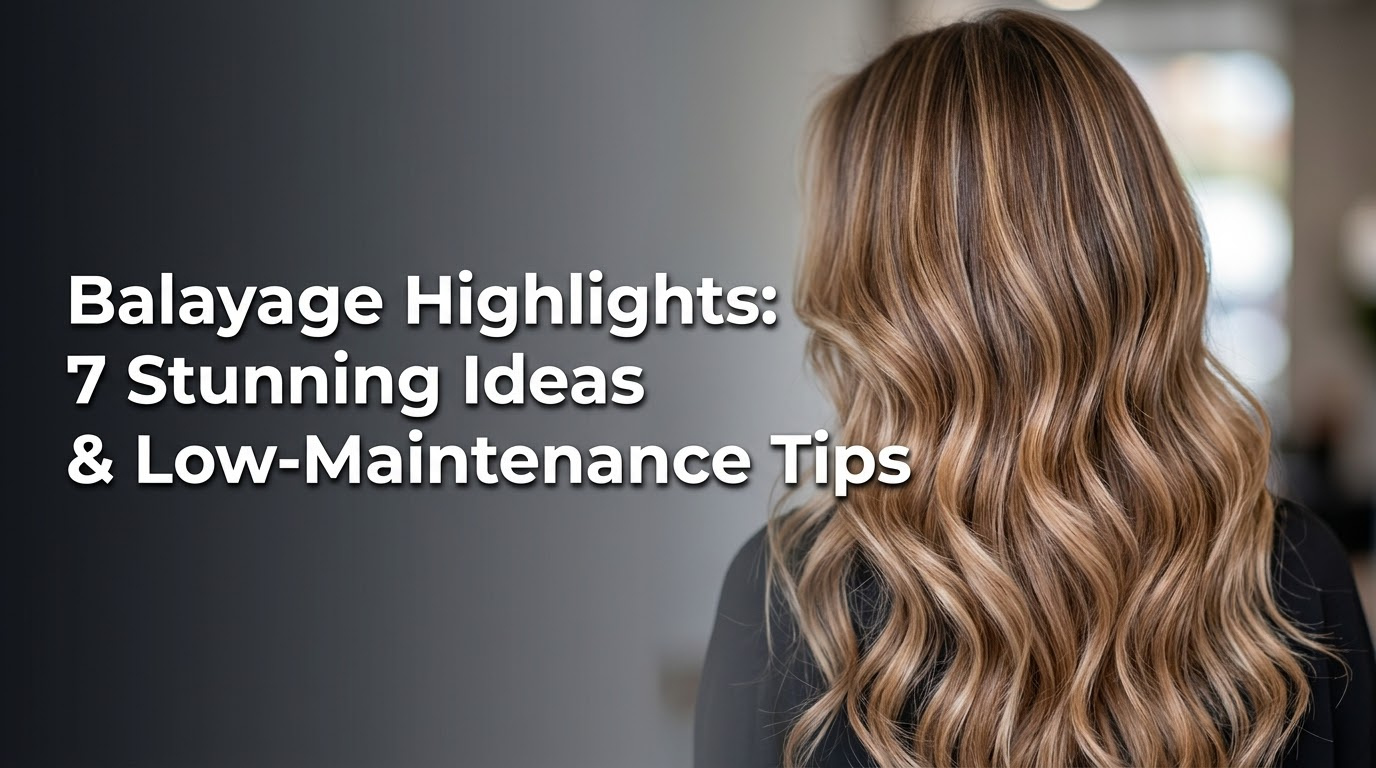
Balayage is a French hair coloring technique where a stylist hand-paints lightener onto the hair to create a natural, graduated, sun-kissed effect. Unlike traditional foil highlights, this method results in a seamless blend with softer, less noticeable regrowth lines, making it a popular low-maintenance option for achieving dimensional color.
Drawing from established best practices and current hair color trends, this guide will unlock the secrets to flawless balayage highlights. You will discover seven stunning ideas tailored to different hair types and colors, along with expert tips to maintain your beautiful, lived-in color at home. Get ready to transform your hair with a modern, effortless, and personalized approach.
What Are Balayage Highlights and Why Are They So Popular in 2026?
The world of hair color is filled with terms like foils, ombre, and babylights, but balayage has truly revolutionized how we think about highlighting. At its core, it is an artistic, free-hand painting technique. Instead of the methodical, uniform strands created with foil highlights, a stylist sweeps or paints lightener directly onto the surface of the hair. This hair painting approach allows for a customized, graduated lightness that mimics how the sun would naturally lighten your hair over time. The result is a soft, seamless blend that lacks the harsh demarcation lines often seen with foils, solving the age-old problem of noticeable roots just a few weeks post-appointment.
The massive popularity of balayage hair color in 2026 comes down to one core benefit: it offers a beautiful, high-end look with incredibly low maintenance. According to many a certified colorist, clients are tired of the expensive upkeep and rigid 6-week appointment schedule required by traditional highlights. Balayage provides a solution. Because the color is feathered toward the root, the grow-out is graceful and blended, allowing clients to go three, four, or even six months between full appointments. This technique delivers that coveted, effortlessly chic lived-in color that looks both luxurious and natural, making it the top request in many a professional hair salon.
7 Stunning Balayage Ideas for a Natural, Low-Maintenance Look
Now that you understand the “why” behind balayage, it’s time for the inspiration. The true beauty of this technique is its versatility. It can be adapted to any hair color, texture, or length to create a completely customized hair color experience. Below, we explore seven distinct and stunning balayage hair ideas, from rich caramel tones on dark hair to icy blondes and even modern gray blending. Each idea includes the specific products needed and the step-by-step application process to help you achieve the look, whether you’re consulting with your stylist or embarking on an ambitious at-home project.
1. Create Rich Caramel Balayage Highlights on Dark Brown Hair

Pin this gorgeous brunette look to your ‘Hair Inspo’ board!
Adding warmth and dimension to dark brown hair without creating a brassy or striped appearance is where balayage truly shines. Caramel balayage highlights for black hair or deep brunette bases provide a rich, luxurious contrast that looks stunning year-round. The key is to lift the hair just enough to create a warm foundation for the caramel toner to grab onto. This creates a beautiful color melt effect, enhancing the hair’s natural texture and movement with every turn of the head.
Products & Tools Used
- Balayage Lightener for Dark Hair: Look for a clay lightener that offers up to 7 levels of lift.
- 20 or 30 Volume Developer: Choose based on your hair’s darkness and health; 20 volume is safer for a subtle highlight.
- Caramel Hair Toner: An essential product to neutralize brassiness and deposit the desired warm, caramel shade.
- Bond Builder Additive: A stylist secret to mix into your lightener to protect the hair’s structural integrity.
- Sectioning clips, balayage brush, mixing bowl, and gloves.
Application/Styling Steps
- Section the hair into four quadrants. Start at the bottom and work your way up.
- Paint V-shaped sections onto the hair strands, focusing the saturation on the mid-lengths and ends for that graduated lightness. Avoid the root area.
- Process the hair in the open air, checking every 10-15 minutes until it lifts to a pale yellow (like the inside of a banana peel).
- Rinse thoroughly, shampoo, and towel dry.
- Tone the lightened pieces by applying the caramel toner from roots to ends. Let it process for the time indicated on the product instructions, then rinse and condition.
Pro-Tip: For a true seamless blend on dark hair, use a root smudge technique. After toning, apply a gloss or semi-permanent color one shade lighter than your natural root color and “smudge” it down an inch or two to erase any potential lines.


2. Apply Icy Blonde Balayage for a High-Contrast Style

Save this icy blonde look for your next salon visit!
For those who crave a bold, fashion-forward statement, an icy blonde balayage on light brown hair or an even darker base offers a striking high-contrast look. This style is all about achieving the lightest possible blonde and then toning it to a cool, near-white finish. The biggest challenge here is combating brassiness. To achieve a true icy result, you must lift the hair past the orange and yellow stages to a very pale yellow. This is an advanced process where safe lightening practices are paramount to protect your hair’s health.
Products & Tools Used
- High-Lift Powder Lightener: A professional-grade bleach capable of 8-9+ levels of lift.
- 30 Volume Developer: Needed for achieving the necessary lift for a true icy blonde.
- Violet or Ash-Based Toner: Crucial for canceling out all yellow tones. Look for toners labeled T18, T10, or with “ash” or “violet” in the name.
- Purple Shampoo & Conditioner: For at-home maintenance to keep brassiness at bay.
- Olaplex No. 3 or similar bond-building treatment: To repair and maintain follicle health post-lightening.
Application/Styling Steps
- Saturate the desired sections heavily from mid-lengths to ends. For a high-contrast look, create thicker, more defined ribbons of color.
- Incubate if needed. While traditional balayage is open-air processing, you can wrap sections loosely in foil (foilyage) to generate more heat and achieve a higher lift faster.
- Process until the hair is a very pale yellow, with no orange remaining. This is the most critical step.
- Rinse and shampoo lightly.
- Tone immediately while hair is damp. Apply the violet/ash toner quickly and evenly, watching closely as it can grab fast. Rinse as soon as you see the yellow disappear and a cool, icy tone emerge.
Pro-Tip: Mastering toning math is key. If your hair lifts to a pale yellow (level 9), a violet-based toner will neutralize it to white. If it lifts to a yellow-orange (level 8), you will need a blue-violet based toner to cancel out both tones.

3. Style a Subtle Face-Framing Balayage for Short Hair

Pin this chic bob idea for a quick and easy hair refresh!
A subtle balayage for short hair proves that you don’t need long locks to enjoy this technique. A partial balayage, focused only on the pieces around the face, is a high-impact, low-commitment way to brighten your complexion and add dimension to a bob or pixie cut. This face-framing technique, often called the “money piece,” is a stylist recommended favorite for clients who want a quick refresh without the time or expense of a full balayage.
Products & Tools Used
- A small balayage at-home kit.
- 10 or 20 Volume Developer: A lower volume is sufficient and safer for these delicate sections.
- Detailing Brush: A smaller, angled brush for precise application.
- Glossing Toner: A gentle, semi-permanent toner to add shine and a hint of color.
- Hair clips to isolate the front sections.
Application/Styling Steps
- Section out two thin slices of hair on either side of your part, right at the hairline. This is your face-framing section. Clip the rest of your hair back and away.
- Paint the lightener onto these two sections only. For a softer look, feather the lightener up towards the root without touching the scalp.
- Process until you reach a golden-yellow. Since these pieces are fine, they will lift quickly.
- Rinse only the front sections carefully in the sink to avoid getting lightener on the rest of your hair.
- Tone the lightened pieces with a quick gloss to add shine and perfect the color.
Pro-Tip: The key to natural-looking face framing highlights is diffusion. After painting the strand, use your fingers to gently smudge the top of the section where the lightener begins. This avoids a hard line and creates a truly melted effect.

4. Define and Enhance Curls with Dimensional Honey Blonde Balayage

Love your curls! Pin this honey blonde idea to celebrate your texture.
Applying balayage highlights for curly hair requires a specialized approach. The goal is to create dimensional color that enhances texture and makes curls pop. A warm honey blonde balayage is a perfect choice, as it adds brightness without looking unnatural. The proper method, known as the “Pintura” technique, involves painting lightener onto individual curls while the hair is dry. This allows the colorist (or you) to see exactly where the highlights will fall, preventing the splotchy or uneven results that can occur when coloring curly hair with traditional methods.
Products & Tools Used
- Clay-based lightener: This is crucial as its thicker consistency stays put and won’t drip onto neighboring curls.
- 20 Volume Developer: A gentle developer is best to protect the delicate structure of curly hair.
- Moisture-Rich Deep Conditioner: An absolute must-have to replenish moisture lost during the lightening process.
- Honey or Golden Blonde Toner: To add warmth and shine.
- No brush needed—just your gloved hands!
Application/Styling Steps
- Style your hair first! Start with dry, defined curls, exactly how you would normally wear them.
- Paint with your fingers. Do not section. Instead, look at your hair as a whole and pick out individual curl clumps that you want to highlight. Apply the lightener where the light would naturally hit.
- Apply the lightener to the “belly” of the curl, avoiding the roots and ends to create a ribbon effect.
- Process in the open air. Watch closely, as porous curls can lift very quickly.
- Rinse, tone, and immediately follow with a 20-minute deep conditioner treatment to restore the hair’s pH balance.
Pro-Tip: The biggest mistake with balayage on curly hair is applying it to wet or brushed-out hair. You must apply it to dry, styled curls to see where the color will live. This is a proven technique used by curl specialists worldwide.

5. Experiment with Trendy Rose Gold Balayage on Dark Hair

Ready for a change? Pin this stunning rose gold balayage!
Balayage isn’t just for natural shades; it’s the perfect canvas for creative color. A rose gold balayage on dark hair is a trendy and sophisticated way to play with fashion shades. This look requires a two-step process: first, using the balayage technique to pre-lighten sections of the hair, and second, applying a semi-permanent rose gold dye over those lightened pieces. The balayage application ensures the fashion color looks dimensional and has a soft grow-out, unlike an all-over application.
Products & Tools Used
- Balayage Lightener and 20-30 Volume Developer.
- Rose Gold Semi-Permanent Dye: Choose a high-quality brand known for its color payoff and conditioning properties.
- Two separate tint brushes: one for lightener, one for the color.
- A mixing bowl.
- Color-safe shampoo and conditioner for maintenance.
Application/Styling Steps
- Lighten the hair first. Using the V-shaped balayage technique, paint lightener onto the sections you want to be rose gold.
- Process the hair until it lifts to a golden-yellow (around a level 8). You do not need to lift to platinum for this shade. The underlying gold will actually help create the “gold” part of rose gold.
- Rinse the lightener completely, shampoo, and dry the hair fully.
- Apply the rose gold semi-permanent dye over the lightened sections. Make sure to saturate them completely for even color.
- Process the color for the time specified (usually 20-40 minutes), then rinse with cool water. Do not shampoo, just condition.
Pro-Tip: Rose gold is a beautiful creative color, but it fades. To prolong its life, wash your hair with the coldest water you can stand, use a color-depositing conditioner, and minimize heat styling.

6. Blend Grays with a Natural “Babylights” Balayage

Embrace your grays beautifully! Pin this graceful blending idea.
One of the most modern and effective uses for balayage is for gray coverage—or rather, gray blending. Instead of covering grays with a flat, single-process color that shows roots in weeks, this approach uses babylights to integrate the grays into a beautiful, multi-tonal design. By hand-painting super-fine highlights that are toned to complement the natural silver strands, you create a sophisticated multi-tonal hair effect that makes the grow-out process nearly invisible. This is the ultimate low maintenance solution for balayage for older women or anyone looking to embrace their grays gracefully.
Products & Tools Used
- Gentle Lightener: Choose one with a built-in bonding agent.
- 10 or 20 Volume Developer: Gray hair can be resistant but is also delicate; a lower developer is safer.
- Ash or Natural-Toned Toner: To ensure the highlights blend seamlessly with the cool tones of natural gray hair.
- A very fine-tipped application brush.
- A rattail comb for fine weaving.
Application/Styling Steps
- Weave out micro-fine sections of hair all over the head. You want the sections to be so small they look like babylights.
- Paint the lightener onto these tiny sections, focusing on the areas where the gray is most prominent.
- Use a lighter touch than you would for a normal balayage. The goal is a subtle shimmer, not bold ribbons.
- Process until the highlights are a pale yellow.
- Rinse and apply an ash-based toner. This will cool down the highlights to match the silver tones of the gray, creating a beautiful multi-tonal hair effect.
Pro-Tip: The goal here is not 100% gray coverage, but diffusion. By adding these subtle highlights, you break up the solid block of regrowth, making the line between your natural gray and the color much less noticeable. This is the secret to lived-in color.

7. Master Low-Maintenance At-Home Toning & Upkeep

Keep your balayage fresh! Pin these essential maintenance tips.
The secret to truly low maintenance balayage isn’t just the application; it’s learning how to maintain balayage hair at home. This is how you combat the expensive upkeep of salon color and keep your hair looking vibrant for months. A simple at-home routine can refresh your toner, fight brassiness, and combat dry hair from lightening. This is a stylist secret for extending the life of your color and ensuring your hair remains healthy and shiny.
What You Need
- Color-Safe Shampoo & Conditioner: Sulfate-free formulas are a must to prevent stripping color.
- Purple or Blue Shampoo: A weekly treatment to fix orange hair and neutralize brassiness in blonde or lightened pieces.
- At-Home Hair Gloss or Toning Mask: A game-changer for refreshing color and adding immense shine between salon visits.
- Deep Conditioner / Hair Mask: To be used weekly to combat dryness from lightening.
- Heat Protectant Spray: Non-negotiable for preventing fading color and hair damage from styling tools.
Routine Steps
- Weekly Toning Wash: Once a week, swap your regular shampoo for a purple shampoo. Lather and let it sit on your hair for 3-5 minutes before rinsing to cancel out yellow tones.
- Weekly Deep Condition: After your toning wash, apply a generous amount of a deep conditioner from mid-lengths to ends. Leave on for at least 10 minutes before rinsing.
- Monthly Gloss Treatment: Once a month, when your color looks dull, apply an at-home hair gloss. This will refresh your toner, seal the cuticle, and add incredible shine.
- Daily Heat Protection: Before you use any hot tool, always spray your hair with a heat protectant. This is the single best way to prevent your color from fading.
Pro-Tip: Don’t overuse your purple shampoo! Using it too often can deposit too much violet pigment and make your blonde highlights look dull or lavender. Once a week is the proven technique for perfect maintenance.

Key Takeaways: Your Quick Guide to Flawless Balayage Highlights
- Balayage is a Hand-Painting Technique: It involves painting lightener directly onto the hair for a natural-looking, sun-kissed result with a seamless blend and softer grow-out compared to traditional foils.
-
Toner is Not Optional: Achieving the perfect shade (like caramel or icy blonde) depends on using the correct toner to neutralize unwanted brassiness after lightening.
-
Maintenance is Key for Longevity: A low-maintenance salon schedule is only possible with at-home upkeep. Use purple shampoo weekly and a deep conditioner to keep your color fresh and hair healthy.
-
Technique Varies by Hair Type: The best application method depends on your hair. For curly hair, paint on dry, individual curls; for a subtle look, focus on face-framing pieces.
-
Protect Your Investment: Always use a heat protectant before styling and a bond builder during the lightening process to minimize hair damage and maintain the structural integrity of your hair.
People Also Ask About Balayage Highlights
What is the difference between balayage and highlights?
The main difference is the application technique and resulting look. Traditional highlights use foils to create uniform, defined streaks of color from the root. Balayage is a free-hand painting technique that creates a softer, more natural, graduated color that blends seamlessly with your base color, resulting in less noticeable root regrowth.
Is balayage better than highlights?
Balayage is better for those seeking a low-maintenance, natural, sun-kissed look. Because it doesn’t typically start at the root, the grow-out process is much more graceful. Traditional highlights are better for those who want a more uniform, high-contrast lift from root to tip and don’t mind more frequent salon visits for touch-ups.
How much do balayage highlights cost?
Balayage is generally more expensive per session than traditional highlights. This is because it is a more artistic, specialized technique that requires a high level of skill and takes more time. However, because it requires less frequent maintenance, it can sometimes be more cost-effective over time.
How long do balayage highlights last?
The color can last for 3 to 6 months, which is a major reason for its popularity. While the toner or gloss may need refreshing every 6-8 weeks, the actual highlights are placed to grow out softly and naturally. You won’t get the hard line of demarcation that you see with foils, allowing for much longer gaps between full salon appointments.
Is balayage damaging to your hair?
Any process involving bleach can cause hair damage, but balayage can be less damaging than traditional all-over foils. Because it’s often applied only to sections of the hair and doesn’t always require the intense heat incubation of foils, it can be gentler. Using a bond builder like Olaplex during the service is critical to minimize damage.
Does balayage work on dark hair?
Yes, balayage looks stunning on dark hair. It’s the perfect technique for adding rich caramel, honey, or auburn tones for dimension without the harshness of traditional blonde highlights. The key is to lift the hair to the correct level and use a toner to achieve the desired warm or cool shade.
Can I do balayage at home?
While it’s possible to do balayage at home, it requires skill and carries risks like uneven color or severe hair damage. For beginners, starting with a very subtle, face-framing application is safest. For a full-head transformation or a significant color change, consulting a professional colorist is highly recommended for the best results.
What is the difference between balayage and ombre?
Ombre is a more dramatic, horizontal color transition, while balayage is a more subtle, vertical highlighting technique. Ombre typically features a stark transition from a dark top half to a fully lightened bottom half. Balayage involves painting soft, vertical “sweeps” of color throughout the hair for a blended, sun-kissed effect.
How often do I need a touch-up for balayage?
Full balayage touch-ups are typically only needed every 3-6 months. Many clients visit the salon in between (around 8-12 weeks) for a simple “money piece” touch-up around the face or a toner/gloss treatment to refresh the color’s vibrancy without re-lightening the hair.
Which is better for gray hair, highlights or balayage?
Balayage is often better for blending gray hair in a natural way. Instead of attempting full coverage, which creates a harsh root line as the grays grow back, balayage allows a stylist to weave in complementary tones. This creates a multi-dimensional look that diffuses the appearance of grays and makes regrowth far less obvious.
Final Thoughts on Achieving Your Dream Balayage
Ultimately, balayage is more than just a trend; it’s a fundamental shift towards more personalized, artistic, and low-maintenance color. Whether you’re enhancing your natural hair color with a few sun-kissed strands or opting for a bold, high-contrast transformation, this hand-painted technique offers a level of customization that traditional foils cannot match. It celebrates dimension, movement, and a graceful grow-out, freeing you from a strict salon schedule.
The key to a successful outcome lies in understanding the process, respecting the integrity of your hair, and committing to simple at-home maintenance with tools like toner and deep conditioner. For the most predictable and beautiful professional results, a consultation with a stylist at a professional hair salon is always the best first step. They can assess your hair’s health and help you create a look that truly compliments skin tone and lifestyle. Which balayage idea will you be trying first?
Last update on 2026-04-01 / Affiliate links / Images from Amazon Product Advertising API